
Table of Contents
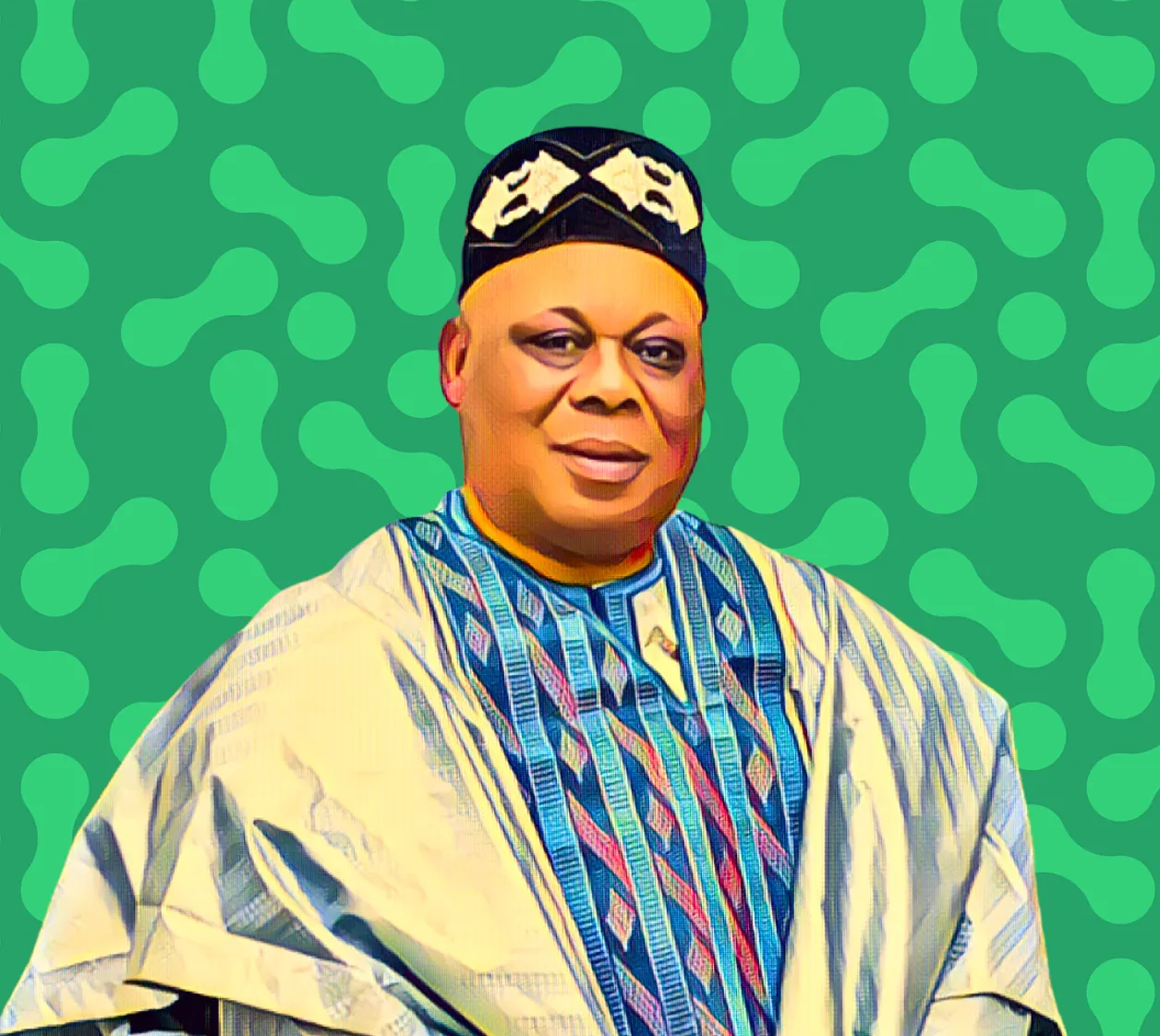
Chief Johnbull Ejovi has spent nearly four decades building one of the largest Nigerian-owned marine fleets serving the country's oil industry, and his company, Ejovi Offshore Ltd., now generates about $100 million in revenue a year, according to a person familiar with its finances.
The Warri-based company supplies vessels, barges, tugboats, dredging, pipeline work and logistics to oil producers working in the creeks, swamps and deep waters of the Niger Delta. It counts Shell, Chevron, TotalEnergies and Seplat Energy among its long-term clients and lists dozens of vessels, from supply ships and anchor-handling tugs to a pipe-laying vessel and an oil tanker.
Ejovi, 71, is not a familiar name outside Delta State. He has never appeared on a rich list, and his company is private and family-owned, so it publishes no accounts. In Warri and across the Urhobo heartland, though, he is known as a marine mogul, a traditional chief who holds the title of Udu of Agbon Kingdom, and a businessman close to the state's political establishment. Delta State Governor Sheriff Oborevwori, in a statement marking Ejovi's 71st birthday in September, described him as a mentor and a pillar of support.
From Orhoakpor to the waterfront
Ejovi was born in 1955 and comes from Orhoakpor, a community in Ethiope East local government area of Delta State that is part of the Agbon kingdom of the Urhobo people. His father had him late in life and died at about 97, when Ejovi was 12 years old.
"I have always told my children that I never had any real experience with him," Ejovi said at a thanksgiving service for his 70th birthday last year. "The journey of my life is far compared to where I am coming from."
He has said little in public about his schooling or his first jobs. His business life has centered on Warri, the oil town on the Warri River where foreign oil companies and their contractors set up bases from the 1960s onward. Chief Mike Ikuku, who spoke at the 70th birthday celebration, said he came to know Ejovi while Ikuku was working at Westminster Dredging, the Dutch dredging contractor that was active in Nigeria's waterways. The company that now carries Ejovi's name says its founder brought experience in marine and drilling operations to the business.
He set up Ejovi Nigeria Ltd. in 1988. Nigeria's oil industry at the time was dominated by foreign majors and by international service companies that brought in their own boats, crews and equipment. Local firms tended to work at the edges, chartering small craft, running supplies through the creeks or subcontracting for bigger players. Ejovi's company started in that world. By 2011, when it renamed itself Ejovi Dredging and Marine Services Ltd., its main business was dredging and marine support in the swamps and shallow waters of the Niger Delta.
Riding Nigeria's local content push
Its prospects improved with a shift in government policy that pushed oil companies to hire Nigerian firms and Nigerian-owned ships.
The Coastal and Inland Shipping Act of 2003, known as the cabotage law, reserved domestic coastal shipping for vessels owned and crewed by Nigerians. In 2010, President Goodluck Jonathan signed the Nigerian Oil and Gas Industry Content Development Act, which requires operators to give first consideration to Nigerian companies, services and assets in their contracts. Oil companies needed boats, and the new rules favored Nigerian-owned ones.
Ejovi's son Oghenegaren joined the company in 2009. He learned the business on the water, working on vessel construction, barge systems, tugboat operations and maritime logistics before moving into management. "Most of my knowledge today about vessels and my understanding of the industry comes from my days working" in the field, he said in a company profile published this year.
In 2012, the company won its first integrated contract with Shell Petroleum Development Co., the Nigerian onshore and shallow-water arm of Shell Plc and for decades the largest oil producer in the Niger Delta. The company describes the Shell contract, which ran from 2012 to 2013, as a landmark. Work for other operators followed, and the company built up its own fleet to reduce its reliance on chartered vessels.
Building the fleet
Ejovi Offshore owns most of the boats it operates. The company says it owns and operates more than 60 offshore and swamp support vessels, a count that includes barges, houseboats and small craft as well as ocean-going ships. Ship-tracking records list 20 sea-going vessels under its management, with a combined capacity of about 36,000 deadweight tons.
The fleet includes four dynamically positioned supply vessels and six anchor-handling tugs, several of them named after characters from the television series Game of Thrones, along with security escort boats called Night Watch, cargo barges, tugboats and floating houseboats that serve as living quarters for oil workers in remote locations. Many of the barges carry family names, from Oghenegaren I to VI and Mudiaga I to VII.
Two of its biggest assets came from Subsea 7 SA, the offshore engineering group. The JV Inagha, a self-propelled jack-up crane and accommodation barge that can house 150 people, was formerly the Seven Inagha. The JV Antares, a pipe-laying vessel with 330 berths, was the Seven Antares, which Subsea 7's Nigerian joint venture, NigerStar7, bought in 2019. Ejovi Offshore has not disclosed what it paid for them.
The company has also moved into oil transport. It manages the Dragon Stone, a 12,692-deadweight-ton products tanker built in 2011 and registered in Panama, which it describes as the start of a push into midstream work. The tanker has been operating around the oil terminals at Onne and Bonny in Rivers State.
Beyond ships, Ejovi Offshore offers dredging and land reclamation, pipeline installation and maintenance, engineering and construction, drilling fluids and the treatment of drilling waste, vessel management, bunkering and catering. It also runs an aviation unit that sources aircraft parts and arranges maintenance, operating through Ejovi Offshore and an affiliate, Blurex Nigeria Ltd., under a parent company registered in the Marshall Islands. The group has its head office in Udu, near Warri, its corporate office in Victoria Island, Lagos, and an operations base in Trans Amadi, Port Harcourt. It employs between 200 and 500 people.
"We have developed one of the largest fleets of marine equipment in the industry," Oghenegaren Ejovi said. "Maintaining exemplary safety and compliance records has been a cornerstone of our operations."
In 2024, the company changed its name again, to Ejovi Offshore Ltd. Its client list includes Chevron, TotalEnergies, Eni, ExxonMobil, Seplat, Nigerian Petroleum Development Co. and Oando, as well as the Delta State government.
Ejovi has handed day-to-day control to the next generation. Oghenegaren Ejovi is managing director and chief executive, and Mudiaga Ejovi is executive director. The management team also includes Okey Ekekenta as chief operating officer and Beburey Atako as chief financial officer.
The founder remains the public face of the family and its fortune. Oghenegaren says he now spends much of his time advising oil companies and Nigerian producers on which vessels suit their projects. He argues that a locally owned fleet is cheaper and quicker for clients than one run from abroad. "Our indigenous model reduces overhead costs associated with international operations," he said. "Being locally based allows us to respond quickly to the needs of our clients."
The pool of Nigerian clients has grown. Since 2024, Shell, ExxonMobil, Eni and Equinor have sold most of their onshore and shallow-water assets in Nigeria to local producers. Seplat bought ExxonMobil's shallow-water business, Oando took over Eni's onshore unit, and the Renaissance Africa Energy consortium completed its purchase of Shell Petroleum Development Co. in March 2025. Those companies tend to hire Nigerian contractors as they work to raise output. Ejovi Offshore is also betting on Nigeria's push to develop its gas reserves, which the government has branded a "Decade of Gas," with work on gas pipelines, processing plants and floating liquefied natural gas projects.
Philanthropy, politics and a public dispute
Ejovi has used his wealth to build influence at home. Through the Ejovi Family Foundation, he marked his 70th birthday in September 2025 with a free eye-care program in Isiokolo that screened more than 2,000 people, handed out about 200 pairs of glasses and paid for 22 cataract operations. He also gave tricycles, motorcycles, sewing machines, grinding machines and hair dryers to more than 60 people from Agbon to help them start small businesses, and distributed 1,000 bags of rice.
Olorogun Andrew Oru, who chaired the event, described him as serious-minded and a family man. "He is a man who will accept even when he knows he is right, but don't take him for granted," Oru said. Augustine Uroye, a member of the Delta State House of Assembly, praised his philanthropy.
The celebration, held at Wellington Hotel in Effurun, drew Governor Oborevwori, Deputy Governor Monday Onyeme and General Christopher Musa, then Nigeria's chief of defence staff. Former state commissioners and the traditional ruler of Agbon, Ovie Mike Omeru, have attended his family events. Ejovi has never held political office and says he is "not competing with anyone or politician."
His private life became public in 2021, when his customary marriage to his then wife, Emily Apiloko, broke down. After she gave birth to twins in Lagos in June that year, Ejovi published a notice saying he was not their father, and her family returned the bride price in October. In August 2024, after she spoke to the BBC about the matter, he gave her seven days to withdraw her comments or face a defamation suit. No suit has been reported.
Ejovi married Princess Erhuvwujero Cosmas in Sapele in December 2021. He has six adult children and is a grandfather.
At 71, he credits his faith for his success. "I am giving the glory back to God because if not for Him, it would have been a different story," he said at his 70th birthday thanksgiving.
The intelligence satisfies curiosity. The paid briefings satisfy strategy.
Every Monday, Elite subscribers receive an Investor Memo breaking down the deal, the structure and the positioning behind the week's most consequential African wealth story — the kind of analysis that doesn't appear anywhere else.
Twice a month, a Wealth Intelligence brief profiles a single billionaire's holdings, cash flows and expansion pipeline in detail no public source matches.
→ Executive ($25/mo): Daily newsletter + Deep-Dive Reports
→ Elite ($75/mo): Everything above + Investor Memos + Wealth Intelligence + Quarterly Analyst Briefings
Subscribe now


