

Table of Contents
Key Points
- Bill Gates pledges most of his $200B philanthropy to Africa, focusing on health and wellbeing over the next two decades.
- Gates urges African-led health investments, highlighting countries like Rwanda and Nigeria for strong leadership and innovation in primary healthcare.
- Warren Buffett commits $20M to Kenya’s health sector, helping offset declining foreign aid and boost public healthcare services.
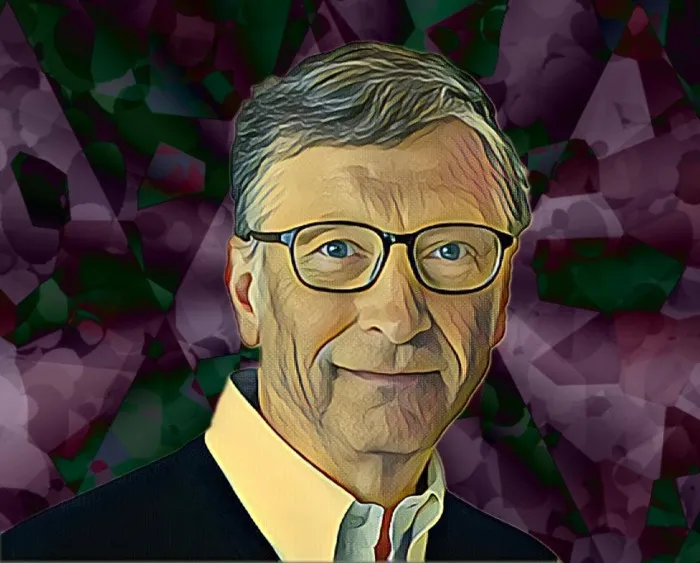
Bill Gates, the world’s fifth-richest person and co-founder of Microsoft, has pledged to direct most of his $200 billion philanthropic commitment toward Africa over the next two decades. His focus: supporting governments that put people’s health and wellbeing at the heart of their agendas.
Speaking at the Nelson Mandela Hall of the African Union headquarters, Gates urged African leaders to push forward with health and development efforts despite current global and regional challenges. “I recently made a commitment that my wealth will be given away over the next 20 years,” he said. “The majority of that funding will be spent on helping you address challenges here in Africa.”
Gates urges Africa-led health investment
Addressing over 12,000 attendees, ranging from government officials and diplomats to healthcare workers and youth leaders, Gates emphasized that the continent’s future rests in its own hands. “By investing in health and education, every country in Africa can build a more prosperous future. And that’s something I’m excited to support,” he said.
After his speech, Gates joined Paulin Basinga, the Gates Foundation’s Africa director, for a fireside chat on the continent’s development priorities and the kinds of partnerships needed to deliver results. African leaders and global voices echoed his call for sustained investment and cooperation. “This is a moment of crisis,” said Graça Machel, renowned advocate for women and children. “But it’s also a time for strong, lasting partnerships. Mr. Gates has walked this road with Africa before, and we are counting on him to continue.”
Ngozi Okonjo-Iweala, director-general of the World Trade Organization, highlighted that much of the continent’s health progress has been driven by strong leadership, community resilience, and practical partnerships. Amina J. Mohammed, deputy secretary-general of the United Nations, added her support for a renewed push toward inclusive development.
Gates backs African health leadership models
In his remarks, Gates called for more attention to primary healthcare, especially for mothers and children. “What we’ve learned is that making sure a woman is healthy and well-nourished before and during pregnancy makes a huge difference. And ensuring a child gets good nutrition in those first four years of life changes everything.”
He pointed to countries like Ethiopia, Rwanda, Zimbabwe, Mozambique, Nigeria, and Zambia as examples of how smart leadership and local innovation can deliver real progress—even under economic strain. From scaling up health services to using data to reduce child mortality and deploying new tools against diseases like malaria and HIV, Gates said African-led solutions are already showing results.
Reflecting on his decades of work across the continent, he added, “What’s always struck me is the hard work and ingenuity I’ve seen in the field—even in the most rural areas with the fewest resources. It’s incredibly inspiring.”
Gates also spoke about the future of technology in healthcare, particularly artificial intelligence. He praised young African innovators for embracing AI and thinking creatively about how it can solve local challenges. “Just like Africa leapfrogged traditional banking with mobile money, you now have a chance to build healthcare systems that integrate AI from the start.”
Buffett boosts Kenya’s health sector
The speech comes as Warren Buffett, Gates’ longtime friend and fellow philanthropist, announced a Ksh3.8 billion ($20 million) grant to Kenya through his charitable group, The Susan Thompson Buffett Foundation. The funds are part of Kenya’s 2025/26 budget and will support the country’s public health system, which has been under pressure since foreign aid started to decline in recent years.
Much of the funding shortfall began under former U.S. President Donald Trump, who cut contributions to agencies like USAID. The Kenyan Treasury confirmed that Buffett’s grant will be allocated directly to the State Department of Medical Services to help improve healthcare delivery across the country. Together, these commitments from Gates and Buffett signal a renewed focus on supporting African countries as they work toward healthier, more resilient futures.