


Table of Contents
The Dangote Petroleum Refinery, Africa’s largest and owned by the continent’s richest man, Aliko Dangote, has sealed a partnership with Japan’s Mitsui Chemicals to jointly produce petrochemicals in Nigeria, marking a fresh push to diversify Africa’s largest industrial complex.
The memorandum of understanding (MOU), signed at the Tokyo International Conference on African Development, will enable the partners to produce resins and fertilizers using feedstock from Dangote’s $20-billion, 650,000-barrel-per-day refinery in Lagos. Mitsui, which operates resin and PET ventures across Asia, will contribute technology transfer and expertise.
Strategic pivot into higher-value products
The move allows Dangote to move deeper into the petrochemical chain, turning crude-based inputs into plastics, packaging materials, and agricultural fertilizers. Mitsui said the collaboration aimed to “strengthen the living foundations and develop regional industries in African countries, including Nigeria.”
The refinery, inaugurated in January 2024, already anchors Africa’s energy supply. Its adjoining petrochemicals unit began producing 900,000 mt/year of polypropylene in March 2025, replacing 250,000 mt/year of Nigerian imports. Dangote also signed an exclusive export deal in May with global distributor Vinmar to market its polymers, creating an immediate global sales channel.
Expansion momentum and financing
The partnership comes as Dangote accelerates growth. Earlier this month, the group recruited former Shell executive David Bird as the first CEO of its refining and petrochemicals arm, shifting from construction to operations. The company also secured a $4-billion loan led by the African Export-Import Bank to lift refining capacity to 700,000 bpd and build regional storage hubs, starting with Namibia.
By integrating feedstock directly from its refinery, the Mitsui joint venture avoids foreign-exchange strains and logistics bottlenecks that have long undermined standalone petrochemical projects across West Africa.
Regional and global significance
Nigeria relies heavily on imported resins and fertilizers, costing foreign reserves and raising input prices for manufacturers. Local supply could slash Africa’s $15-billion annual plastics and chemical import bill while spurring new industries in packaging, consumer goods, and agriculture.
Globally, the tie-up reflects shifting dynamics: slower Asian demand has freed Japanese capital and expertise, while Africa’s population surge and industrialization offer fresh demand growth. For Mitsui, the venture marks its first significant foothold in sub-Saharan Africa’s chemicals market.
Dangote’s broader vision
Since launching phased operations in 2024, the refinery has scaled output from diesel and naphtha to gasoline and polymers, hitting 500,000 bpd by January 2025. Exports already reach Europe, the U.S., and West Africa. Dangote projects $30 billion in annual group revenues by 2026, spanning fuels, fertilizers, and petrochemicals.
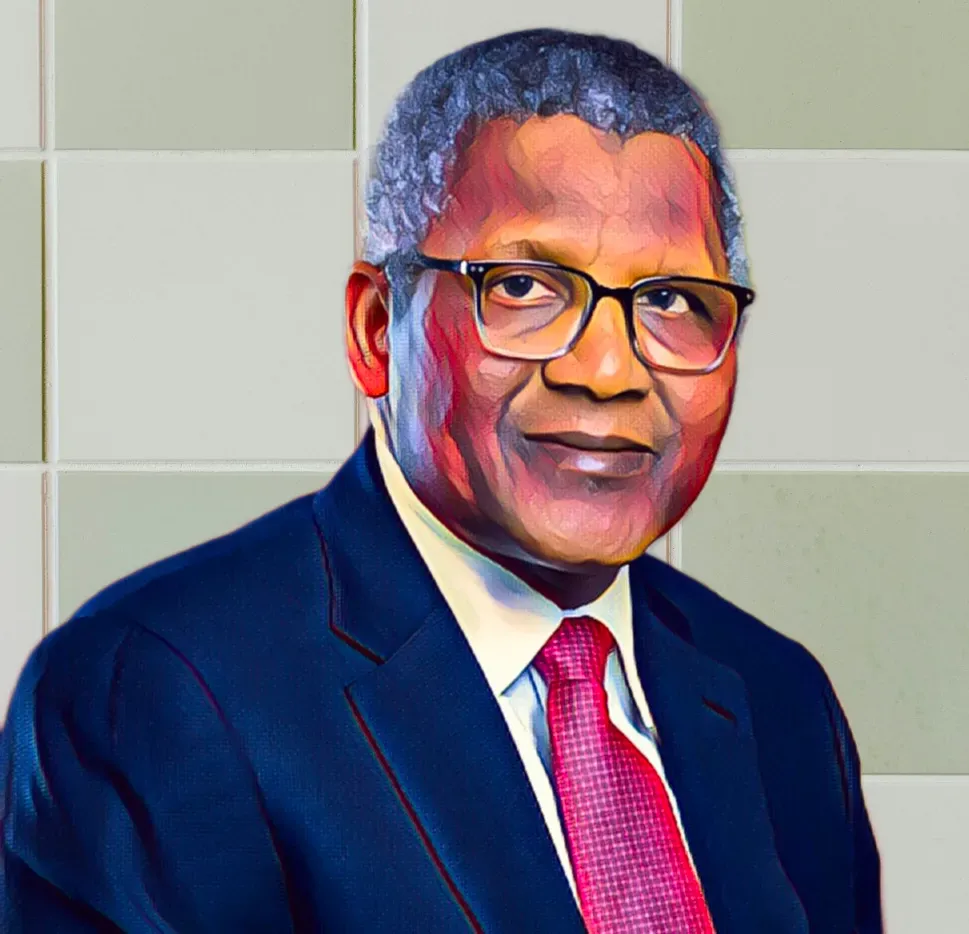
Aliko Dangote, Africa’s richest man with a net worth of $28.7 billion, has framed the complex as a cornerstone of energy and industrial independence. For Mitsui, the deal secures a strategic African partner. And for Nigeria, the project signals a chance to move from commodity exporter to industrial producer — reshaping the continent’s petrochemical landscape.