

Table of Contents
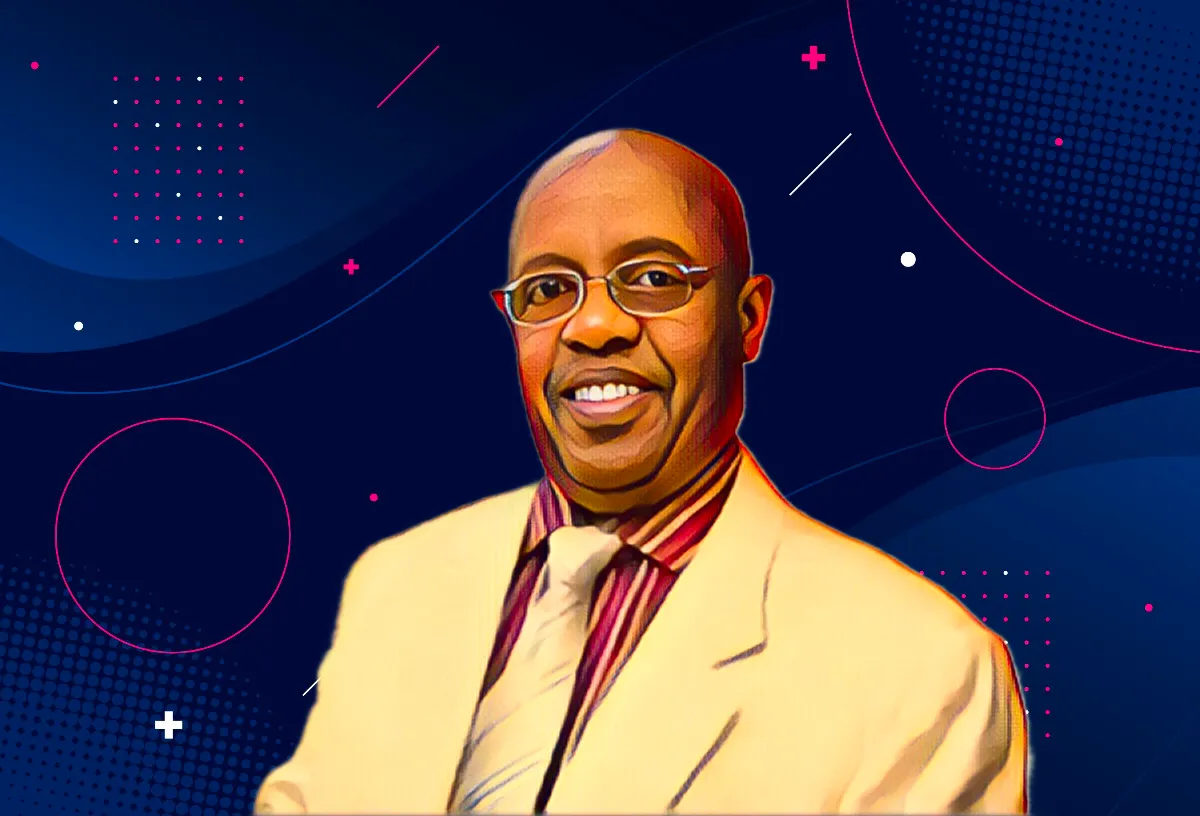
In Rwanda, the land of a thousand hills and eternal sun, few figures have risen higher or shone more brightly than Miko Alexis Rwayitare.
He was the engineer who, in 1986, lifted a bulky handset in Kinshasa and made Africa’s first mobile phone call. It was a moment both audacious and prophetic: a continent long tethered to unreliable copper lines had found its own shortcut to the future.
From that single call, Rwayitare built Telecel, Africa’s first cellular operator, and expanded it into more than a dozen countries. Later, he poured capital into vineyards, hotels, and broadband. Along the way, he became the first black African to own a Cape wine estate, the man who bought Kigali’s most famous hotel, and a strategist who knew when to sell.
Though much of his empire has since been broken up or sold off, the imprint of his vision endures. He remains, in many ways, Rwanda’s most successful modern entrepreneur.
The making of a telecom pioneer
Born in Rwanda in 1942, Rwayitare left for Zaire for secondary school and later Germany, where he earned a degree in electronic engineering in 1970. He returned to Zaire and rose to vice president of marketing at Gécamines, the state mining giant. Ambition soon pushed him into private business. In 1977, he launched Computer & Industrial Engineering, distributing Hewlett-Packard and Xerox products across central Africa.
The turning point came in 1986 with the creation of Telecel. At a time when even ministers couldn’t count on working landlines, he bet on wireless. Early handsets cost thousands of dollars, calls ran at $16 per minute, but the target market—politicians, diplomats, executives—paid. That niche revenue funded expansion.
Within a decade, Telecel was in 12 countries: from Uganda to Zimbabwe, Benin to Côte d’Ivoire. It was more than a network; it was proof that African entrepreneurs could engineer their own revolutions.
The billion-franc question: when to sell
But rapid growth came with turbulence. Politics in Zaire were volatile, regulators inconsistent, and infrastructure demands ballooned. Global telecom multinationals, flush with capital, were eyeing Africa. Rwayitare faced a choice: fight giants or cash out.
In 2000, he made the defining deal of his career: selling roughly 80 percent of Telecel International to Egypt’s Orascom Telecom, led by billionaire Naguib Sawiris, in a transaction valued between $147 million and $213 million.
For Orascom, it was an instant gateway to Africa’s growth markets. For Rwayitare, it was vindication—one of the largest telecom deals on the continent at the time, and a chance to pivot from operator to investor.
The decision showed his instinct for timing. He had built the empire, proved the model, and exited before the capital demands became overwhelming. Few African entrepreneurs of his generation managed a sale of that scale.
Wine, hotels, and broadband
After Telecel, Rwayitare relocated to Johannesburg and diversified. He founded Mikcor Investment Holdings, channeling capital into sectors that fused business with lifestyle.
Mont Rochelle Estate
In 2001, he acquired Mont Rochelle in Franschhoek for 17 million rand (about $2.1 million). It was a first: no black African had ever owned a Cape wine estate. He expanded production, introduced the “Miko” label, and stamped his name on the estate’s flagship restaurant.
Mont Rochelle was more than a vineyard—it was a signal. Just as he had broken ground in telecoms, he was now dismantling barriers in South Africa’s wine industry.
Hôtel des Mille Collines
In 2005, he bought Kigali’s Hôtel des Mille Collines, remembered worldwide as the refuge during Rwanda’s 1994 genocide and immortalized in Hotel Rwanda. The acquisition from Belgian airline Sabena and state partners was as symbolic as it was commercial. Rwayitare planned renovations to elevate the 112-room hotel to international standards and envisioned it as a hub for Rwanda’s tourism revival.
Broadband and beyond
Never abandoning technology, he acquired Goal Technology Solutions in 2005, a broadband company deploying internet and voice via power-line communications. Risky but forward-looking, it was consistent with his career-long instinct: invest early in infrastructure that could redefine access.
The unraveling and what remains
Rwayitare died suddenly in Brussels in September 2007 at age 65, in the midst of planning what he hoped would be his final masterpiece: the Academy of African Excellence, a tuition-free university to cultivate a generation of African leaders in ICT, health, and agriculture.
Without his driving force, the empire began to change shape. Mont Rochelle was sold in 2014 to Sir Richard Branson’s Virgin Limited Edition after years of underperformance. Under Branson’s stewardship the estate has thrived, buoyed by global marketing power, yet the “Miko” label still endures as a quiet tribute to the man who first planted his name on the vines.
The Hôtel des Mille Collines, meanwhile, cycled through management changes, including a period under Kempinski. The Rwayitare family retained connections for a time, but the bold upgrades he had envisioned—new facilities, expanded reach, an elevated tourism presence—never fully materialized.
Telecel, the company that defined his legacy, also fragmented over the years. It survives in pieces across Africa, but the once-unified brand has long since drifted away from its founder’s identity.
Rwanda's most successful modern entrepreneur?
By any measure, Miko Rwayitare remains Rwanda’s greatest modern entrepreneur.
He launched Africa’s first cellular operator and sold it in a blockbuster deal. He broke racial and cultural barriers by acquiring a South African wine estate. He reclaimed Rwanda’s most iconic hotel. He dreamed of training Africa’s future leaders through a world-class academy.
Yes, many of his holdings were sold. But legacies are not measured solely in assets retained—they are measured in industries opened, barriers broken, and futures made possible. Rwayitare reshaped how Africa connected, consumed, and imagined itself.