

Table of Contents
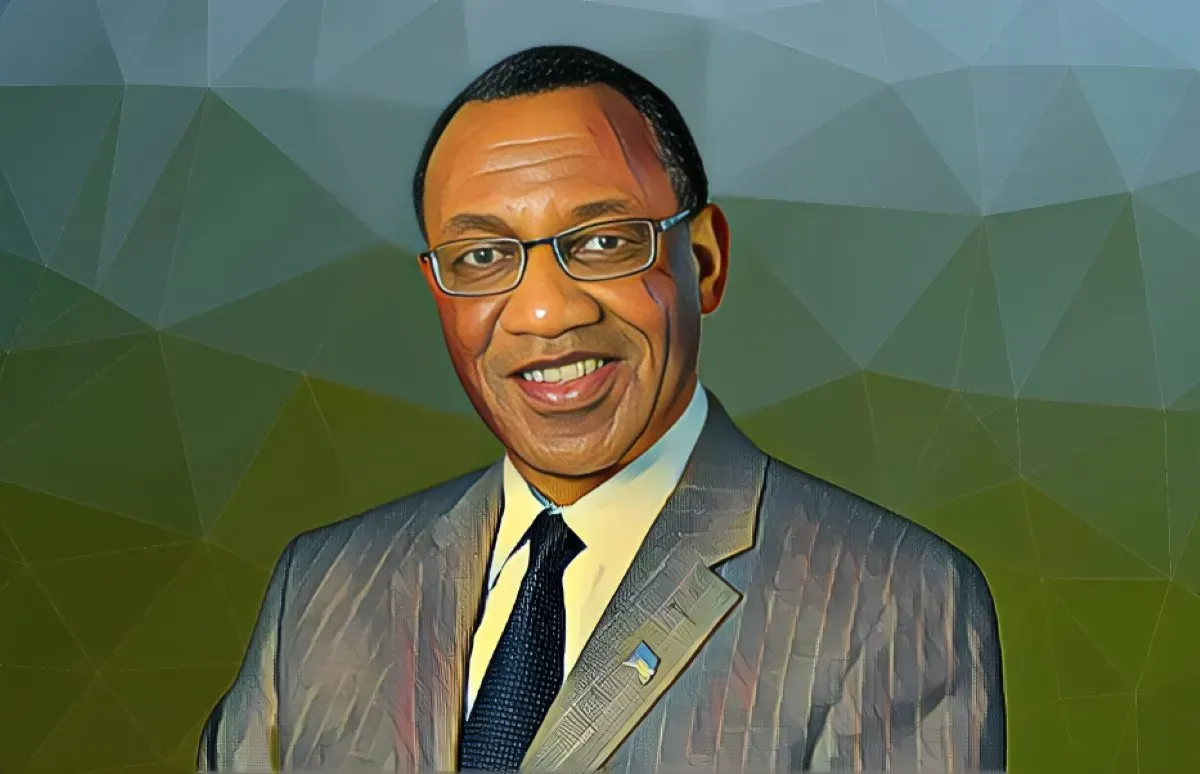
Thom (Dr. Thomson Frank) Mpinganjira remembers the moment his childhood ended. “At age eleven my father was sent to detention,” he says, the dates etched in his mind: December 21, 1972 to May 13, 1975. The charge was belonging to a banned religious organization. Hope thinned, money was tight, and the boy from Kanjedza, a suburb of Blantyre, learned early that progress in Malawi rarely comes without resistance. “That was a very dark period full of strife and no hope,” he says. It also forged an ambition that would carry him from a corner office with seven staff to the helm of FDH Financial Holdings, now the most valuable indigenous-owned company in the country.
Today, at 64, the accountant-turned-financier is Malawi’s first homegrown billionaire. He speaks with the dispassion of a numbers man and the conviction of a founder who’s had to fight for every inch. “Doing business in Malawi,” he quips, borrowing a local saying, “is like climbing Mulanje Mountain on a bicycle.”
He recently chatted with Mfonobong Nsehe of Billionaires.Africa and told the story of how he built a financial empire from scratch, weathered political storms, and continues to shape his Malawi’s economic landscape.
You’ve become Malawi’s first homegrown billionaire, but let’s start at the beginning: what was your childhood like, and how did it shape your ambition?
I was born on 28 February 1961 in Blantyre at Queen Elizabeth Central Hospital and raised mostly in Kanjedza suburb, Blantyre, Malawi. I was born second in a family of eight with four boys and four girls. Went to Primary school in Blantyre, Secondary school at Zomba Catholic Boys School in Zomba and University in Blantyre at the University of Malawi, Polytechnic. At some point at age eleven my father was sent to detention on 21 December 21, 1972, up until 13 May 1975, on grounds that he was a Jehovah witness, a banned religious organization in Malawi at the time. That was a huge setback growing up and studying and was to shape my future immediately and, in the future, as that was a very dark period full of strife and no hope.
Was there a defining influence from your family or community that pushed you toward business and finance?
Absolutely. My father, a Chartered secretary and Accountant, ran an import trading business called Metropolitan Trade Agencies, which was importing tailor made suits for men and upmarket clothing for women mostly dresses and coats. His entrepreneurial spirit and financial acumen exposed me early to the world of business. During holidays while I was at Secondary school, he would take me full time at his office as a bookkeeper, where I would write up his books of accounts. He would also take me whenever he was travelling on business and this saw me travel to all major cities and towns of Malawi, carrying his briefcase. Between 1970 and 1972 he took me along to Zambia on his business travels that saw me travel to Lusaka, Livingstone, Kitwe, Ndola, Luanshya etc both by road and air. Over time, I’ve also been motivated by a desire to leave a legacy and generational wealth for my family, emulating successful European and Asian family enterprises in Malawi, and contribute meaningfully to Malawi’s socio-economic development. This was the single major influence. When it came to choosing courses to study in University, I naturally chose Business Studies and Accounting. That is all I ever wanted to study.
You studied accountancy before moving into entrepreneurship. At what point did you realize you wanted to build your own company rather than remain a professional?
Very true I studied as an accountant, the UK Fellow of the Chartered Certified Accountant (FCCA). Accountancy provided a solid foundation in financial systems and governance. After qualifying as a Chartered Accountant in 1984, I worked 5 years as an External auditor, 5 years in Industry, 3 in Banking before I joined the nascent Capital market in Malawi first as CEO of FDH Stockbrokers and then as first CEO of the Malawi Stock Exchange. That move was the game changer. 18 years after leaving University I saw opportunity in Government Securities and grabbed the opportunity. I was the first Malawian to get involved in Government securities trading. In any event at that time, in December 1999 I was a CEO no longer an accounting professional.
I leveraged my experience and network to establish First Discount House FDH), dealing exclusively in Government securities, with the Board approval of the Malawi Stock Exchange. The company opened its doors on 1 April 2002, and the first trade was done on 8 April 2002. That marked the beginning of FDH. That journey continued with the establishment of FDH Bank Plc in 2008, FDH Money Bureau in 2009, the acquisition of the Government owned bank, Malawi Savings Bank on 2 July 2015 and FDH Properties in 2017. The most recent, the TFM Centre of Excellence opened its doors in March 2025 named in my honor - Thomson Frank Mpinganjira (TFM)—to nurture leadership excellence in Malawi.
In respect of FDH Bank, the game changer was when I put it (listed) on the Malawi Stock Exchange in August 2020 at Malawi Kwacha (Mwk)10.00 per share. Today that share price stands at MWK679.60.
What inspired you to start FDH Bank, and how did you navigate the regulatory and financial hurdles in Malawi’s banking sector at the time?
It is funny how I vowed not to venture into business after I had worked on a USAID monitoring project of all their loan funded micro and small scall businesses in Malawi in 1987- 88. It was a disaster and everyone was struggling, while some lost their property and 90% of the businesses were beyond Intensive Care Unit (ICU). My experience was very bad.
What inspired me really is the information and knowledge I picked up through dealings as first Malawi Stockbroker and First CEO of the Malawi Stock Exchange (MSE). Through my interactions with the Reserve Bank of Malawi (financiers of the MSE) and the SADC Stock Exchanges, the people I networked with in these countries especially indigenous people were owning and running financial Services businesses. That is when I knew it was doable. I got into the Capital markets on 1 September 1997 and in December 1999 my brother who was a Consultant came to see me to discuss a project proposal. I went through his papers and statistics and 30 minutes later I hired him to prepare a project proposal that was to become the “First Discount House” dealing exclusively in Government Securities. This was to be the second Discount House to be established in Malawi. I was just in the right job, the right place with knowledge and network. It was clear to me that this business was profitable from day one. This was a different type of business and industry one I understood very well so I set about putting together everything.
First hurdle: As first CEO of MSE I was contractually bound to honour my contract and set it up fully. So, my first task was to ask the MSE Board to allow me to set up this institution and participate at shareholder level while running the MSE.I remember it was on September 11, the day the twin towers were bombed. I was stuck in my office all day as the Board deliberated. I was called around 6pm to be informed the Board had given conditional approval that I could proceed with the setting up. That was a game changer.
Second hurdle: The minimum Capital requirement to set up a Discount House was USD1,500,000.00. This business needed a corporate anchor shareholder if it was to gain credibility and attract serious depositors. I approached Malawi Development Corporation (MDC) and their Board approved up to a maximum 25%. This meant I had to find investors for the remaining 75%, as I could not raise that on my own. I convinced a carefully selected team of four, mostly university days colleagues to join me in the project. As five of us we each would contribute 15%, sharing the burden of raising capital. Sadly, as it turned out my four colleagues dropped out one by one and in the end, I was left all alone. I now had to convince MDC to take up the difference. To cut a long story short after very difficult discussions, MDC did not pull out and instead they agreed to take up 55% and I the remaining 45%. Raising 45% was a nightmare scenario but I had to save the project.
Third Hurdle: On 4 April 2001, after the Reserve Bank submitted my application to the Minister of Finance for approval, the Minister refused to grant the licence on the grounds the Government of Malawi had agreed with the IMF (International Monetary Fund) to disinvest from the Financial Services. All money and time spent down the drain. After discussing with the Governor and General Manager of the Reserve Bank of Malawi, I was advised to look for alternative corporate investors because the business was very viable and they were in full support. To cut a long story short I roped in Old Mutual Malawi 20%, Press Corporation 30%, Kingdom Financial Holdings (Zimbabwe 25.1%) and myself 24.9%. By the grace of God, the licence was signed off on 21 July 2001and the First Discount House opened its doors on 1 April 2002.
Fourth Hurdle: By December 2005 the Discount House business had plateaued primarily due to changes in the Regulatory environment, and the Board and shareholders were restless contrary to the cashflows and projections I had submitted when inviting them as investors. I scanned the environment and concluded that full Commercial Banking was the solution going forward. This is what motivated the establishment of the FDH Bank. The Regulator directed that only after Press Corporation Limited (PCL) (majority shareholder in the National Bank of Malawi) exited FDH. That was tough to navigate as PCL were unwilling to exit, hammered us on the exit price. In July 2006 PCL exited. The process of banking commenced.
Fifth Hurdle: Raising capital to capitalize the Bank. I suggested to the Board to list the First Discount House on the MSE to raise the capital so they would not have to dip into their pockets so soon after setting up the Discount House. We got provisional approval from MSE to proceed with the listing and appointed advisors. The day we were expecting Final approval we received a letter from the MSE advising that final approval had not been granted. This was a complete deal breaker, which led to cancellation including the listing launch cocktail set for the following day with invitations sent to over 300 guests and thousands of prospectuses printed. I was left with a staggering bill to pay all advisers and contractors. Worse was to explain to the Board what had just happened, deal with the reputation fallout with potential exodus of customer deposits. This was in July 2007. It was a complete and unmitigated disaster. Just to add that along the way we considered two acquisitions, Finance Bank Malawi, which was under management for regulatory breaches, and subsequently, Nedbank Malawi from Nedbank South Africa. Neither materialized, hence we decided to go greenfield.
Sixth Hurdle: Acquisition of Malawi Savings Bank: The greatest challenge we had was to compete with exiting Banks some over 100 years old when we started from scratch. Building branches was very slow, never mind securing ideal sites. And the mickey mouse image was not helping at all in a very competitive market plus being labelled an indigenous bank. Corporate and international organisations business was out of reach. Then boom!! Government is planning to sell off two or three Banks and Financial institutions. I said to my team lets plan to find money and buy off Malawi Savings Bank MSB), the bank with the widest coverage in Malawi. In fact, in all districts but one. The restricted and limited due diligence stank. The books were bad such that out of 36 bid briefing attendees FDH turned out to be the only Bank that submitted a bid, as we discovered on the bid opening date. I understood why because it was too risky, but for me the key issue was instant countrywide presence. We turned out to have submitted the best technical and financial bids of all bids (others bid for the other two institutions. And best. And then trouble started after the announcement when civil society organisations (CSOs), Parliament and opposition parties opposed the sale. We had already paid, within 5 days of the announcement. The President stopped the sale and called for a national conference to hear the views of all parties for and against. This sale had been prompted by IMF and donors’ conditions regarding financial sector reforms. So, for some two months we just sat waiting. Finally, the President approved the sale and on 2 July 2015 we put pen to paper. Suddenly we were now taken seriously. We reckoned it would have taken us 10 to 15 at least years to achieve the same size through this acquisition. To give you perspective, we had 12 ATMs. Suddenly we had over 80 ATMs across the country. We had 12 service centres and suddenly we had over 65 combined.
Of course, we had to clean up the loan book and a whooping MWK40 billion was written off between 2015 and 2018 but that paled into insignificance when compared to the accelerated growth. Calls for recapitalizations, threats of administration throughout the same period. But we cleaned up and recapitalized too.
7th Hurdle: MSB Acquisition Condition Precedent – List the Bank within 3 Years: So, we were required, in the sale and purchase agreement, to take the Bank to the Stock Exchange within 3 years from 2015 so the Malawi Government could sell its residual stake to the Malawian public. We missed 3 years ending 2018 because the cleaning up process was not complete. We deferred to do this in 2020 based on 2019 audited results. Then Covid happened. Against the protests of my fellow shareholders (they wanted instead to buy me out) and subsequently even the Lead Transaction Advisers, who both saw the listing failing, I refused to halt the process. Advisers said the institutional response from the pathfinder process was lukewarm, usual underwriters including Old Mutual pension funds were not keen to underwrite etc. I set up the MSE and listed 9 of the 11 companies so I knew exactly how to circumvent these challenges. To my consternation Government turned round at the last minute and refused to offer their residual 5.04% to the public and nearly scuppered the listing. We managed to get MSE approval to proceed with a 20% IPO (instead of 25% minimum required). Against all odds I cobbled together underwriting and the listing went ahead at Mwk10.00 (the lead market advisory firm told the market the correct price was Mwk6.00 so recommendation was a “No Buy”. The offer was oversubscribed and on 3 August 2020 FDH Bank was listed on the MSE. Today the company that was valued at a mere Mwk69 billion is now valued more than MWK4 trillion.
FDH Holdings is now the most valuable indigenous-owned company in Malawi. What were the key strategic moves that got you here?
Agility: In decision making and implementation. So FDH moves quickly and easily.
Acquisition of Malawi Savings Bank from Government was a game changer. Though a very painful cleanup process. Suddenly a small bank had countrywide coverage and was taken seriously.
Focus on digital banking. FDH Bank was at the forefront of Digital Banking in Malawi and kept winning awards as the most innovative bank, which in turn has improved investor confidence.
Listing the Bank on the Malawi Stock Exchange and the timing of the same, during Covid. Though not foreseen, but the move of the IPO price from MWK10.00 to over Mwk600.00 in just 5 years, overtaking “giants” is testament.
Finally: A robust corporate governance and compliance regime has built investor and regulatory confidence.
Banking in Malawi was once dominated by foreign-owned institutions. How did you carve space for an indigenous bank to thrive against that backdrop?
We differentiated FDH by positioning it as a bank deeply attuned to local needs. Our agility, local decision-making, technological innovation, extensive footprint, and community engagement helped us build strong customer loyalty. Rather than imitating foreign institutions, we forged our own identity rooted in understanding and serving Malawians.
Foreign banks have a huge support base or package from Head office and sister network outside the country. They even have very easy, nice and soft lines of credit and access to forex. Their major challenges include (1) speed of decision making. Referrals to Head office heavily slow down decision making, (2) lack of understanding of local sensitivities and environment by Head Office can pitch their risk assessment too high and appetite very low (3) they do not like expansion of network preferring to make money from a small network. This may be good from a cost perspective but can limit local confidence. Yet in their Head Office country they have huge networks of branches and service centers. We have none of these bottlenecks.
What role has technology and digital banking played in FDH’s rise, and how are you preparing for the next decade of disruption?
Technology has been a cornerstone of our growth. FDH Bank is recognized as a digital leader in Malawi winning awards, driven by a tech-savvy workforce and continuous investment in future-ready solutions. We’ve pioneered innovations like mobile loans and WhatsApp banking. Looking ahead, we’re investing in AI-powered financial services, cybersecurity, and expanding our digital footprint to stay ahead of industry disruptions. Perhaps the key part is giving space to our youngsters in IT to innovate freely and have access to the highest offices with their ideas. The results were truly amazing.
Every entrepreneur faces setbacks. What was the toughest period in your career, and how did you get through it?
My first setback was the Minister refusing to issue a banking licence, which almost scuppered the whole business idea
Convincing giant of industry in Malawi, Press Corporation, to exit FDH so we could set up FDH Bank. Those were some of the nastiest times at Board level plus the risk (materialized) that FDH would not get business from that giant group. But it had to be done.
The acquisition of Malawi Savings Bank, a government-owned institution that had been incurring perpetual losses. The transaction, though driven by the IMF Financial sector reforms and aid conditions, faced massive political resistance (including in Parliament) thus public backlash from the politicians prompting. Everyone had an opinion. We responded with transparency and strategic stakeholder engagement, presenting the facts and long-term benefits. It was a true test of leadership and resilience, and through faith and determination, we persevered. From 2015 before and after the acquisition, the matter only settled down in 2024.
You’ve faced controversies and even legal challenges in the past. How do you reflect on those moments now, and what lessons do you take from them?
Not just legal but political challenges too. I have faced them all. I will say more in a book I am writing. I thank God because out of each such challenge something good has come out. The FDH Bank has grown beyond all expectations during the same period. A new group of companies (Ekhaya Group) has been born that now comprises of fast moving consumer goods (FMCG), Hospitality, Technology and Cattle feedlot as part of a vertical FMCG business. I have learnt valuable lessons in resilience, humility, and staying true to my principles. Every setback has been an opportunity for growth and reflection. As I said earlier, I will tell it all in my new book.
Running a financial institution in Malawi comes with political pressures. How have you managed the relationship between business and politics?
Operating a financial institution in Malawi requires navigating political dynamics with diplomacy and a clear sense of purpose. I’ve always maintained that business should remain independent and focused on value creation. Unfortunately, it is not always easy for people and politicians to understand this. Changes of Government in our environments where Government is the largest contractor in the economy can be traumatic. We have, however, engaged constructively with government but steered clear of political involvement. This explains how the Bank has grown so clearly the public like what they see out this engagement.
Many investors view Malawi as a challenging place to do business. What’s your candid assessment, what works and what must change?
There is a quote from a then seasoned businessman over 25 years ago that “. doing business in Malawi is like climbing Mulanje mountain on a bicycle.” Now, Mulanje Mountain is the highest in Malawi and peaks at 6,000 feet, which gives you perspective of this quote. I think the economic environment is worse now than it was 25 years ago.
Malawi holds immense potential, but unlocking it requires major structural reforms—particularly in infrastructure, energy, and regulatory efficiency. You can top it up with corruption. What works well is our entrepreneurial spirit and resilience. However, we must improve the pace of implementation and ensure policy consistency across administrations over the medium to long term. The Malawi 2063 development blueprint is a promising framework that, if followed diligently, can guide us toward sustainable progress.
How do you see the role of indigenous companies in shaping Malawi’s economic future?
Indigenous companies are the cornerstone of sustainable economic development. They reinvest in local communities, understand the nuances of the domestic market, and build long-term value. Their role in shaping Malawi’s future is not just important—it is indispensable. What we need is a critical mass of serious indigenous companies not just tenderprenuers that disappear with each new Government that comes.
What industries beyond banking and finance do you believe hold the most promise for Malawi’s growth?
Beyond banking and finance, I see significant potential in commercial agriculture value chains, food processing, technology, mining, and focused tourism. These sectors can drive inclusive growth, create jobs, and position Malawi competitively within the region.
How would you describe your leadership style, and how has it evolved as FDH grew from a startup into a market leader?
My leadership style is transformational. From our humble beginnings with just seven employees in a small corner office, to leading a bank with over 1,000 staff and the largest branch network in Malawi, I’ve always practiced an open-door policy. This approach fosters trust, enhances communication, and empowers teams. As FDH grew, I evolved by delegating more, trusting my executive team, and focusing on strategic direction and vision. Most importantly we have heavily invested in our people, sending them externally for executive management development programmes and this has paid off. When I left in 2020, we had ready youngsters to takeover and, if I am to be honest, they have taken FDH into territory that truly amazes me. Now they are in Mozambique and knocking in two other African countries. Three in fact. Amazing. Really amazing.
What sacrifices have you had to make on the personal side while building FDH into what it is today?
Building FDH has come with significant personal sacrifices—long hours, missed family milestones, and enduring public scrutiny. I’ve faced personal persecution simply because of my success. To get FDH to where it is, none of my partners understand and will ever understand what I have suffered personally. Almost all of this is in the public domain. I have been the face of FDH and paid a huge price for it. I remain deeply grateful for the unwavering support of my family throughout this journey.
As a father and family man, what values are you trying to pass down to the next generation?
As a father and family man, I emphasize on integrity, discipline, and service. I want my children—and young Malawians—to understand that true success is not measured solely by wealth and success, but by the impact one makes and the legacy one leaves behind. I am pleased to see that the generation that has taken over from me has fully embraced these values. May God continue to guide them so that at the next passing on of the baton, this continues. They have truly embraced my goal of generational wealth and legacy.
Do you envision expanding across borders into regional markets?
From the very beginning, our vision has been clear: “To make FDH a leading provider of first-class financial solutions in Malawi and Southern Africa.” Having consolidated our position locally, we are now actively exploring regional expansion. In August 2025, we achieved key milestones—acquiring a license from the Reserve Bank of Zambia to operate a Forex Bureau (Bureau de Change) in Zambia and another banking licence in Mozambique purchasing Ecobank Mozambique. Our digital platforms provide scalability, and we are building strategic partnerships to expand sustainably. The goal is to transform FDH into a regional financial powerhouse but may not restrict ourselves to the Southern Africa region. Tribute to the team I left behind.
Finally, what advice do you give to young Malawians who look at your story and hope to build their own billion-dollar businesses one day?
Put God first. Start with a clear purpose. Develop a personal Vision. Build your network, be patient, do not be in a hurry they say easy come easy go, stay ethical, and never stop learning. Most importantly embrace humility. Success is a journey, not a destination. If I could do it, so can you—but you must be willing to work harder than anyone else around you.
On a Lighter Note: Apart from your popular luxury sunglasses, how does Malawi’s first billionaire unwind and spend his money?
Laughs) I enjoy quiet time with my family, attending church—I'm a proud Seventh-day Adventist—and now travel a lot. The sunglasses? The story behind them is interesting. When I lost my wife to Cancer in January 2019, I was overwhelmed by grief to the point where I decided to hide behind the sunglasses. Now they have become part of me. I am, of course, now happily remarried to my wife Triephornia. More importantly, I find fulfillment in philanthropy. I set up and my daughter runs the Thomson and Barbara Mpinganjira Foundation, established in memory of my late wife, and the Blantyre International Cancer Centre (IBCC), the first Radiotherapy Cancer facility and cancer hospital in Malawi, launched in March 2024.
The IBCC is a 50/50 joint venture between us under the ‘Thomson & Barbara Mpinganjira Foundation’ and the Luxembourg, Belgium based company called OMCC and has cost an estimated amount of €5,280,255,274.
Before its establishment, radiotherapy cancer patients had to seek treatment abroad, costing families and the government millions annually. Supporting such initiatives is how I choose to spend both my time and resources. I am now expanding my philanthropy activities in the health services sector, amongst other philanthropic activities.