

Table of Contents
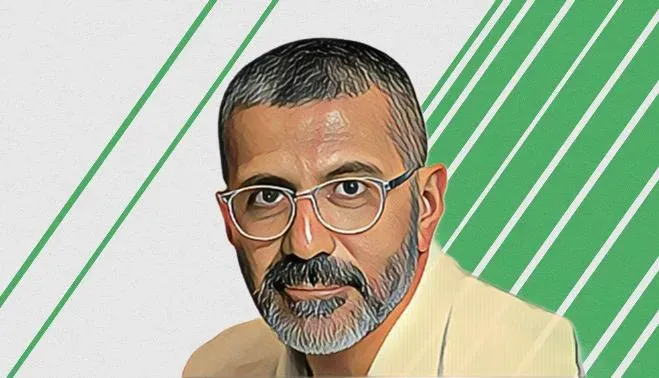
Klarna’s first day on the New York Stock Exchange added a fresh shine to Bassim Haidar’s venture portfolio—and likely a tidy windfall. The Nigerian-Lebanese billionaire is the owner of Knuru Capital, a Dubai-based investor that backed Klarna years before the Swedish buy-now-pay-later pioneer finally went public this week. Klarna priced at $40, opened at $52 and was valued at about $15.1 billion at the offer, climbing intraday toward $19.7 billion—re-rating a company that swung from boom-time heights to a brutal reset, then back to public-market grace.
Knuru isn’t public about its Klarna check size, but filings and investor databases list the firm among Klarna shareholders. The range in Knuru’s deals provides a useful guide: the firm led a $5 million seed for UAE health-fintech Klaim; it led $15 million for fashion label The Giving Movement; and it joined the $25.24 million Series C for Madrid AI-health company Savana. That pattern—deploying from low-single-digit millions to the mid-twenties—frames how a Klarna position might have been sized.
What might the payoff look like? Here’s one reasonable scenario. If Knuru accumulated stock in or after Klarna’s 2022 down round—when the company raised $800 million at a $6.7 billion valuation, after peaking at $45.6 billion in 2021—then the IPO’s $15.1 billion offer value implies roughly a 2.3x multiple on paper (and nearer 3x against about $19–20 billion in early trading). On a hypothetical $10–$15 million ticket, that pencils to an unrealized gain in the low- to mid-tens of millions. If Knuru bought earlier, at richer private marks, the return would compress; if it bought later or averaged down, the multiple could be higher. Either way, given this week’s pricing, Haidar can plausibly say Klarna’s listing “worked.”
Klarna’s float was also—finally—rational. The company and selling holders offered 34.3 million shares at $40, above the range, bringing in $1.37 billion and signaling a healthier IPO market that doesn’t need a face-melting first-day pop to count as a win. The stock finished day one up modestly, around the mid-$40s, a move cheered by market pros as a sign of sensible pricing rather than froth.
Knuru’s Klarna exposure fits a portfolio that blends fintech and marketplaces across emerging and developed markets. Public and private databases show stakes in names like Chime, Groq and Persado, alongside regional standouts such as Alma Health, NOW Money, Jiji, The Luxury Closet and more. On its own site, Knuru highlights multiple deals across MENA and Southern Europe, consistent with a Series A–C focus and an ability to provide private credit lines as companies scale.
The Klarna bounce also caps a long entrepreneurial arc for Haidar. Born in Nigeria to Lebanese parents, he launched Intercomm in 1991 and co-founded GMT Group in 1995, building what became a leading procurement-and-logistics outfit in West Africa. In 2003 he started Channel IT to supply and service Nigeria’s fast-growing mobile networks; the group later spawned Channel VAS, rebranded as Optasia, an AI-led platform that powers micro-lending, airtime advances and data-monetization products for mobile operators and banks across 30-plus countries. Today, Haidar corrals his ventures under BH Holdings, his personal group platform.
Haidar’s newer bets reflect the same “infrastructure meets inclusion” bent. He co-founded SafriCanna, a South African medicinal-cannabis producer that secured EU-GMP certification to export into Europe’s medical market. He also launched Finergi, a utility-finance play that fronts smart, prepaid credit for electricity, gas and water—designed to help households and SMEs in emerging markets smooth consumption and payments. The conglomerate approach is stitched together at BH Holdings, which he uses to house both founder-led operating companies and later-stage investments like Knuru.
He’s also stepped into public life. In 2024, South Africa appointed Haidar as its Honorary Consul in the United Kingdom, where he’s focused on trade ties, technology collaboration and life-sciences exchange between the countries—a role that dovetails with SafriCanna’s export push and his B20 policy work.
On politics, Haidar has emerged as one of Britain’s more conspicuous donor-migrants. After years backing the Conservatives, he shifted toward Nigel Farage’s Reform UK this spring, pledging as much as £1 million and paying £25,000 for a place at a January fundraiser’s top table—an emblem of how the UK’s business-donor class has splintered amid tax and regulatory angst. Donation-tracker tallies also put him among notable contributors during the year.
For Klarna, the IPO marks redemption after a bruising reset from 2021’s $45.6 billion private mark to that 2022 trough. For Haidar, it’s proof that Knuru’s mix of growth-stage equity and structured capital can capture turns in the cycle, particularly in fintech where sentiment swings are violent but addressable markets remain vast. If his Klarna bet was sized the way Knuru usually invests—and if the firm leaned in when prices were low—then the billionaire likely just made bank.