


Table of Contents
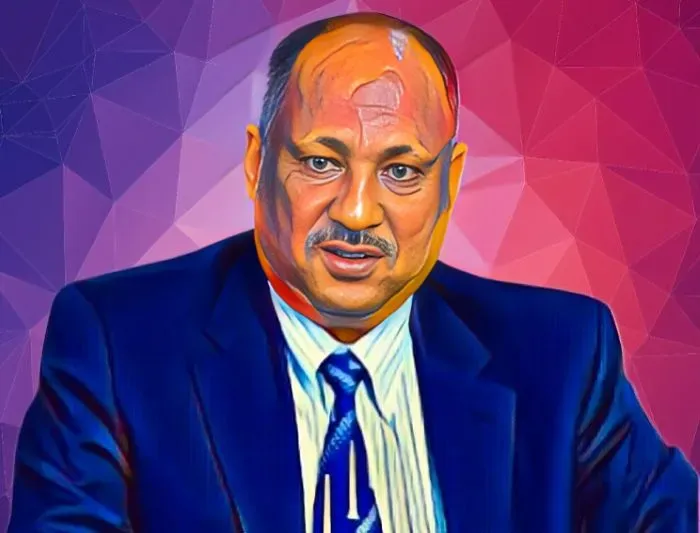
For years, the name Abubakar “Abu” Joho has been vector to Kenya’s cargo corridors—a figure casting long shadows over Mombasa’s port logistics, railway freight routes, bulk storage yards, bonded depots and last-mile trucking. His influence, rooted in business acumen and deep political ties, once seemed unassailable. But now, as Kenya’s Supreme Court invalidates key deals and rivals surge into corridors he long controlled, Joho’s empire is facing challenges of its own making.
To understand where Joho came from—and why the system that lifted him is now probing his foundations—we need to trace his past, map his network, and watch how he handles fresh pressure.
From tides to terminal: origin and ascent
Abu Joho is the elder brother of Hassan Ali Joho, Mombasa’s former governor and now Cabinet Secretary for Mining, Blue Economy & Maritime Affairs. That link has rooted Abu in both port business and coastal politics. Through his brother’s decades in county government, Abu consolidated access to land leases, permit pathways, political goodwill—and occasionally, influence over how contracts got awarded.
His logistics arc began in Autoport Freight Terminals Ltd (AFTL)—a company that grew into the spine of his control over inland and coastal freight. Autoport secured prime leases, including a controversial 45-year lease for 26 acres at Nairobi Freight Terminal (NFT), under terms critics say entrenched his reach. He also leveraged special SGR (standard gauge railway) tariff arrangements to move bulk goods—fertiliser, grain, steel—at concessional rates, squeezing competitors with thinner margins.
To complement Autoport, Joho invested in Portside Freight Terminals Ltd, a sibling vehicle linked by overlapping directors and addresses. Portside was approved to build a second bulk grain terminal at Mombasa—until the Supreme Court voided that licence in June 2025, citing unconstitutional procurement practices.
Other enterprises tied to his network include Prima Pest & Bins Ltd (waste management), East Africa Terminals Ltd (liquid storage), Aftraco Ltd (emerging in court documents tied to land and infrastructure), and varied real estate and fertiliser trading fronts. These layers, though less public, deepen his vertical grip from terminal to yard, storage tank to plot.
Political gravity and alliances
In Kenya’s networked power structure, Joho’s influence isn’t strictly commercial. His brother Hassan, once a coastal populist kingmaker, now holds a national post overseeing maritime affairs under President William Ruto’s administration. That proximity has given Abu visibility—and sometimes protection—within corridors where state and business intersect.
Yet those alliances carry risks. As litigation challenges surface, critics allege that part of Joho’s dominance relied too heavily on political patronage, opaque permits and exceptions that skirt procurement norms. The Supreme Court’s 2025 ruling, for example, struck at just such structural shortcuts. In the ruling, the judges explicitly rejected the use of “specially permitted procurement” as a loophole to bypass open, competitive bidding. The message: even politically connected operators must adhere to constitutional standards.
Rivalry, reputation and courtroom scars
No Joho story is complete without Mohammed Jaffer, the man whose 30-year grip on grain terminal operations became the foil to Abu’s expansion. Jaffer’s company, Bulkstream Ltd (formerly Grain Bulk Handlers), has long dominated mechanical bulk grain handling in Mombasa. When Abu entered the logistics and fertiliser space, tensions escalated.
In court in 2025, Abu accused a Jaffer aide, Matilda Kinzani, of engineering a smear campaign. He testified that defamatory messages circulated online claimed he was involved in drug dealing, land grabbing or colluding to embezzle KSh 40 billion with his brother. He described how those lies reached his children and wreaked psychological damage.
“This is not healthy competition,” he told the magistrates. Charges were filed under Kenya’s Cybercrimes and Computer Misuse Act, implicating Kinzani in four counts of defamation. Jaffer has denied direct involvement in the campaign.
The rivalry, however, runs deeper than courtroom drama. As Joho’s vehicles sought to grab share of grain throughput or fertiliser corridors, Jaffer’s incumbency felt threatened. Some of Jaffer’s defenders leveraged historical dominance and proprietary contracts; others pointed to Joho’s access to permits and political capital. The legal judgments now give Jaffer breathing room—by nullifying Joho’s grain terminal license, the courts preserved much of Jaffer’s entrenched position.
Legal cracks in the citadel
The June 2025 Supreme Court ruling is the hinge point: it overturned the Ports Authority’s decision to award land and wayleaves to Portside, condemning the deviation from competitive procurement. It effectively shelved what would have been a KSh 5.8 billion facility, and jurisprudentially warned that no public authority may curry favour through procurement exceptions.
Beyond that, the government had already begun dismantling cargo exclusivity in the South Sudan corridor. Once largely handled by Joho-linked logistics bottlenecks, the route was reopened to multiple operators in 2023—breaking the de facto monopoly. In 2025, court orders and regulatory tweaks further mandated sharing of traffic, pushing Joho’s corridor dominance to the margins.
Still, he retains assets. Autoport, Portside (in diminished form), trucking fleets, bonded warehouses, terminal yards and rail-linked depots are not disappearing overnight. His relationships with railway, customs and shipping agents remain sticky lines of influence. The question now is whether he can rewire his empire for a more transparent, contestable arena.
Observers believe the next few tender cycles—grain terminal licensing, rail access rights, bulk corridor assignments—will test whether Joho can pivot to compete on merit or limit himself to legal counters and postponements. A misstep could see competitors carve out long-term inroads.
Beyond commerce: the implications for Kenyan trade
To many Kenyan importers, logistics costs and delays are no abstraction—they’re bottom-line drag. Joho’s dominance, critics argue, fortified inefficiencies and muted competition. Reforms backed by legal rulings may open up room for price improvement, faster throughput and fairer bidding.
But reforms come with transitions. Splintering big flows across many operators can introduce coordination gaps and stranded investment. Joho’s defenders argue that consolidation yielded scale needed to move millions of tonnes of cargo reliably across port, rail and inland links. Breaking it up, they warn, could jeopardize those advantages.
Still, the tide seems shifting. Kenya’s courts and regulators are insisting that the race begin on even footing. For Joho, a man who once moved with the confidence of inevitability, the emerging test is not just about holding assets—it’s about whether he can evolve into a new role in Kenya’s port system, one that can survive without exceptions, aligned with rules he once bent.
Abu Joho’s story is now entering a chapter of reckoning. His empire is not yet dismantled—but its walls are under pressure, its corridors opening, its title deeds questioned. The ports, the rails, the corridors he once controlled will now be tested by competition, law and public scrutiny, and in that test lie the stakes not just of his legacy—but of Kenya’s freight future.