

Table of Contents
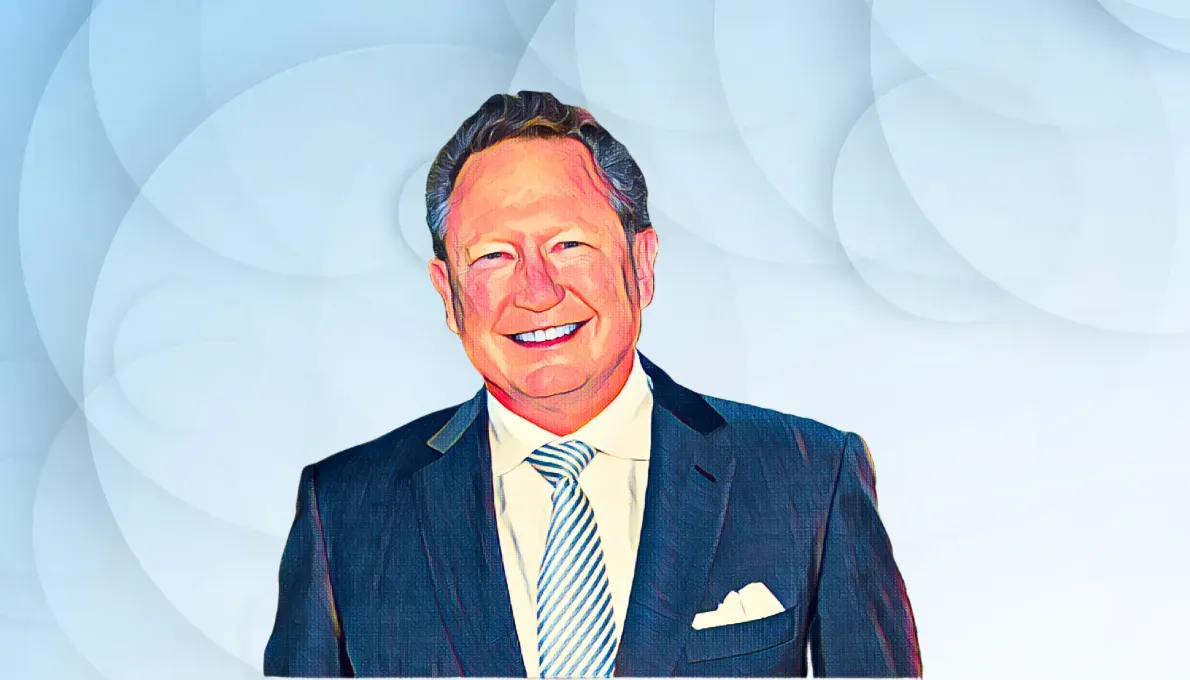
Australian billionaire Andrew “Twiggy” Forrest has never been a man for small bets. In the Australian business imagination, his name is shorthand for a kind of brazen, bulldozing ambition — the kind that turns ideas into iron and iron into billions. He is the bush-stockbroker who became the founder of Fortescue, the iron ore upstart that muscled into a market once owned by BHP and Rio Tinto. He is also, in recent years, something else: a self-styled energy visionary with a sprawling green hydrogen portfolio and a taste for geopolitical scale.
That taste, in the last five years, has increasingly drawn him north — to Africa.
Forrest first began planting flags on the continent with a kind of restless, entrepreneurial urgency. His company signed memoranda of understanding, launched joint ventures, chased wind corridors and geothermal fields, and promised — in grand Forrestian fashion — to turn Africa’s vast renewable resources into a new engine of industrial growth. In the telling of Fortescue’s executives at the time, Africa was not just a destination but a frontier.
But five years on, the reality is less heroic.
A Shipment from the Jungle
It is perhaps fitting that Forrest’s single clean win on the continent so far comes from iron ore — the thing that made him rich. In February 2023, Fortescue signed a mining convention with the Gabonese government for the Belinga project, a once-forgotten iron deposit in the country’s north-east. By December of that year, the company had achieved something remarkable: its first shipment of ore from outside Australia.
The Belinga venture moved at a pace unusual for a mining major. Fortescue drilled thousands of metres of core samples, mobilised port infrastructure, and produced a first cargo before many industry observers thought it would even get permits signed. In boardrooms back in Perth, the Gabon play was held up as proof that Forrest could do offshore what he’d done in the Pilbara: move fast, hit targets, build confidence.
And yet, even in Gabon, the story isn’t neat. The 2023 coup that removed President Ali Bongo sent a chill through investors. Contractors were stood down. Feasibility studies dragged on. The political winds shifted. Fortescue reassured the junta that it was staying the course, but the project now sits at a delicate juncture between promise and delivery.
Still, it remains Forrest’s only African venture that has produced something tangible you can actually weigh, ship and sell.
The dream that sank in the Congo
Not every bet fared so well. Forrest’s boldest African ambition — to help drive the Grand Inga hydropower complex in the Democratic Republic of Congo — has all but evaporated.
In 2021, Fortescue announced with characteristic swagger that it would play a key role in developing Inga, a project so vast it made the Hoover Dam look like a garden weir. If built to its fullest, Inga could generate 40 gigawatts of hydropower, enough to light much of the continent. Forrest talked about linking it to green hydrogen production, exporting clean molecules to the world.
But Inga is a graveyard of ambition. Over the decades, countless companies, consortia and governments have tried to tame the Congo River’s immense potential, and just as many have quietly folded. By May 2024, Congolese authorities announced Fortescue was out of the revised scheme. Forrest’s team tried to downplay the exit, but the truth was plain: the dream had slipped away into the same opaque currents that drowned its predecessors.
The green hydrogen boom that isn’t (Yet)
Around the same time, Fortescue began signing MoUs for green hydrogen projects across the continent, each pitched as a piece of a future net-zero puzzle. In November 2022, it inked a framework agreement in Kenya to build a 300-megawatt green ammonia plant tapping the country’s abundant geothermal power. The promise was elegant: clean energy turned into fertiliser for African farmers and exports to global buyers.
But two years later, that project remains in limbo. No final investment decision has been made. Offtake agreements are thin. Nairobi’s bureaucracy moves at its own pace.
Egypt was next. In the Suez Canal Economic Zone, Fortescue signed another MoU for a major hydrogen and ammonia hub. There was fanfare at the signing table, smiles for the cameras, glowing language about “unlocking Africa’s green potential.” But Egypt has dozens of such MoUs, and Fortescue’s remains one line in a very long list.
Morocco, however, was different. In April 2024, Fortescue went beyond memoranda and entered a 50:50 joint venture with OCP, the world’s largest phosphate producer and a strategic force in North African industry. The plan: build a green energy hub with manufacturing, R&D and green hydrogen production aimed at Morocco and Europe. The company described the status as “scoping.” Optimists called it a serious play. Skeptics, familiar with Morocco’s Western Sahara entanglements, called it a reputational gamble.
In Namibia, Fortescue lent support to the Daures Green Hydrogen Village pilot project — less an empire-building play than an experiment. In Djibouti and Ethiopia, it signed framework deals and licences to study hydrogen potential. In South Africa, it inked a non-binding term sheet with Patrice Motsepe’s African Rainbow Energy. The paper trail is long. The steel and concrete are not.
The billionaire behind the gambit
To understand why Forrest is in Africa, you have to understand Forrest himself.
He is the son of a pastoral family, educated at Hale School, once a junior stockbroker who hustled his way through deals in the 1980s mining boom. He rose to prominence when Fortescue broke the iron ore duopoly in the early 2000s, building its own railways and ports across the Pilbara. The company became one of Australia’s biggest exporters and made Forrest a billionaire many times over.
Today, he is not just a mining tycoon but a crusader for green energy, talking openly about decarbonising heavy industry and challenging fossil fuel orthodoxy. In recent years, he’s reshaped Fortescue around this vision, with a dedicated green energy arm. His lieutenants include Gus Pichot, Fortescue’s growth chief, and Dino Otranto, the CEO overseeing operations. Together they have tried to rewire a mining company into a global energy major.
Africa fits into that story because it is, in Forrest’s telling, the most potent untapped renewable frontier on Earth. Wind and solar resources are abundant, land is relatively cheap, governments are hungry for investment, and the European market is close. For a man who once built a mining empire out of the dust of the Pilbara, that must sound familiar.
The walls he’s hitting
But ambition and reality often travel on different timetables. In Africa, Forrest has collided with political risk, grid limitations, regulatory uncertainty, and the sheer complexity of getting first-of-kind green projects off the ground.
In Gabon, the coup was a reminder that political fortune can change overnight. In the DRC, Inga was a lesson in the depth of state dysfunction and mega-project peril. In Kenya and Egypt, MoUs have struggled to mature into bankable deals. In Morocco, geopolitical sensitivities hover just offstage.
The verdict so far
So has Andrew Forrest succeeded in Africa? The short answer is: partly.
Gabon is a real achievement — a shipment of iron ore that proves Fortescue can operate beyond its home turf. But one shipment does not make an empire. The DRC was a loss. The hydrogen ventures are largely paper. Africa, for Forrest, remains a frontier of potential, not yet of profit.
Still, unlike many foreign investors, he hasn’t walked away. His team continues to court governments, scout renewable corridors, and insist this is a long game. Whether that game will pay off depends on whether he can finally turn MoUs into machines, promises into pipelines.
For this story, we reached out to Doug Horak, CEO of the Australia–Africa Minerals & Energy Group (AAMEG) — the peak industry body that represents Australian companies operating across the continent, advising governments, lobbying on policy and helping miners navigate complex jurisdictions. Horak, a seasoned Africa hand, did not respond by press time.
We also sent detailed questions to Fortescue. No reply came.
The silence is telling. Forrest’s African adventure sits at a delicate moment — somewhere between triumphalism and retreat, between a single Gabonese shipment and a horizon of green energy deals that may or may not take flight.
A bet not yet settled
Andrew Forrest built his fortune on the certainty of iron ore. Africa offers him no such guarantees. What it offers instead is possibility: vast, complicated, contested possibility.
Whether Forrest becomes the man who brought Australian capital into Africa’s green energy future — or just another billionaire who passed through with big promises — will depend on what happens next.