

Table of Contents
A 300 year old wine farm on Cape Town’s northern edge is being sold again, and it carries the faint imprint of a vanished boardroom kingdom.
Bloemendal Wine Estate, acquired in 2008 by a farming subsidiary of Tokyo Sexwale’s Mvelaphanda Holdings, went to auction in 2025 with a reserve price of R250 million, according to trade and farming publications. The property is enormous by Cape standards, roughly 240 hectares with vineyards, venues and a steady stream of day visitors.
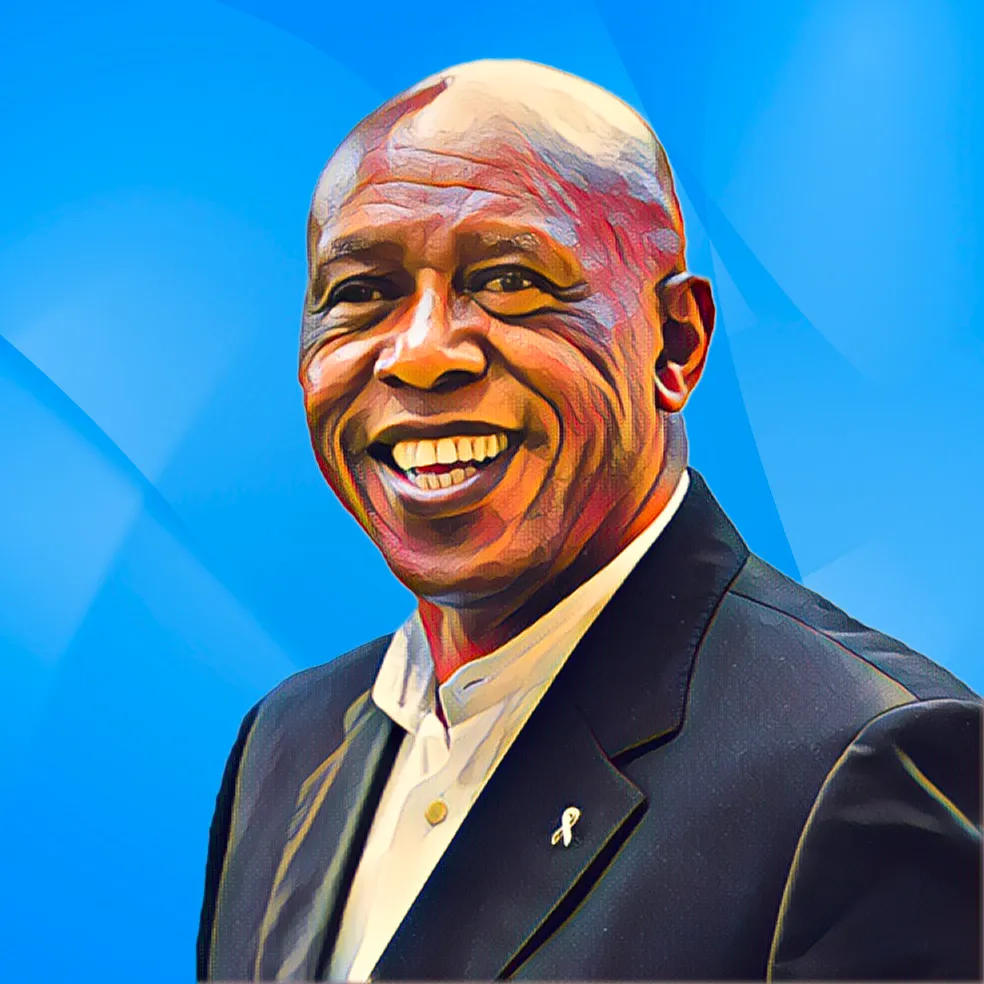
It is an oddly pastoral marker for a man whose public life has been anything but. Sexwale is one of the country’s best known political survivors, a former Robben Island prisoner who rose under the African National Congress into top government posts, then stepped into business with the sheen of Mandela era legitimacy.
In the early years of democracy, when South Africa tried to stitch justice to capitalism, he also became a shorthand for the promise and the discomfort of Black Economic Empowerment. The policy aimed to broaden black ownership, control and participation after apartheid’s systematic exclusion. It also created a new kind of currency: access.
Sexwale had it in abundance. He could walk into a mine boardroom as a liberation veteran and walk out with a term sheet. His firm, Mvelaphanda, turned that access into a web of stakes in gold, platinum, diamonds, property and banking. In its prime, the brand signalled a certain type of deal: politically plausible, bankable, and wrapped in the language of transformation.
Then it began to disappear. Not with a single spectacular implosion, but through the quieter choreography of South African corporate life: restructures, unbundlings, name changes, delistings and asset sales. Bloemendal, now back on the market, stands as one of the few remaining assets that still plainly points back to the old empire.
From Robben Island to the first Gauteng government
Sexwale, born Mosima Gabriel Sexwale in Soweto in 1953, joined anti apartheid politics young, first in Black Consciousness circles and later in the ANC’s underground. Convicted in the Pretoria Twelve case, he served 13 years on Robben Island and was released in 1990, a year that reshaped the country and elevated a generation of imprisoned leaders into public life.
The relationship with Nelson Mandela was not just symbolic. In the transition years, Sexwale was counted among the activists imprisoned on Robben Island who were later promoted into leadership roles after 1994. In those tense months of negotiation, street violence and mistrust, he gained a reputation as a political fixer and a steadying hand.
Mandela appointed him the first premier of Gauteng in 1994, placing a newly freed political prisoner in charge of the economic engine room of South Africa. The job demanded more than speeches. It demanded order and delivery, a kind of governing that could keep the country’s business capital from panicking while communities demanded visible change.
His premiership ended in 1998, and he returned to national government more than a decade later as minister of human settlements under President Jacob Zuma, serving from 2009 to 2013. By then, his name had already become entangled with a different South African narrative: the birth of a black corporate elite.
Empowerment began as a moral argument and a practical fix. A democratic state could not ask people to accept political freedom while the economy remained largely unchanged. A formal empowerment framework followed in the early 2000s, and the mining sector in particular began pushing ownership stakes toward black partners under charter requirements and political pressure.
Mining houses and banks, facing targets and public scrutiny, went looking for black partners. The deals were often funded through leverage, preference shares and deferred structures that only worked if dividends flowed and asset prices climbed. That era needed intermediaries who could speak both struggle and spreadsheets. Sexwale became one of the most recognisable.
A dealmaker’s playbook and Mvelaphanda’s prime assets
Sexwale founded Mvelaphanda Holdings in 1998, a private platform that soon became a bridge between established capital and empowerment targets. Profiles of the era described him as chairman and emphasised how his political standing opened doors that stayed shut for most newcomers.
The group’s public surge came through a reverse listing. In 2004, a listed services firm, Rebserve, was used as the vehicle for a merger with Mvela Holdings and then a rebrand into Mvelaphanda Group. It was the kind of financial manoeuvre that defined the empowerment years: new capital dressing itself in old shells to get onto the market quickly.
Mining was the centre of gravity, and Mvelaphanda Resources became the flagship for that ambition. A headline deal with Gold Fields gave Mvelaphanda an effective interest in Gold Fields’ South African gold assets, a transaction valued in the billions of rand and loudly framed as a breakthrough.
Its disclosures in that period showed what it had assembled: a major holding in Northam Platinum, a large stake in diamond miner Trans Hex, and exposure to gold through the Gold Fields structure. It also pursued diamond exploration through a joint venture linked to Trans Hex. These were not passive holdings. They were levers.
Stakes in operating companies created board influence, dividend flows and deal options. They also served as collateral in a market that was happy to lend against rising commodity prices. The structure could look like alchemy: paper wealth created through rising share prices, then used to fund the next stake.
Banking brought a different kind of legitimacy. Absa’s empowerment deal, which placed a 10% stake into the Batho Bonke consortium in 2004, was marketed as transformation in action. Sexwale, as chair of the consortium, became one of the public defenders of a model that tried to marry broad participation language to elite dealmaking reality.
Mvelaphanda’s listed group also reached into financial services and property. That included interests tied to Abvest Associates and Broll Property Group, among others. In time, some of those holdings were sold or absorbed by larger institutions, which is often what happens when a consortium vehicle has served its strategic purpose.
This is where the empowerment era’s mechanics mattered. Mvelaphanda did not typically buy whole companies in the old fashioned sense. It brokered stakes, often through consortium structures, preference shares, options and layered holding companies. It partnered with incumbents who needed empowerment points and with financiers who wanted proximity to the centre of power without looking political.
That model also made personal wealth hard to map. Holdings sat in companies, trusts and vehicles whose beneficiaries could be contested or private. That opacity became part of Sexwale’s public story when his marriage collapsed.
His courtship of Judy van Vuuren began in the prison years and became a favourite South African parable: the paralegal and the political prisoner, love notes smuggled past authority. The divorce, which burst into headlines in 2013 and 2014, dragged his finances into court filings and public argument, with claims about lifestyle spending and disputes over trusts and maintenance.
The jet story lives in the country’s political gossip museum. A columnist wrote that Sexwale bought Judy an eight seater Lear Jet as a Valentine’s Day gift, a detail that stuck because it captured the whiplash of South Africa’s new money. Later reporting and commentary cited talk of multiple private jets. Public documentation remains limited, and the claims sit in the realm of reported allegation and insider chatter rather than audited fact. The cultural impact, though, was real: it framed Sexwale not as an empowerment technician, but as a symbol of excess.
The long unwind and where the pieces landed
Mvelaphanda’s retreat began before most people noticed. The global financial crisis exposed the fragility of leveraged empowerment structures, and investors grew impatient with holding companies that traded at discounts to their underlying assets.
Mvelaphanda Resources began talking openly about restructuring and delisting, with plans to sell down key holdings and unbundle its largest stake to shareholders. The logic was brutal and familiar: unlock value by dismantling the layers. What investors had once rewarded as clever architecture now looked like unnecessary complexity.
The decisive moment came in 2011. Northam moved to acquire what was left of Mvelaphanda Resources after an unbundling that shifted a major Northam shareholding directly to Mvelaphanda shareholders. Disclosures at the time set out what Northam expected to pick up: cash, interests in platinum projects, and a stake in Trans Hex, among other items. The scheme unfolded through formal meetings, approvals and a delisting from the Johannesburg Stock Exchange.
The empire’s signature assets did not vanish. They simply moved on.
Northam carried the Trans Hex stake for several years, then sold it. Trans Hex later delisted from the JSE and now operates privately, still tied to diamond mining and expansion plans that no longer carry the Mvelaphanda badge.
Gold Fields remained a global miner, but its South African portfolio was reshaped. Its key South African mines were unbundled into what became Sibanye, later Sibanye Stillwater. That means one of the earliest building blocks of Mvelaphanda’s prestige ended up under a different South African corporate champion.
The Absa empowerment story also ended without the empowerment mystique. Batho Bonke eventually began selling down its stake, reviving long-running questions about who benefited most from these structures and whether the broad based promise matched the outcome.
The corporate shell carrying the Mvelaphanda name faded too. The listed Mvelaphanda Group changed its name to New Bond Capital and later went through delisting processes. The renaming was an epitaph in slow motion: a company once valued for political proximity became a generic investment label, then drifted out of the public imagination.
Sexwale’s post Mvelaphanda life has been quieter but not absent. He remains a public ANC elder, still weighing in on leadership succession and national debates, while his commercial interests sit mostly behind private structures.
His visible assets are the ones that surface in property and deal reporting. Bloemendal is the clearest example, a tangible remnant bought through a Mvelaphanda subsidiary and later discussed in business coverage of the Cape winelands rush.
Mvelaphanda’s deeper legacy is less about a single man’s fortune than about a country’s first attempt to turn political victory into economic change without detonating the system that already existed. It worked, partly, and it warped, partly. It created board seats and dividends, and it created folklore about jets and mansions. It built black ownership in real companies, and it concentrated that ownership in a familiar set of hands.
Bloemendal’s sale notice reads like any other luxury listing. The history behind it is not ordinary at all.