

Table of Contents
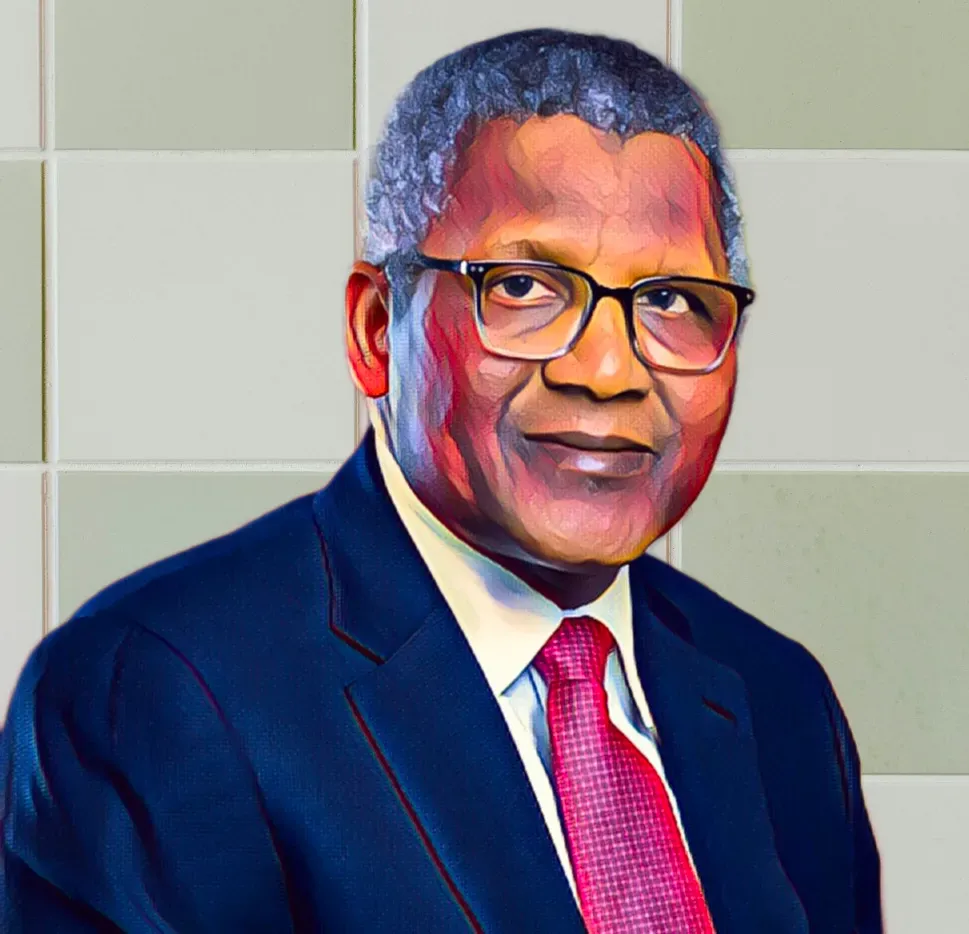
Founder and Executive Chairman of BUA Group, Abdul Samad Rabiu, has called for a fundamental shift in Africa development model, urging leaders and financiers to move the continent beyond raw material exports toward large scale industrial processing and value addition.
Rabiu delivered the message as Special Guest of Honour at an Africa Finance Corporation forum held during Mining Indaba 2026, where policymakers, investors and industry executives gathered to debate the future of mining and real sector growth across Africa.
The Nigerian billionaire commended the Africa Finance Corporation for mobilising long term capital to support industrial expansion, noting that strong development finance institutions are central to reshaping Africa economic trajectory. He pointed to the corporation recent credit rating upgrade with a positive outlook as evidence of institutional strength and investor confidence.
Drawing from BUA Group own experience, Rabiu recalled how the company made a strategic decision more than sixteen years ago to stop importing cement and instead invest heavily in domestic production. At the time, Nigeria was importing cement despite possessing abundant limestone reserves.
He said the shift required conviction and patient capital, given the heavy investment and long gestation periods associated with mining and cement production. According to him, the core challenge was not resource availability but the willingness to invest in local capacity.
Today, Rabiu said, BUA mines and processes roughly forty thousand tonnes of limestone daily and produces about one million tonnes of cement each month. The transformation has helped Nigeria move from cement import dependence to net exporter status, saving billions of dollars in foreign exchange annually.
Rabiu credited long term financing from development finance institutions, particularly the Africa Finance Corporation, for supporting BUA industrial growth. He disclosed that AFC has provided more than four hundred million dollars in financing to BUA cement and related operations.
He added that a significant portion of those facilities has already been repaid, demonstrating that African industrial projects can deliver both developmental impact and commercial returns when structured properly.
Broadening the discussion, Rabiu described what he called a structural paradox across the continent. Africa remains rich in minerals and agricultural resources yet continues to export most commodities in raw or minimally processed form.
He cited gold, cobalt, copper, iron ore, diamonds and cocoa as examples where Africa supplies global raw inputs but captures limited downstream value. In his view, the continent does not lack natural resources but suffers from limited processing capacity and insufficient industrial scale.
The same imbalance, he said, is visible in agriculture, where Africa controls a significant share of global arable land yet imports billions of dollars worth of food annually.
Rabiu called for coordinated action among governments, development finance institutions and private investors. He urged policymakers to create incentives for local processing and invest in critical infrastructure such as power generation and transport networks.
He said industrialisation requires deliberate planning and consistent execution, adding that nations that achieved industrial growth did so through intentional design rather than chance.
Rabiu concluded that Africa future prosperity depends on aligning private enterprise, patient capital and supportive policy to move the continent from extraction to transformation and from potential to shared economic growth.