

Table of Contents
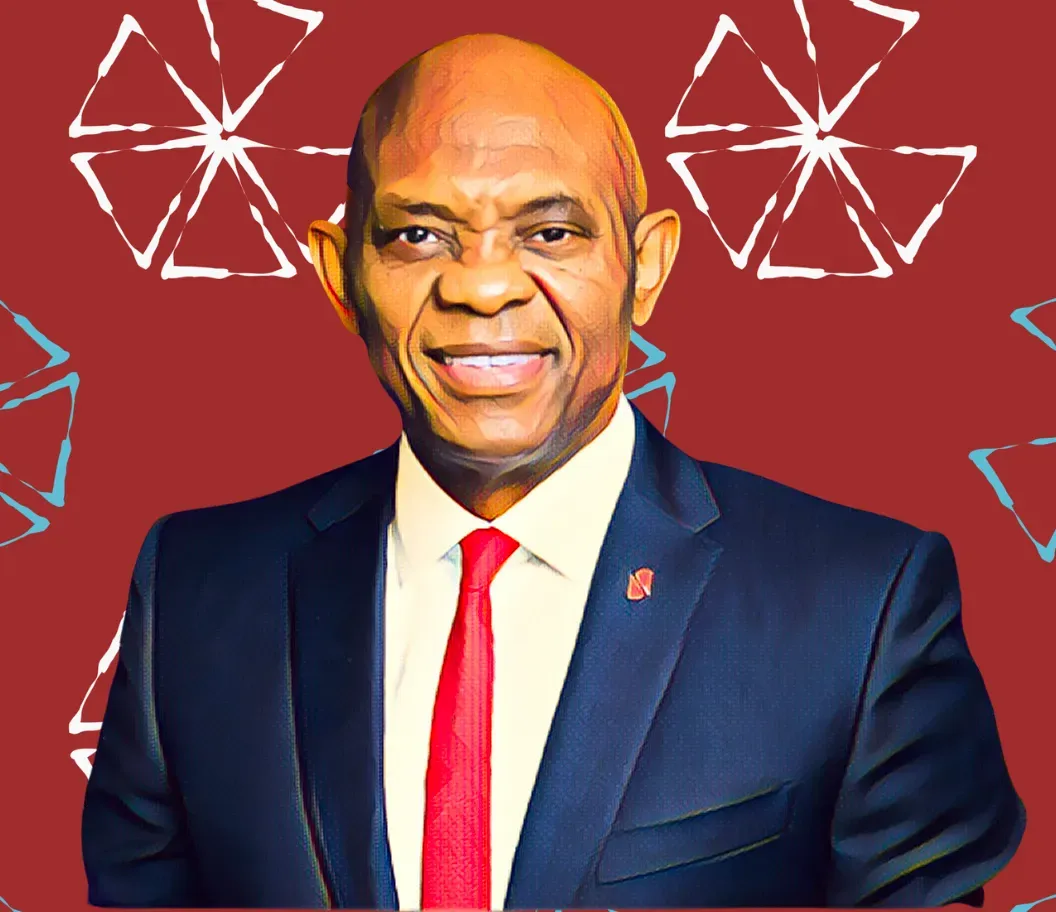
Heirs Energies, the oil exploration and production company controlled by Nigerian banker and economist Tony Elumelu, has made an estimated $186.6 million paper gain on its Seplat Energy stake in less than two months, based on Seplat’s share price rising to 420 pence from the 305 pence paid in the December transaction.
Heirs Energies bought 120.4 million Seplat shares, equal to 20.07% of the company, from France’s Etablissements Maurel and Prom in a deal announced after market close on Dec. 30, 2025. Maurel and Prom said the sale was valued at $496 million.
Using the current price of 420 pence a share provided by the user, the gain is 115 pence per share. That implies a paper profit of about 138.46 million pounds, which converts to roughly $186.6 million.
A quick gain, but a long term bet
The early gain casts the spotlight on Heirs Energies and its owner, Heirs Holdings, which is anything but a passive financial investor. Heirs Energies is a privately held Nigerian oil and gas producer owned by Elumelu, and the purchase immediately gave it a major position in one of Africa’s most important listed energy companies.
Seplat is not the same company it was a few years ago. After completing the acquisition of ExxonMobil’s Nigerian shallow water assets in December 2024, Seplat moved into a different league in terms of production scale, infrastructure access and offshore exposure. In 2025 the company announced that it planned up to $320 million in spending and was targeting crude production of around 140,000 barrels per day after the asset expansion.
Seplat’s own disclosures show how sharply the business has grown. The company reported average production of 134,492 barrels of oil equivalent per day in the first half of 2025, above the midpoint of its guidance range, and 135,636 boepd for the first nine months of 2025.
That production story helps explain why Heirs Energies paid up for a strategic block at 305 pence. It also helps explain why the market has repriced the shares higher.
Heirs Energies’ path from OML 17 takeover to expansion mode
Heirs Energies built its upstream business around OML 17 in the Niger Delta. In January 2021, Heirs Holdings - Elumelu's family office and Heirs Energies' parent company, acquired a 45% stake in the onshore oilfield in a transaction backed by $1.1 billion in financing from a consortium of banks and investors.
The company, then known as Heirs Oil and Gas before rebranding to Heirs Energies, has spent the last several years trying to prove it could do what many indigenous operators promise but struggle to deliver: stabilize output, raise gas supply and manage the operational headaches that come with mature Niger Delta assets.
Those headaches are well known in Nigeria’s oil patch. Operators face crude theft, pipeline vandalism, evacuation constraints, delayed repairs, community disputes, aging infrastructure and high operating costs. Nigeria’s reform push has aimed in part to reduce costs and make projects easier to develop, but implementation remains uneven. Last May, President Tinubu launched a "Performance for Pay" system for the oil industry whereby oil companies qualify for a tax discount (capped at 20%) only if they can prove they’ve cut production costs. It’s a strategic move to force the industry to become more efficient by linking their tax bills directly to how much money they save.
In any case, Heirs Energies has said OML 17 output has improved significantly under its watch. The company said in late 2025 that OML 17 JV gas output reached a peak of 135 million standard cubic feet per day after a rigless recompletion project, and it boasts production of more than 50,000 barrels of oil per day and about 120 million cubic feet of gas per day.
The $750 million Afreximbank facility and what it is meant to do
Days before the Seplat stake purchase, Afreximbank and Heirs Energies signed a $750 million financing agreement. That matters because there has been speculation in local energy circles that the loan was taken mainly to fund the Seplat share purchase. An executive at Heirs Energies disputed this and insists the funding for the Seplat share acquisition came mostly from Heirs Holdings' cash reserves. The dual tranche senior secured reserve based lending facility was designed to strengthen Heirs Energies’ capital structure and fund its field development program in Nigeria, while providing liquidity to support growth.
In practical terms, that usually means drilling, workovers, gas projects, flowline replacement, production optimization and working capital for day to day operations. Mature assets can produce strong cash flow, but they also consume capital constantly.
The Seplat stake gives Heirs Energies something different from OML 17. It provides exposure to a listed company with offshore and onshore production, gas infrastructure and a broader financing platform. Seplat also announced first gas at its ANOH gas project in January 2026, with the company saying the plant is a 300 MMscfd facility and a major part of its gas growth strategy.
Nigeria’s indigenous oil era and the limits of merger talk
Nigeria’s oil industry is in the middle of a long ownership shift. International majors have been reducing their exposure to onshore and shallow water assets, while local companies have expanded. Several of these landmark moves have been well documented, including Shell’s sale of SPDC to the Renaissance consortium, Eni’s sale of NAOC to Oando, and Seplat’s earlier acquisition of ExxonMobil’s shallow water assets.
Renaissance itself is a symbol of the new structure, bringing together local players such as ND Western, Aradel, First E and P and Waltersmith with an international partner. Local firms are now driving a new growth phase, with companies such as Seplat, Oando and Conoil pushing production and field redevelopment plans.
Older deals helped set the pattern. Aiteo, led by Nigerian billionaire Benedict Peters, became one of the most prominent indigenous players after acquiring Shell’s OML 29 and related infrastructure in a landmark transaction that shifted a major producing asset into Nigerian hands. That transaction remains one of the best known examples of the first big wave of local consolidation.
Tinubu’s recent executive orders add another layer. One order in 2025 offered tax relief tied to cost reductions in upstream operations, a move aimed at making projects more competitive. A separate February 2026 order directs oil and gas revenues owed to government to be remitted directly to the federation account, part of a broader fiscal reform push. The combined effect for independents is mixed: potentially better investment incentives in some areas, but tighter fiscal oversight and policy scrutiny in others.
Talk of a Heirs Energies and Seplat merger has picked up since Heirs bought the stake and Elumelu was appointed a non executive director on Seplat’s board effective Jan. 22, 2026. Market participants point to obvious industrial logic, especially around scale, gas and infrastructure.
A merger still looks difficult. Seplat is publicly listed in London and Lagos, has its own governance structure and investor base, and is still integrating and optimizing a much larger asset portfolio. Heirs Energies is private, centered on OML 17 and in an investment phase funded by reserve based debt. A combination would raise valuation, control, regulatory and financing questions that are far more complex than market rumors suggest.
What is easier to see right now is the near term result. Heirs Energies made a large strategic purchase at the end of December, Seplat’s shares moved higher, and Elumelu’s company is sitting on a paper gain of roughly $186.6 million while Nigeria’s indigenous operators push deeper into the center of the country’s oil business.