


Table of Contents
Stanbic Bank Ghana and Standard Bank of South Africa have arranged a $205 million syndicated loan for Engineers and Planners Company Limited, the mining and construction firm founded and run by Ibrahim Mahama, in what ranks among the largest structured financings ever assembled for a wholly Ghanaian-owned company.
The deal was signed at a ceremony in Accra on Feb. 27. Ecobank Ghana and Absa Bank Ghana joined as participating lenders, rounding out a consortium that pulled together some of the most active corporate banks operating in West Africa.
The facility is structured as a senior secured term loan with revolving credit lines and carries a five-year maturity. It is split into two tranches: $110 million and $95 million. The money will go primarily toward supporting E&P's long-running contract mining operations with Gold Fields Ghana, the local arm of the South African gold major, and toward upgrading equipment and operational infrastructure to handle hard-rock extraction at scale.
Kwamina Asomaning, chief executive of Stanbic Bank Ghana, framed the transaction as something more than a lending deal. "Our relationship with E&P spans more than two decades, built on trust and shared ambition," he said at the signing. "By structuring and mobilising this facility, we are not only enabling Engineers and Planners to scale its operations but also reinforcing Stanbic Bank's role as a long-term partner in advancing localisation, strengthening Ghana's mining value chain and driving sustainable growth across the broader economy."
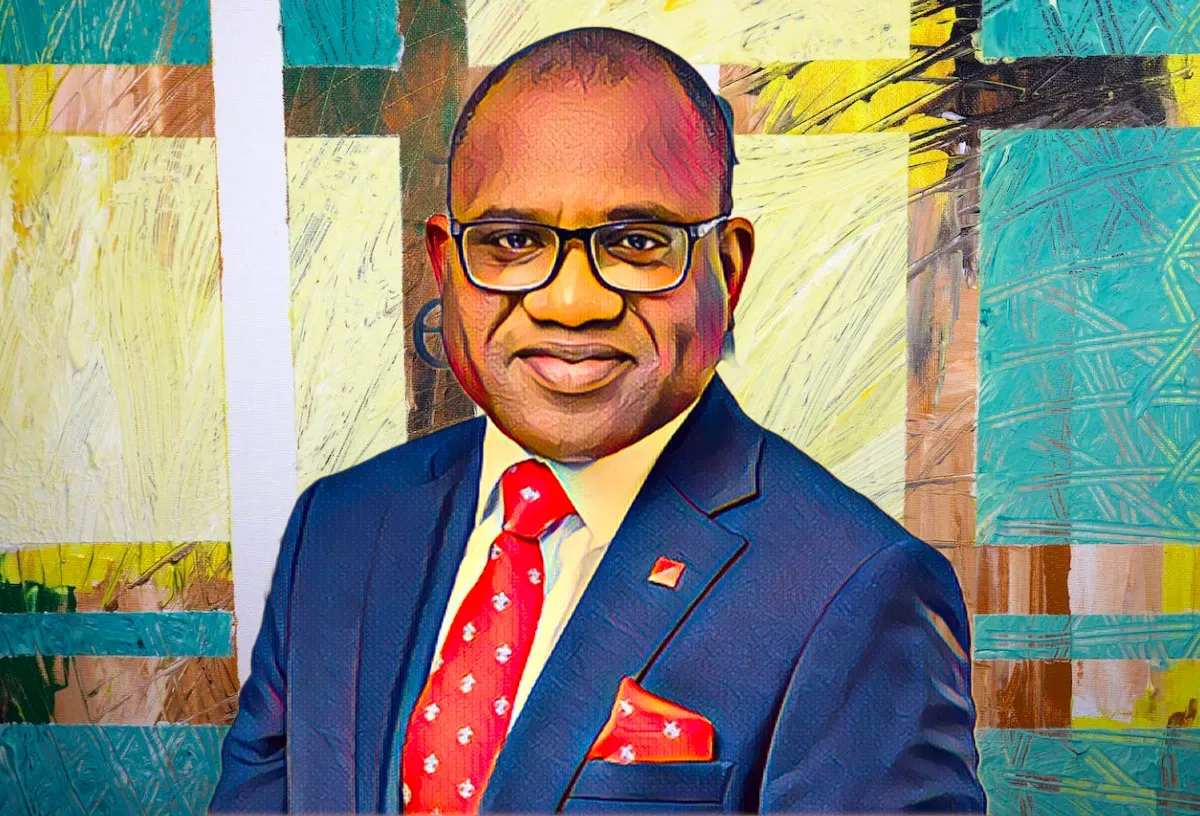
Mahama, who founded E&P in 1997 after returning from studying in London, has grown the company into the largest indigenous-owned mining contractor in West Africa, with more than 4,000 employees and operations spanning Ghana, Liberia and Sierra Leone. He called the loan an important milestone. "This facility strengthens our capacity to deliver on large-scale mining contracts to the highest global standards, while deepening local participation in the sector," he said.
The cumulative financing that Stanbic Bank Ghana and Standard Bank South Africa have arranged for E&P now exceeds $450 million, underscoring a banking relationship that has tracked the company's growth across more than two decades.
The timing is significant. Ghana's mining sector is coming off a strong year. In 2024, the industry, including manufacturing and mining, accounted for 31 percent of Ghana's GDP, according to government data, with output rising 9.3 percent. President John Dramani Mahama, Ibrahim's elder brother, who returned to the presidency in January 2025, has made the extractive sector a focal point of his economic agenda, framing it as central to Ghana's fiscal recovery and foreign exchange generation.
Gold Fields Ghana is among the sector's anchor operators, running the Tarkwa and Damang mines in the Western Region. E&P has been embedded in those operations as a contract miner, and this facility secures the financial firepower to keep that engagement going at an expanding scale.
Beyond the direct mining work, the facility is expected to generate broader downstream effects: sustained employment, more local procurement activity within the mining supply chain and additional foreign exchange inflows from gold exports. The banking consortium's confidence also carries a signalling value. Structuring a deal of this size around an indigenous Ghanaian firm sends a message to the wider market about the bankability of African-owned operators.
Ghana's government has simultaneously been tightening its approach to the mining sector, including an ongoing crackdown on illegal small-scale mining, known locally as galamsey, which has caused significant environmental damage across the country's forest belt and river systems. The push to formalise and expand legitimate large-scale mining, partly through deals like this one, fits within that broader regulatory direction.
E&P was founded with a single focus on mining services and earth-moving contracts. It has since diversified, adding Dzata Cement, a wholly Ghanaian-owned cement processing plant in Tema with 2.6 million tonnes of annual capacity, as well as Man Bosch Ghana, which distributes Renault trucks, and large-scale poultry farming operations. But contract mining remains the core, and this loan plants that core more firmly in the ground.