

Table of Contents
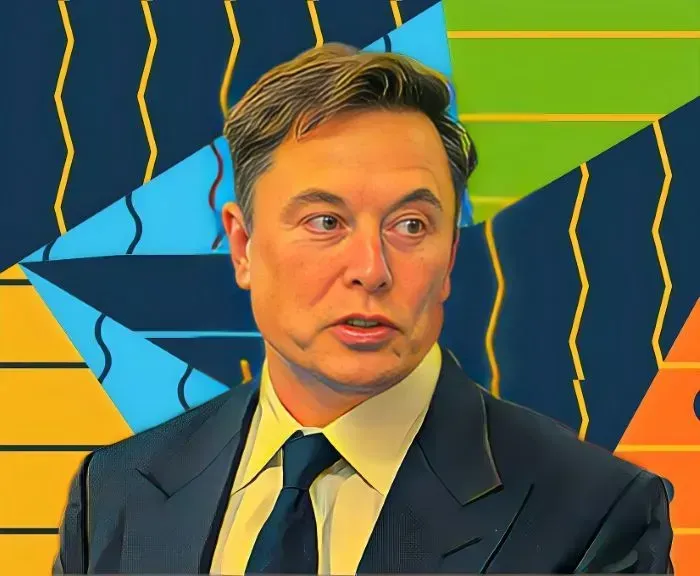
Elon Musk will not have to answer questions under oath about his role in dismantling the United States Agency for International Development, a federal appeals court ruled Wednesday, handing him a significant legal reprieve one month after a lower court judge said there was no way around it.
The ruling, dated March 4, 2026, reverses an order from U.S. District Judge Theodore Chuang of Maryland, who had ruled in February that Musk and two other officials must sit for depositions in a lawsuit brought by current and former USAID employees. Chuang, an Obama appointee, had found that extraordinary circumstances made the depositions necessary and that Musk likely had firsthand knowledge of decisions that his legal team had refused to explain through documents.
The appeals court disagreed.
The case goes to the heart of one of the most contentious episodes of Donald Trump's second term: the swift, chaotic dismantling of an agency that had existed since 1961, managed roughly $43 billion in annual appropriations and operated across some 130 countries. Within weeks of Trump's inauguration in January 2025, USAID's workforce was slashed from around 10,000 employees to fewer than 300. Its headquarters was locked. Its website went dark. Musk, who was then running the so-called Department of Government Efficiency, publicly celebrated. "DOGE fed USAID into the wood chipper," he posted on X at the time, a phrase his lawyers would later spend considerable effort trying to explain away in court.
The anonymous USAID employees and contractors who filed the lawsuit argued that Musk's actions violated the U.S. Constitution's Appointments Clause, which requires Senate confirmation for anyone exercising significant governmental authority. Their position was that Musk, who held no confirmed government role, had nonetheless been making binding decisions about a congressionally established agency. Judge Chuang largely agreed with that framing in earlier rulings, finding that Musk had moved to dismantle USAID without formal authority or official approval, and that the defendants had failed to produce documentary evidence identifying who had authorized the shutdown of the agency's headquarters and website.
That left depositions as the only option, Chuang ruled in February, rejecting Musk's legal team's attempt to invoke the apex doctrine, a principle that generally protects senior government officials from being compelled to give oral testimony. The judge found that it was unclear whether Musk, former acting USAID deputy administrator Peter Marocco and State Department official Jeremy Lewin even qualified as high-ranking government officials under that doctrine, given that many DOGE figures operated in informal or acting capacities throughout the effort to gut the agency. He ordered all three to submit to questioning.
The appeals court's March 4 ruling blocks that from happening, at least for now. Earlier in the litigation, the 4th U.S. Circuit Court of Appeals had already sided with the Trump administration on a related question, lifting a lower court injunction that had barred DOGE from making further cuts to the agency. That March 2025 ruling found that even Musk's own social media declarations about USAID did not legally prove he was issuing orders, and that the evidence was more consistent with him acting as a presidential adviser than an officer of the government.
The White House has maintained throughout the litigation that Musk was not a government official in any formal sense, but rather a senior adviser to the president, a distinction that matters enormously under the Appointments Clause. The State Department, the Department of Justice and representatives for Musk did not respond to requests for comment after the February deposition ruling.
The USAID lawsuit is one of dozens of court challenges that emerged from the early months of Trump's second term as DOGE swept through federal agencies, cutting contracts, dismissing staff and shuttering operations that had taken decades to build. A July 2025 study estimated that USAID programs had helped prevent approximately 91 million deaths over the prior two decades, including 30 million children. The same research warned that the agency's dismantling could contribute to more than 14 million deaths by 2030, roughly a third of them children under the age of five.
Musk formally left his DOGE role in May 2025, telling reporters afterward that the initiative had been only "somewhat successful" and that he would not take on a similar assignment again. Whether Wednesday's ruling fully closes the deposition question or merely delays it will depend on how the broader lawsuit progresses. The underlying constitutional claims have not been resolved.