
Table of Contents
Forbes has released its 2026 ranking of Africa's richest people, and the numbers tell a story of surging stock markets, stabilizing currencies and fortunes that just keep climbing.
The continent's 23 billionaires are collectively worth $126.7 billion, up 21% from $105 billion a year ago, after adding a combined $20.3 billion to their fortunes over the past 12 months. It is the second straight year Africa's three-comma club has broken records, having crossed the $100 billion threshold for the first time in 2025.
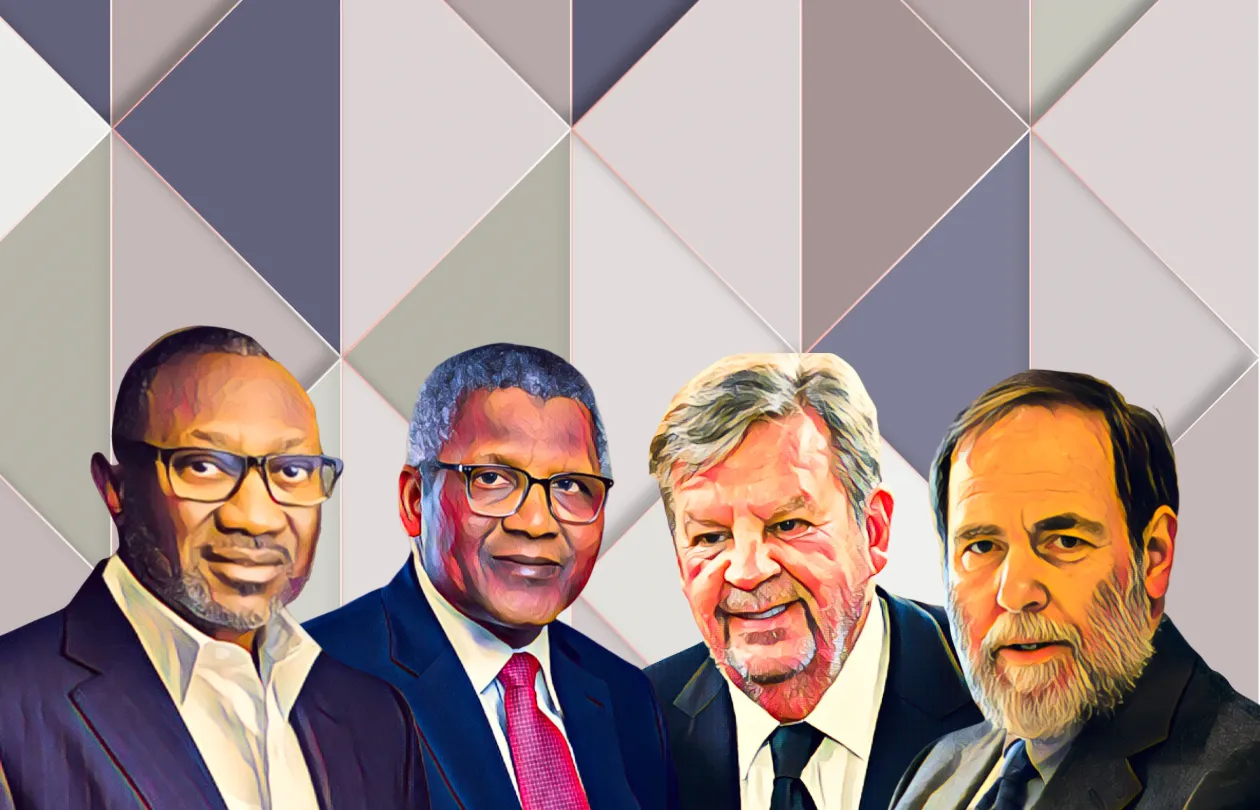
Aliko Dangote sits at the top, as he has for 15 consecutive years. The Nigerian cement and energy tycoon is worth an estimated $28.5 billion, a gain of $4.6 billion from last year. Shares of Dangote Cement, listed on the Nigerian Exchange, surged nearly 69% since last March. The company doubled its profits in 2025 to a record 1 trillion naira. Dangote, who plans to take his oil refinery public later this year, also announced a $400 million deal with a Chinese machinery company to accelerate plans to double the refinery's full capacity by 2029.
The year's biggest winner by far was Abdulsamad Rabiu. His estimated net worth jumped 120%, rising $6.1 billion to reach $11.2 billion, a gain no other billionaire on the list came close to matching. Rabiu, chairman of BUA Group, is now Africa's third richest person, up from sixth a year ago. His main asset, BUA Cement, saw its shares climb 135% on the Nigerian Exchange, which itself rose 81% to record highs over the past year. The NGX rally was driven by record corporate profits and a government directive requiring Pension Fund Administrators to increase their exposure to equity investments.
South Africa also produced a big gainer. Capitec Bank founder Michiel Le Roux, worth $3.8 billion, benefited from a 57% jump in the lender's shares on the Johannesburg Stock Exchange, which itself posted a 45% gain over the past year as gold and platinum prices climbed to new highs.
Not everyone moved the needle. Egyptian investor Nassef Sawiris, worth an estimated $9.6 billion, essentially broke even. Sawiris holds a stake in English Premier League club Aston Villa and owns roughly 6% of sportswear giant Adidas. He is set to become chairman of Adidas at the company's shareholder meeting in May.
Four of the 23 billionaires are poorer than they were a year ago. Morocco's Anas Sefrioui lost $300 million after shares in his Group Addoha fell more than 30%. Nigeria's Femi Otedola lost $200 million after selling the majority of his stake in Geregu Power at a discount to the listed company's market price. Both men are now worth $1.3 billion each, the lowest figures on the list.
Fourteen of the 23 billionaires, or 61%, built their own fortunes rather than inheriting them. There are no women on the list. All but one are older than 60. The exception is Tanzania's Mohammed Dewji, who is 50.
South Africa leads in billionaire count with seven. Egypt follows with five, Nigeria has four, and Morocco has three.
Forbes applies a residency and primary business test to determine eligibility. Sudanese-born Mo Ibrahim, a U.K. citizen, was excluded, as were South Africans Nathan Kirsh, who operates out of London with business interests in the U.S. and U.K., and Paul Van Zuydam, a Swiss resident whose primary business is based in France. Several high-profile figures born on the continent but based elsewhere also did not qualify, including Ivan Glasenberg, Clive Calder and Elon Musk, who remains the world's richest person.