


Table of Contents
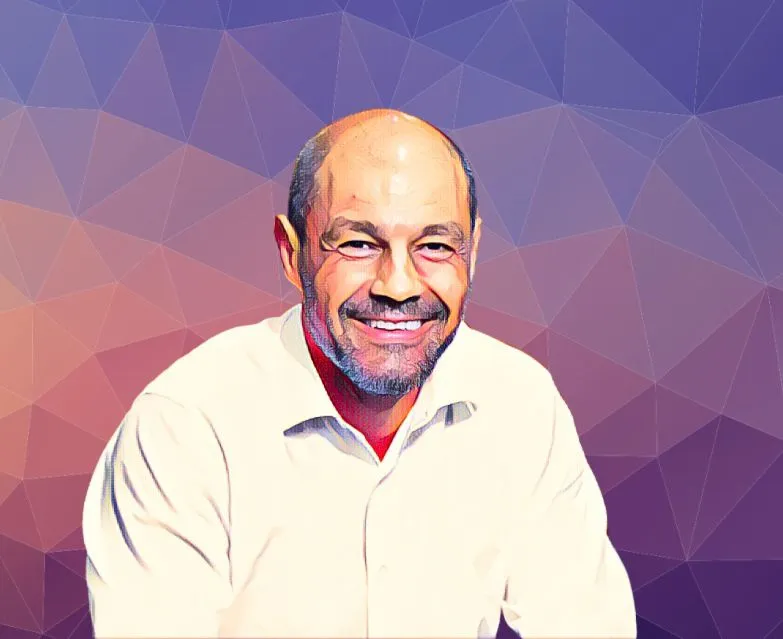
Lazarus Zim was born with a name that, in retrospect, reads like prophecy. In the Bible, Lazarus rose from the dead. In South Africa's corporate world, Polelo Lazarus Zim has done something that felt equally improbable: he collapsed spectacularly, buried his flagship company, walked away from his debts with the banks, and then came back to engineer one of the most significant platinum empowerment deals in the country's history.
Few South African business figures have moved across as many sectors, or navigated as many reversals, as Zim. His career spans mining, media, telecommunications, real estate and finance. At its peak, Bloomberg once recorded him as being associated with 47 boards across five organisations in 13 different industries. That number alone tells you something about the scale of the man's ambitions.
The Education That Built the Foundation
Zim studied at the University of Fort Hare, one of the historically black universities that produced a generation of liberation-era leaders including Nelson Mandela and Oliver Tambo. He went on to the University of the Witwatersrand before completing a Master of Commerce degree at what was then Rand Afrikaans University, now the University of Johannesburg. Fort Hare later awarded him an honorary Doctorate of Commerce, a recognition that speaks to how far he had come from the institution's lecture halls.
He is a chartered accountant by training, and that financial grounding became the bedrock of every deal he would later structure. Numbers were not just a language for Zim. They were a tool for reading opportunity in places others could not see it.
The Media Years: From M-Net to MTN
Before Zim became a mining name, he was a media and telecoms executive. He served as CEO of the M-Net channel and then as managing director of M-Net SuperSport, giving him early exposure to South Africa's entertainment economy. He moved up to CEO of MIH South Africa, then became managing director of MTN International and eventually executive director of the MTN Group, one of Africa's most powerful telecommunications companies. At MTN, Zim helped shape the group's continental expansion at a time when mobile penetration across Africa was just beginning its sharp upward curve.
Those years in telecoms did two things for him. They gave him a seat at the table of the country's most significant corporate players, and they handed him the network and credibility he would need to make the leap into mining during the black economic empowerment era.
Anglo American: The CEO Role That Didn't Last
In 2005, Zim was appointed CEO of Anglo American South Africa, the local arm of one of the world's largest mining houses. It was a landmark appointment. He was voted African Business Leader of the Year the same year, a recognition that placed him in rarefied air. He was also elected past president of the Chamber of Mines of South Africa, giving him a policy platform that few BEE figures had ever occupied.
But the Anglo American tenure lasted just a year. Insiders later described the role as a "non-job," a position where the real decisions were made elsewhere. Zim left in 2006. Looking back, his departure from Anglo was the starting gun on a more consequential chapter. Instead of climbing somebody else's corporate ladder, he decided to build his own house.
Afripalm and the Big Bet on Mvelaphanda
After Anglo, Zim threw himself into Afripalm Resources, an investment vehicle he had been building as a platform for BEE opportunities in mining. In 2006, Afripalm emerged as the driving force behind a reverse takeover of Tokyo Sexwale's Mvelaphanda Resources. It was the deal that announced Zim as a serious player in the mining space. Through Afripalm, he acquired a 19.3% economic stake in Mvelaphanda Resources, with a 31% voting stake attached. The price was roughly R1.5 billion.
What Mvelaphanda held was significant: stakes in Gold Fields, Trans Hex, and Northam Platinum. Zim was now sitting at the centre of a web of platinum, gold and diamond assets. Everything looked correct. Then, in 2008, it all came apart.
The Collapse: How the Global Financial Crisis Broke Afripalm
The global financial crisis hit commodity prices hard. Northam Platinum's share price fell sharply, and the shares Zim had pledged as collateral against his debt financing started failing the covenant tests set by the banks. Under the terms of his guarantee with Nedbank, Afripalm was forced to relinquish its Northam shares. The Public Investment Corporation (PIC) bought the Northam stake at R25 per share, far below the R30 per share entry price, and well short of the roughly R50 per share that analysts estimated would have been needed to cover the interest as well as the original capital.
Northam's empowerment credentials collapsed from 26% to under 10%. Afripalm Resources was shut. Zim told employees the company was "not doing well." It was a considerable understatement. He had been one of BEE's most celebrated names. Now he was one of its most visible casualties. By September 2012, the Sunday Times ranked his net worth at R419.6 million. That figure, and the ranking itself, was a shadow of what his ambitions had once suggested.
Around the same time, he was extricating himself from another problematic association. Zim had invested in ventures connected to the Gupta family, the wealthy Indian family later identified as central figures in South Africa's state capture scandal. He had allowed Atul Gupta to serve as his alternate director on Northam's board. He had been involved in the Guptas' newspaper venture, The New Age. By the end of 2011, he was pulling out. In April 2012, he formally withdrew Atul Gupta as alternate director at Northam Platinum and publicly stated he was out of The New Age and other Gupta businesses. The distancing was timely. The full weight of the state capture revelations was still years away, but Zim had read the room.
He also lost money on Pinnacle Point, a luxury resort development firm with operations in South Africa and Nigeria that collapsed amid accusations of fraud and mismanagement.
The Resurrection: Zambezi Platinum and the R6.6 Billion Deal
By 2014, Zim was back at the table. Northam Platinum needed a new BEE structure after the collapse of the Mvelaphanda arrangement had left it out of Mining Charter compliance. Zim, still chairman of Northam's board since his appointment in April 2007, led the design of a new self-funded empowerment transaction. Zambezi Platinum was incorporated on June 2, 2014. On October 22, 2014, Northam concluded a fully funded, 10-year R6.6 billion BEE equity transaction, combined with a R4.6 billion capital raising.
Under the structure, Zambezi Platinum acquired 31.4% of Northam's issued share capital. The deal was financed through the issue of preference shares listed on the JSE, meaning historically disadvantaged South Africans did not need to put in cash upfront. Zim participated through the Atisa Consortium, which held a 12.8% stake in Zambezi. When the deal was unwound in September 2021 and Northam repurchased the preference shares, Zambezi paid out more than R9.4 billion to its shareholders. The man who had once lost everything in platinum had waited a decade and collected on the other side.
During his decade at Northam's helm, the company transformed from a single-mine operation at Zondereinde into a multi-shaft producer. The Booysendal Mine was designed, developed and commissioned under his watch. Northam also acquired the Eland Platinum mine. When Zim retired from Northam's chairmanship in November 2017, outgoing CEO Paul Dunne credited him directly: "Zim will be remembered for the empowerment transaction with Zambezi Platinum, which secured Northam's historically disadvantaged South Africans' equity status, serving as the catalyst for the company to launch its growth ambitions."
The Boardrooms and the Businesses That Followed
Beyond Northam, Zim built a board presence that covered most of South Africa's major sectors. He chaired Kumba Iron Ore, resigning from that position in December 2010. He chaired Telkom SA for 20 months from February 2011. He chaired TransHex Group and Mvelaphanda Resources. He served as independent non-executive director at Sanlam and Sanlam Life Insurance. He sat on the boards of MTN Group, AngloGold Ashanti, Anglo American Platinum, Mondi South Africa, Tongaat Hulett and Blue Label Telecoms.
He also founded Zanozi Properties and Commodities, a vehicle focused on real estate investments and commodity trading, which he and his wife run through the broader Zim Group, which also holds investments in the Mpilo and Atisa entities.
The Lawsuit That Has Followed Him
In September 2025, Zim was summonsed at the Johannesburg High Court by Peter Wayne Roberts, a former stockbroker and former chief investment officer of the Atisa Group. Roberts is seeking R123.7 million ($7 million) plus interest at 7% per annum from September 2021. He alleges that in March 2014, he and Zim entered into an oral agreement under which Roberts would advise on structuring the new Northam BEE deal, in return for a 20% stake in the vehicle representing Zim's interests. Roberts claims that stake was promised and then quietly removed when the structure was finalized, leaving him outside the benefits when the R9.4 billion payout came through in 2021. Zim has indicated through his attorneys that he will defend the matter. His lawyers declined to comment further, citing the ongoing litigation.
The case cuts to a question that has followed empowerment transactions in South Africa's mining sector for decades: when deals are built on verbal understandings between connected individuals, who gets paid when the numbers finally land?
What the Story Adds Up To
Zim is now in his early sixties. His estimated net worth sits in the range of R2.5 billion to R4 billion, though he has never confirmed a figure publicly. His career has passed through almost every significant sector of South Africa's post-apartheid economy, and he has been both a beneficiary and a casualty of the structural forces that shaped it.
He built his first fortune on BEE deals that blew up when commodity markets collapsed. He built his second on a platinum restructuring that took a decade to pay out. The litigation that now trails him is the kind of dispute that tends to follow large, complex empowerment transactions where the original promises were made in rooms with no written record.
What is not in dispute is the arc. A Fort Hare accountant who moved through media, telecoms and mining, lost his flagship firm to a global financial crisis, walked back into the same industry and engineered a multi-billion deal that redefined Northam Platinum. His name, it turns out, was always the right one.