

Table of Contents
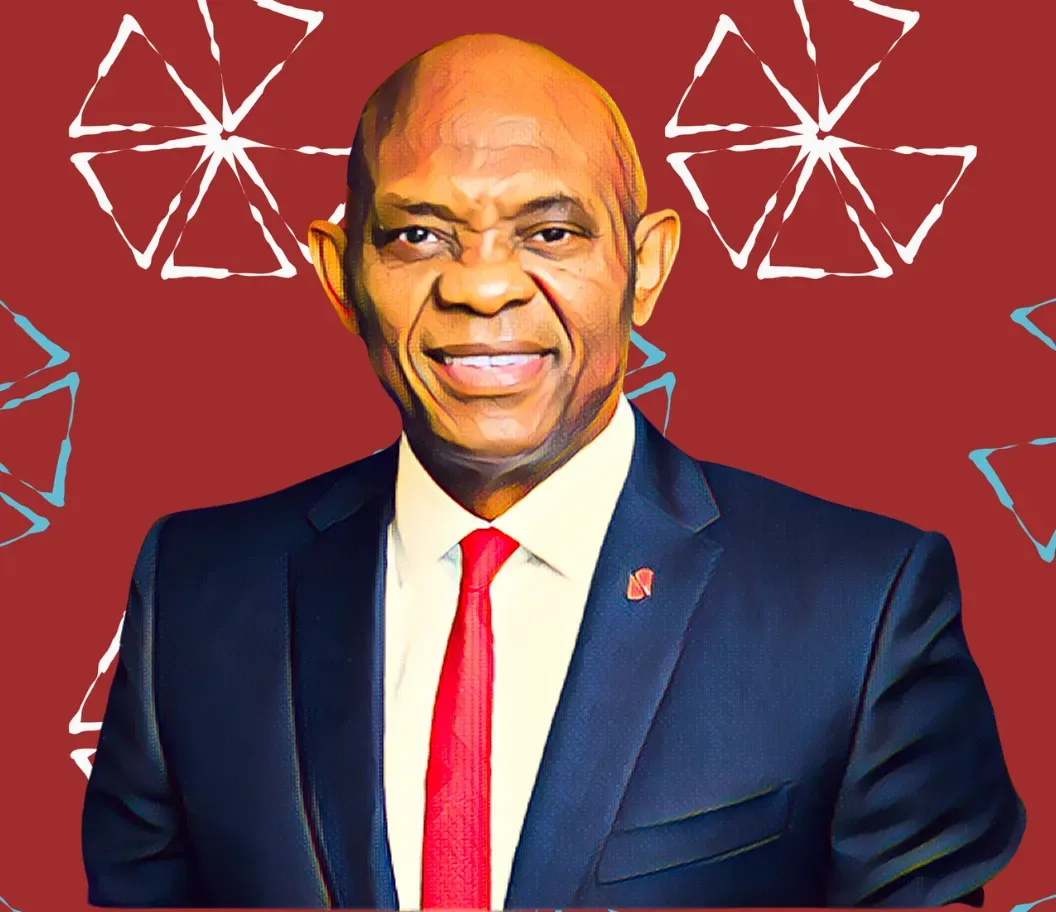
French President Emmanuel Macron has appointed Nigerian billionaire Tony Elumelu to lead the Africa France Impact Coalition, a new forum designed to bring French political leaders and prominent African entrepreneurs closer together as Paris works to recalibrate its standing on the continent.
The Coalition will be showcased at the upcoming France-Africa summit in Nairobi in May, scheduled for May 11 and 12 and formally titled the "Africa Forward Summit: Africa-France Partnerships for Innovation and Growth." It is the first France-Africa summit to be held in an English-speaking African country, a choice that signals something deliberate about where France is placing its bets.
Elumelu, chairman of United Bank for Africa and founder of the Tony Elumelu Foundation, attended the first gathering of the Coalition in Paris last week. He came with a clear message. "Africa's young people are talented, entrepreneurial, and ambitious. What they need is access to opportunity, capital, mentorship, and markets," he said. "But potential without opportunity is a promise broken; joblessness is the betrayal of a generation."
He called for deeper collaboration, describing the Coalition as a partnership between Africa's private sector and global leaders that matches the scale of the opportunity before them.
The appointment carries weight beyond the ceremonial. Elumelu has spent 15 years building one of the continent's most substantive entrepreneurship programmes. Since launching the Tony Elumelu Foundation in 2010, he has disbursed over $100 million in seed capital to more than 24,000 entrepreneurs, provided business training to 2.5 million young Africans, enabled the creation of over 1.5 million direct and indirect jobs, and helped generate over $4.2 billion in revenue across his supported ventures. On March 22, the foundation is scheduled to fund an additional 3,200 young entrepreneurs.
His economic philosophy, which he calls "Africapitalism," holds that the African private sector must take the lead in driving the continent's social and economic transformation through long-term investment rather than aid dependency. It is a worldview that fits neatly into what Macron is trying to project.
The choice of both Nairobi and a Nigerian entrepreneur to anchor the initiative reflects France's increased emphasis on anglophone Africa, partly as a response to its waning influence in former francophone colonies. Military coups in Mali, Burkina Faso and Niger have often carried explicitly anti-French sentiment, with many citizens in Françafrique resenting perceived remnants of colonial-era control. The CFA franc arrangement, which requires France's former colonies to deposit at least 50 percent of their foreign reserves with the French Treasury in Paris, has long been a flashpoint.
Ghana's foreign minister Samuel Ablakwa, speaking at the Chatham House think tank in London last week, said "there is a genuine concern in Francophone Africa that their relations with France will have to be reset and that there is a need for a new approach."
Macron has acknowledged France's economic gaps in Africa openly, citing the exit of French banks from several markets and calling for reinvestment by entrepreneurs. The new doctrine, centered on small and medium enterprises and what Paris describes as equal partnerships, is a departure from the top-down Françafrique model that defined French engagement with the continent for decades.
France has also been leveraging its closer ties with anglophone Africa for security and military purposes. Paris and Nairobi are due to sign off on a landmark defence pact, with Kenya seeking to diversify from a dependence on its traditional military partners.
Elumelu referenced Macron's 2018 visit to Nigeria, when the French president addressed more than 2,000 young African entrepreneurs, as a moment whose energy the new Coalition should rebuild and surpass. Whether the Africa France Impact Coalition translates that energy into durable economic partnerships will be measured, in part, at the Nairobi summit in May.