

Table of Contents
In 1978, a young man from the Rift Valley was doing what his job required. He was supervising prisoners working on a compound. He was a warder, low-paid and largely anonymous, one of thousands of civil servants whose names would never appear in any newspaper. Then Daniel arap Moi noticed him.
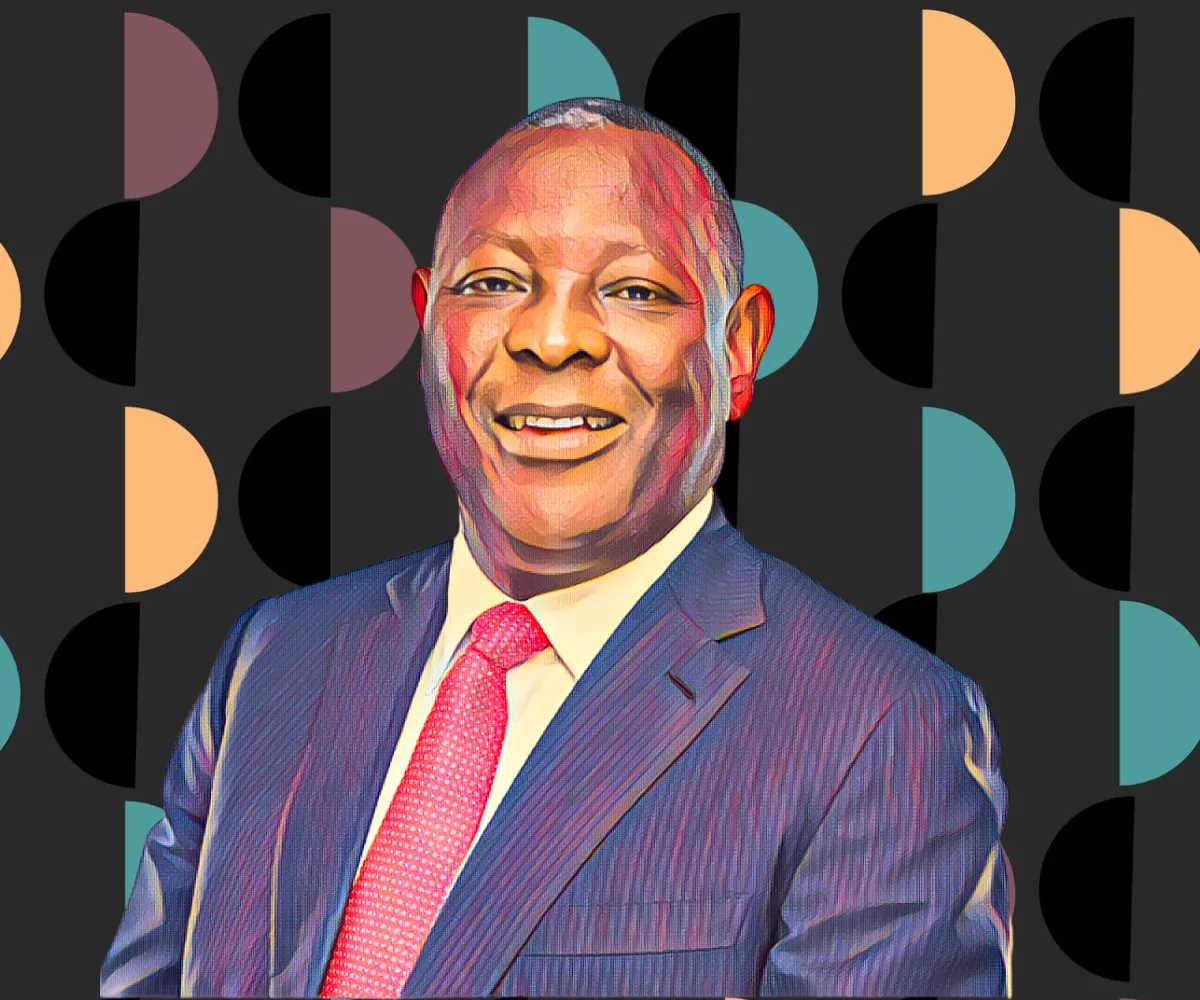
That encounter set in motion one of the most remarkable and contested accumulations of private wealth in Kenya's post-independence history. The young warder was Joshua Kulei, and by the time Moi left the presidency in 2002 after 24 years in power, Kulei had become one of the most talked-about and least-understood billionaires in East Africa.
The man Moi trusted
Kulei was born and raised in Kenya's Rift Valley province, coming from a background with limited means and minimal formal education. After completing secondary school, he cycled through menial work before landing a job in the Kenya Prisons Service. The position that would change everything came when he was assigned to supervise prisoners working on the Home Affairs minister's farm and compound. That minister was Moi.
The two struck up a relationship. When Moi became president following Jomo Kenyatta's death in 1978, he needed someone to handle his private business affairs, someone he trusted absolutely. State House had an official Comptroller, but Moi had come to see Kulei as a different kind of ally. He brought Kulei with him.
Over time, Kulei moved from prison warder to stores clerk at State House, slowly cementing his position in Moi's inner circle. When Moi decided to separate his official business from his private dealings, Kulei was the man chosen to manage the private side. By the mid-1990s, he had become what those close to the Moi administration later described as the undisputed consigliore. He wielded power quietly, rarely appearing at public functions, almost never giving interviews, but present in the architecture of Kenya's political economy in ways that would only become visible years later.
A colleague who worked within the Moi administration at the time told journalists that Kulei had very limited formal education, that in meetings about business matters he sometimes struggled with English industry terminology. And yet his instincts were sharp, his loyalty was absolute, and his ability to navigate Kenya's deeply political business environment during those years was exceptional. "Street-smartness and survival instincts," one account noted, was what set him apart.
The empire that grew in the shadows
The extent of what Kulei built only began to surface after Moi left power in 2002. The incoming administration of President Mwai Kibaki contracted British security and investigation firm Kroll and Associates to trace allegedly looted assets from the Moi era. Kroll submitted a 106-page report that was leaked to WikiLeaks in 2007. Its findings about Kulei were striking.
According to the report, Kulei represented Moi in more than 50 companies cutting across nearly every sector of the Kenyan economy, both locally and internationally. He held significant stakes in companies across agribusiness, banking, media, logistics, real estate, mining and insurance. Some of those companies used his family name as cover: Sian, a flower farm company, was derived from his surname Chemusian. Ngata Flower Farms in Nakuru was co-owned with Moi on a 50:50 basis. Sian flowers were held on a 60:40 basis. The name choices were deliberate. Kulei reportedly used banks in Luxembourg for Moi's confidential banking, and held interests in London property from which his children attended school.
By 1997, Kulei was a director of Bamburi Cement, Nas Airport Services, Heritage Insurance, CMC Holdings, CFC Bank and American Life Insurance Company, among others. He and Moi co-owned more than 200 prime properties across Kenya, along with a house in Eaton Park, Surrey, valued at about Ksh600 million, and a flat in Lowndes Square, London, valued at around Ksh300 million.
He was said to be the richest of all Moi's inner circle, and the most reclusive. He also reportedly played a role in one of Kenya's most consequential political decisions: sources have said he was influential in Moi's choice of Uhuru Kenyatta as his preferred successor in the 2002 election.
Sovereign Group and the post-Moi years
When Moi left office, Kulei did not retreat. He consolidated his holdings under Sovereign Group Limited, registered on April 1, 1997, and headquartered at Trans National Plaza on Mama Ngina Street in Nairobi. The company became his public-facing vehicle, though its actual ownership was wrapped in a series of trusts and holding structures that made it difficult to trace who ultimately benefited.
Ruby Trust Limited owns 99.99 percent of Sovereign Group. Sovereign Trust owns half of Ruby Trust. The other half belongs to a company secretary. A similar loop exists with Sian Enterprises and Trade World Kenya.
Sovereign Group has interests across more than eight sectors: agribusiness, real estate, hospitality and tourism, ICT and technology, mining and manufacturing, transport and logistics, insurance, communications and media, trading and education. Its subsidiaries and associates include Siginon Group, one of East Africa's leading logistics companies, the Maasai Ostrich Resort in Kitengela, Merica Hotel in Nakuru, Crater Lake Sanctuary, Fidelity Insurance and Sian Roses, one of Kenya's largest exporters of rose stems. In 2018, Sovereign Group acquired a 33.8 percent government stake in the five-star InterContinental Hotel in Nairobi. Kulei is also the single largest shareholder of Standard Media Group, which owns The Standard newspaper and KTN television, holding a 38 percent stake.
His son Kennedy Kipruto Kulei serves alongside him as a director of Sovereign Group, and former Uchumi Supermarkets managing director Julius Kipngetich is also listed on the board. The Sovereign Group website describes Kulei as a leader with more than 50 years of experience in investments and business management, overseeing more than 5,000 employees across the group's subsidiaries and associates.
The legal weight
Kulei's wealth has never existed without scrutiny. In 2009, he was permanently banned from travelling to the United States, citing his alleged involvement in large-scale corruption. In 2017, he was charged in a Kenyan court with obtaining Ksh17.9 million through the sale of public land in Mombasa to a private company. He and two others also faced charges of abuse of office over the transfer of 12 plots belonging to Kenya Airports Authority. Two years later he was charged with conspiracy to defraud the Kenya Pipeline Company of about Ksh65 million.
More recently, in 2024, an activist filed a petition at the Nakuru High Court alleging that Kulei used his proximity to power to illegally acquire nearly 935 acres of Agricultural Development Corporation land now valued at more than Ksh14 billion, land on which Sian Roses now operates. Kulei denied the claims, saying he acquired the land legally and that only the ADC could question whether payment was made.
Kulei has consistently deflected accountability. In his own court filings and public statements, he has sought to minimize his past role, claiming at one point that he only held "the small role of setting appointments for members of the public who wished to meet the then President." Few who studied the Kroll report or tracked his corporate footprint found that characterization credible.
The land cases, the US travel ban, the criminal charges: they have not dismantled the empire. The Sovereign Group still operates across Kenya. The family still controls stakes in logistics, media, agriculture and hospitality. Joshua Kulei, the man who got noticed while supervising prisoners on a minister's compound more than four decades ago, built something large enough that it has survived the fall of the administration that made it possible, and every legal challenge that has come since.