


Table of Contents
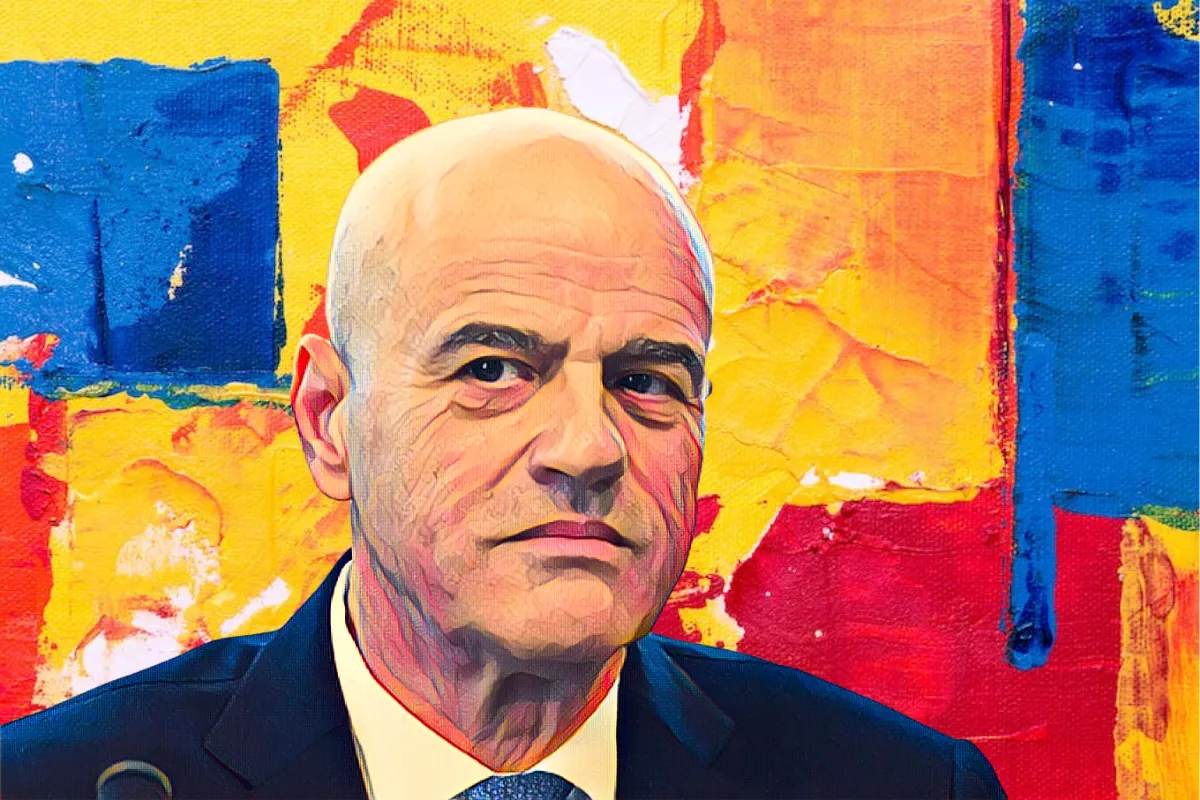
Claudio Descalzi traveled to Abuja on March 5 with a clear agenda: put a legal dispute to rest that had frozen one of Nigeria's most commercially significant oil blocks since the late 1990s.
He left with a deal.
The Eni chief executive officer and Nigeria's President Bola Tinubu announced a settlement the same day, formally ending a case that had dragged through international arbitrations, criminal courts in Italy and a failed 2011 resolution attempt before arriving at this result.
The agreement converted Oil Prospecting License 245, widely known as the Malabu block, into four licenses under a new operating structure and discontinued the pending arbitration at the International Centre for Settlement of Investment Disputes.
The block now sits in four parts: two petroleum mining leases, PML 102 and PML 103, and two petroleum prospecting leases, PPL 2011 and PPL 2012. Nigerian Agip Exploration Ltd., Eni's Nigerian subsidiary, will serve as operator across all four. The Nigerian National Petroleum Co. Ltd. and Shell Nigeria Exploration and Production Co. Ltd. are the partners.
The path is now open for a final investment decision on the Zabazaba-Etan development project. The deepwater development holds approximately 500 million barrels of recoverable reserves and is designed around a floating production, storage and offloading vessel capable of processing 150,000 barrels per day. Natural gas output, peaking at 200 million standard cubic feet per day, will be exported through Nigeria LNG.
Tinubu called the settlement a milestone and said it sent a direct signal to investors watching Nigeria.
"This resolution sends a clear signal to global investors that Nigeria is prepared to address legacy issues transparently, uphold the rule of law, and create a stable environment for long-term capital," he said.
Olu Arowolo-Verheijen, the president's special adviser on energy, said the revised terms mark a meaningful improvement on the 2011 deal and align with the framework established under the Petroleum Industry Act. She described the outcome as striking a balance between investor predictability and stronger protections for the federation.
The block's ownership history is well known across the industry. Gen. Sani Abacha's government awarded OPL 245 in April 1998 to Malabu Oil and Gas. What followed was nearly three decades of contested ownership, international arbitrations and criminal investigations in Italy targeting Eni executives, all of whom a Milan court acquitted in March 2021 on every count.
Industry watchers say the production potential alone justifies the years it took to get here. Oil and gas expert Bernard Iloh estimates the additional output could generate more than $9.6 million in daily revenue to the Nigerian federation account at current budget pricing, before any natural gas proceeds are counted.
The final investment decision, when it arrives, is expected to rank among Nigeria's largest-ever upstream capital commitments, with some industry estimates putting development expenditure as high as $10 billion, comparable in scale to the Bonga deepwater project.
Eni has operated in Nigeria since 1962. Beyond OPL 245, Descalzi and Tinubu also discussed the company's existing portfolio in the country, including the Abo and Bonga fields, Nigeria LNG and a recently acquired additional stake in OML 118.