

Table of Contents
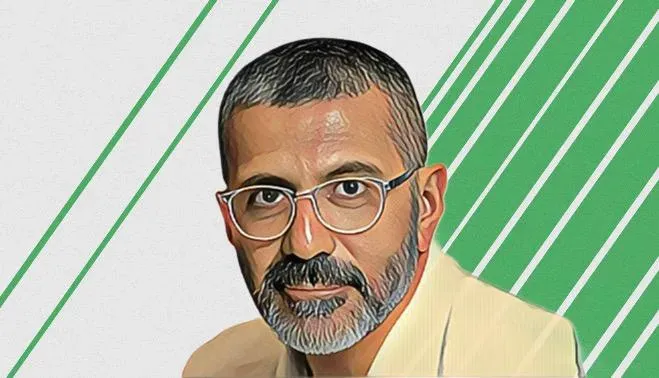
Optasia founder Bassim Haidar has sold R1.482 billion ($86.4 million) worth of shares in the JSE-listed fintech to FirstRand, sharply cutting his stake in the company just five months after one of the Johannesburg Stock Exchange's biggest new listings in years.
The transaction involved 74,103,711 ordinary shares, equal to 6% of Optasia's issued share capital, sold at R20 a share by Zoey Enterprises, an associate of an entity owned by Haidar. FirstRand bought the block through FirstRand Investment Holdings, lifting its shareholding in Optasia from 20.1% to 26.1%. Settlement was expected on or about March 30, 2026.
The sale puts Haidar back in the market conversation at a sensitive time. Optasia made its debut on the JSE in November 2025 in what Moneyweb described as one of the biggest new listings on the bourse in several years. At the time, FirstRand took an initial 20.1% strategic stake valued at about R4.7 billion. Before the listing, Haidar held an estimated stake of more than 18% through Zoey Enterprises. He now holds an indirect 1.5% shareholding, according to the latest disclosures, marking a substantial reduction in his economic interest even as he continues to serve as a non-executive director.
To allow the transaction to proceed, the lock-up restriction on the shares had to be waived by the joint bookrunners. That detail matters. It shows this was not routine open market dealing but a deliberate block trade requiring specific approval, which underscores the size and significance of the move.
Optasia is not a conventional South African fintech. Founded in 2012 as Channel VAS and rebranded in 2022 after adopting an AI-powered platform of the same name, the group uses artificial intelligence and mobile data to provide airtime credit and micro-lending services to underbanked consumers across emerging markets. It operates in 38 countries, processes more than 34 million transactions a day and posted revenue growth of 76% in 2025. The company is headquartered in Dubai but has a Johannesburg hub in Bryanston and deep operating ties to South Africa through partnerships with MTN and Vodacom. Michael Jordaan, the former FNB chief executive, chairs the board.
That operational profile is precisely what drew FirstRand in from the start. When the bank first disclosed its investment, it said Optasia's technology gave it access to markets and customers it would have found difficult to build organically. It pointed specifically to the group's ability to score customers using alternative data, process micro loans at scale and collect repayments through mobile ecosystems, a set of capabilities that matters most in regions where formal banking infrastructure is thin and mobile penetration is high.
Optasia chief executive Salvador Anglada said FirstRand's increased investment reflects confidence in the company's growth trajectory and its strategy of what he called disciplined, responsible scaling.
Founder share sales always attract scrutiny, especially so close to a listing. Investors will read this transaction in at least two ways. One is that Haidar is realising value after a successful listing and a substantial strategic partnership with one of South Africa's most powerful financial institutions. The other is that FirstRand is sending a deliberate signal that it wants materially more exposure to fintech-driven credit markets across Africa, the Middle East and Asia. Both interpretations hold up, and they are not mutually exclusive. The sale reduces founder concentration. The increased FirstRand stake adds the weight of a blue-chip strategic shareholder with a stated long-term rationale.
Haidar is a well-known entrepreneur with a long track record in telecoms, logistics and financial infrastructure across Africa and the Middle East. MyBroadband described him as a Nigerian-born Lebanese billionaire who founded Intercomm in 1991, GMT in 1995 and Channel IT in 2003 before building Channel VAS into what became Optasia. His decision to bring that story to the JSE made him one of the more prominent founders to list an Africa-linked fintech company in Johannesburg.
The ownership picture has now changed. The bigger question it leaves behind is the same one that has hung over Optasia since its listing: whether the company can convert a fast-growth emerging markets story into a durable public market track record. FirstRand has doubled down on its bet. The founder has taken significant money off the table. Both moves say something about where confidence in Optasia currently sits, and neither says the same thing.