

Table of Contents
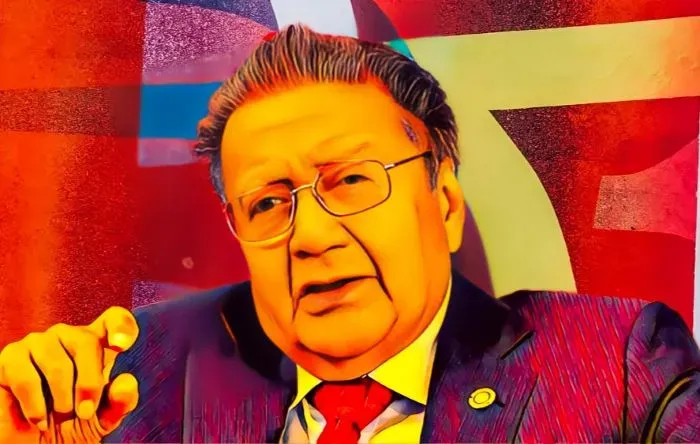
Kenya has awarded industrialist Manu Chandaria the National Heroes Award, formally recognizing one of the country's most respected business figures for a lifetime of giving that has placed his name on hospitals, schools and community projects across East Africa.
The award was presented by Chief of Staff and Head of the Public Service Felix Koskei during a ceremony held at Chandaria's home in Muthaiga, Nairobi. Chandaria, who is 97, was recognized under the philanthropy category after President William Ruto named him during the 2025 Mashujaa Day celebrations in Kitui County.
Koskei said Chandaria's life and work reflected the spirit of heroism, citing his long record of expanding access to medical care and education including support for rural clinics. The decision to hold the ceremony at his home gave it a personal quality, but the message was clearly national.
What stands out about this recognition is what it was not about. This was not an award for revenue figures or corporate expansion. It was explicitly tied to philanthropy, healthcare support and social development in underserved communities. Government officials pointed to contributions that helped widen access to treatment across Kenya, and others linked the honor to education, enterprise development and broader community support.
Chandaria was born in Nairobi in 1929 and built a career that combined manufacturing, corporate leadership and large-scale giving. He is a senior member of the Comcraft Group, an industrial conglomerate with manufacturing operations in dozens of countries that has long been one of the region's most prominent private sector enterprises.
He has also spent years cultivating a reputation as a businessman for whom philanthropy is not an afterthought. The Chandaria Foundation has supported schools, health initiatives and charitable trusts in several African countries where the family business operates. In 2022, he received the Carnegie Medal of Philanthropy, one of the more prestigious international recognitions in the field.
Koskei said in his public remarks that Chandaria's contribution reflected a lifetime of service and impact across key sectors. Congratulations from business and civic organizations framed him as a symbol of private wealth directed toward public benefit, a distinction that in Kenya, where frustration with elite privilege often runs high, carries weight beyond ceremonial language.
Chandaria has maintained broad admiration across political and social lines over decades of public life. Part of that comes from longevity. Part of it comes from the visibility of his giving. His name is attached not only to factories and boardrooms but to institutions that ordinary Kenyans can point to in education and healthcare. That combination is not easy to sustain, and not many wealthy industrialists manage it.
The timing carries its own significance. At 97, Chandaria is one of a generation of business figures whose careers span Kenya's independence era and the modern corporate economy. Recognizing him now allows the state to place him in a national story about institution building, continuity and the long arc of private sector contribution to public life.
His business record alone would have guaranteed him a place in Kenyan corporate history. He helped build one of the region's most prominent industrial groups, served on numerous boards and contributed to Kenya's manufacturing and export base over decades of active leadership. The National Heroes Award suggests the government sees something more, a legacy grounded in the quieter work of scholarships, clinics and community support that can outlast market cycles and executive titles.
It is also the kind of recognition that sharpens a question that follows many of Africa's wealthiest industrialists: what they choose to do with the capital and influence they accumulate over long careers. In Chandaria's case, the Kenyan state has now put its answer on the record. He has been formally recognized not only as a businessman but as a national figure whose philanthropy has had lasting public impact.
The distinction matters because it is rare. Many wealthy people give. Fewer build giving into the fabric of their public identity over decades in a way that attracts genuine, lasting recognition. Kenya has now formally said, in front of the country and through one of its highest civilian honors, that Chandaria is one of those people.