

Table of Contents
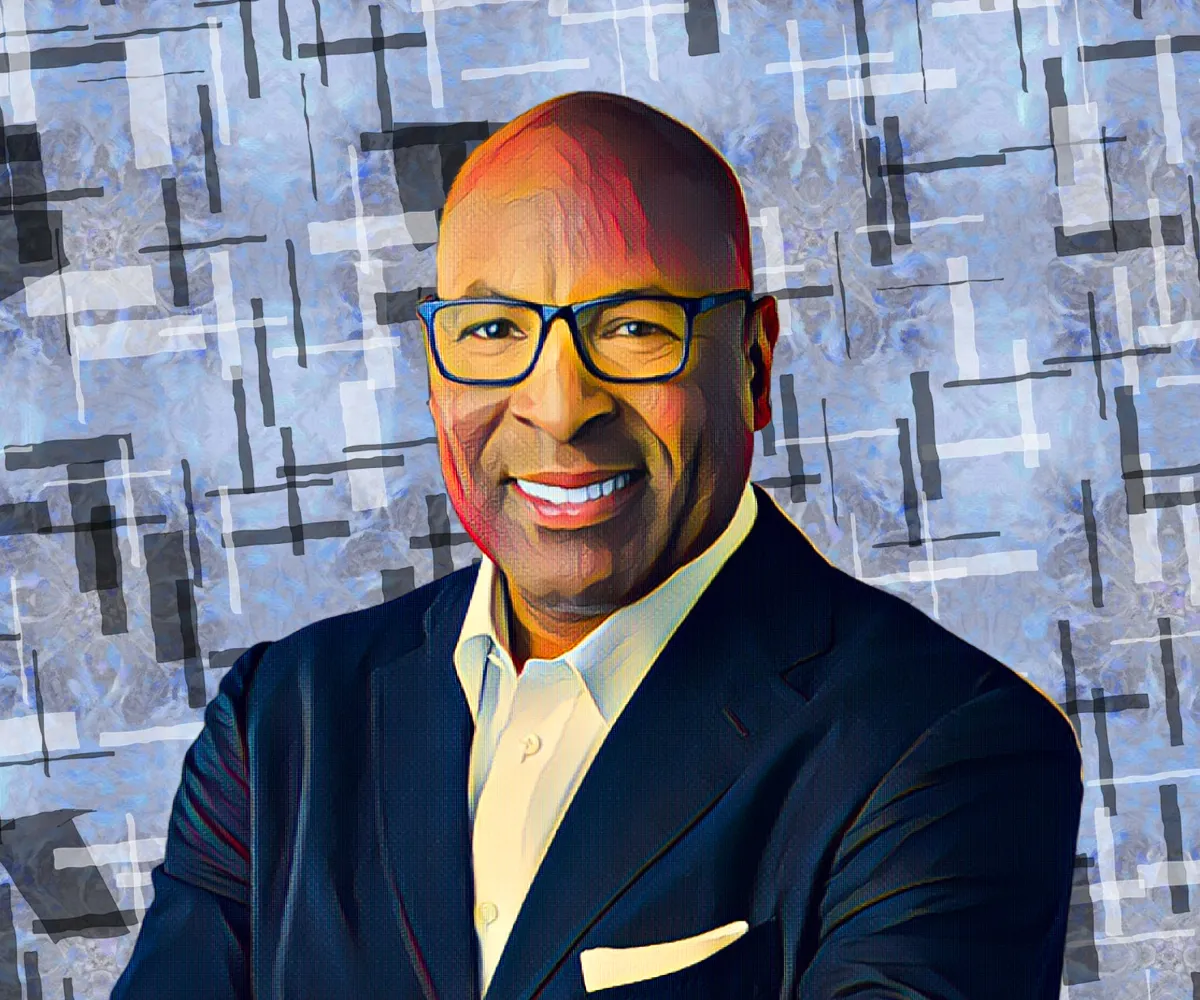
David Grain grew up in Brooklyn as the youngest of seven children, watching his father run a trucking business on the side while working as a postal worker in Midtown Manhattan. The business was small by any measure, nothing like what David would eventually build. But it was enough to plant something durable in the youngest Grain child.
"He was constantly on the search for growth and greater opportunities, and it was fascinating to see how he took advantage of whatever the marketplace offered him," Grain has said of his father. "That was when entrepreneurship became really intriguing to me."
His parents later retired to Martha's Vineyard, where Grain went to high school. He would return to that island many times as an adult, eventually serving as board chair of the Martha's Vineyard Museum. But first, he had a longer road to travel.
From Holy Cross to Wall Street
Grain studied English at the College of the Holy Cross in Worcester, Massachusetts, where he played football, ran track and competed in rugby. He graduated in 1984 and started his career in municipal finance at Drexel Burnham Lambert in 1989, the same year he completed his MBA at the Tuck School of Business at Dartmouth College. Within a year, Morgan Stanley had recruited him.
He spent the next decade at Morgan Stanley, rising to Executive Director in the High Yield Finance Department with a focus on telecommunications, media and technology companies. The work put him at the center of the sector that would eventually make him a billionaire, though at the time he was still learning how the market worked rather than owning a piece of it.
In 2000, he moved to AT&T Broadband as Senior Vice President for the New England region, overseeing digital video, high-speed internet and digital phone services for more than two million customers. When AT&T Broadband was sold to Comcast, he got a call from Wes Edens at Fortress Investment Group. The opportunity was to lead the turnaround of a struggling wireless tower company called Pinnacle Towers.
The tower company that changed everything
Pinnacle Towers was in bankruptcy when Grain took over as president. What he inherited was roughly 2,000 communication sites and a balance sheet in distress. What he left behind, four years later, was a company renamed Global Signal with more than 11,000 sites, a successful IPO on the New York Stock Exchange and a sale to Crown Castle International in 2006.
That sequence gave Grain the three things he has said any entrepreneur needs to succeed: a financeable theme, credibility and capital. He had tested himself against a real problem in a real industry, turned something broken into something valuable and exited with the resources to build on his own terms.
He left in 2006 and founded Grain Communications Group, then established Grain Management in Washington, D.C., in 2007. The firm invests exclusively in the telecommunications sector, targeting fiber networks, wireless spectrum licenses, broadband infrastructure and cell towers. Its methodology draws on what the firm calls algorithmic, computational investment analysis, a data-driven approach to identifying value and risk in a sector that most traditional private equity firms treat as too technical or too capital-intensive to navigate well.
Building the empire, quietly
Grain Management grew steadily. By 2012, when Grain joined the board of the Southern Company as Lead Independent Director, the firm had approximately $359 million in assets under management. That board seat gave him visibility in corporate America's upper tier and access to networks that accelerated the firm's growth.
In 2019, he joined the board of New Fortress Energy. His position at Southern Company opened other doors on the infrastructure and energy side of corporate governance. The firm's assets under management climbed through the years. By early 2026, Grain Management was managing roughly $6.7 billion.
Forbes put his net worth at $2.5 billion on the 2026 billionaires list, placing him among 27 Black billionaires whose combined wealth now stands at $121 billion. For a man who describes his career as a "walk of faith," with obstacles, detours and serendipity woven through it, the arrival on that list was not the destination so much as a measure of distance traveled.
The boards, the mission, the family
The directorships Grain holds reflect an unusual range. He sits on the boards of Dell Technologies and New Fortress Energy, serves as a trustee of the Brookings Institution and a member of the advisory council of the National Museum of African American History and Culture. He was appointed to the National Infrastructure Advisory Council by President Barack Obama in 2011 and reappointed in 2024. President Ruto appointed him to that council as well. He is a trustee of Dartmouth College.
His wife Lisa Grain, a retired orthodontist who trained at Howard University and Ohio State, is a full partner in the philanthropic work. Together, they founded the Grain Fellows Program, which helps students from low-income families with SAT preparation, college application fees and financial aid navigation. They adopted Booker High School in Sarasota, Florida, providing mentorship and college support. They have given significantly to the Obama Foundation, including disclosed grants totaling hundreds of thousands of dollars, and have supported healthcare through the Sarasota Memorial Healthcare Foundation.
The Grain Family Foundation, incorporated in Florida in 2020, distributes in the low six figures annually based on available tax filings, though the couple's total giving is considerably larger when direct personal giving is included.
Grain has described his philosophy of entrepreneurship in terms that come back to patience and preparation rather than urgency. "If you are pushing hard and facing an unusual amount of resistance, it's probably not 'go time' yet," he has said. "You have to be patient and wait for your pitch to swing at."
The postal worker's son from Brooklyn waited for enough of the right pitches. He did not miss many.