

Table of Contents
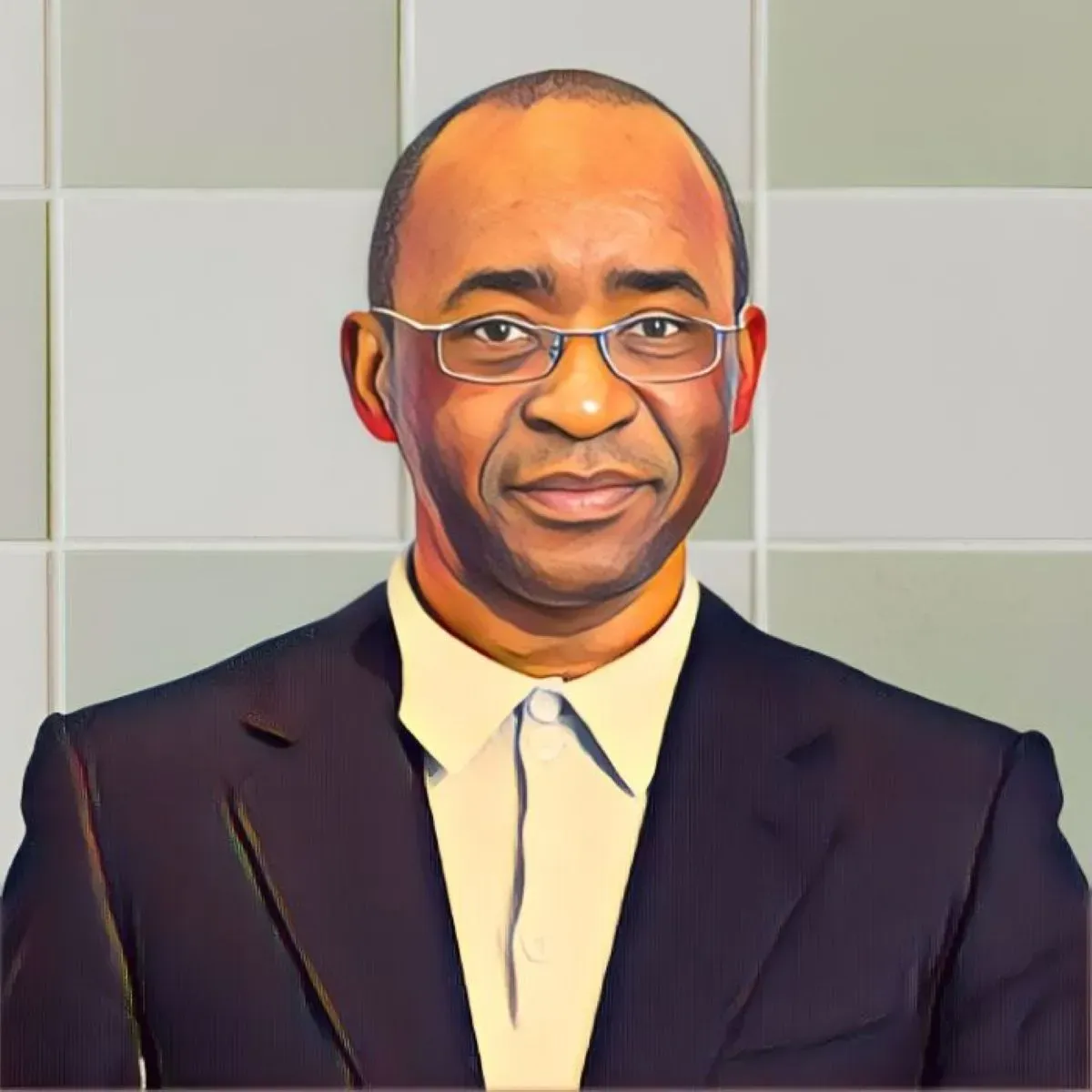
Guaranty Trust Holding Company has posted profit before tax of N1.23 trillion for the year ended December 31, 2025 and declared a dividend of N12.76 per share, its most generous payout since listing. The numbers are spectacular. But they also shine a light on an uncomfortable question that has quietly followed Segun Agbaje for years: for a man who has spent more than a decade building one of Africa's most admired financial institutions, why does he own so little of it?
The numbers
Based on Agbaje's disclosed shareholding of 32,146,651 ordinary shares, his gross dividend from the N12.76 per share payout comes to approximately N410.2 million. After applying Nigeria's 10% withholding tax on dividends, his net take-home is roughly N369.2 million. At GTCO's current share price of approximately N117, his entire stake in the company is worth about N3.76 billion, equivalent to roughly $2.35 million at current exchange rates. That 32 million shares represents approximately 0.088% of GTCO's outstanding issued share capital.
Consider what those numbers mean in context. GTCO reported profit before tax of N1.23 trillion. The group's total assets rose to N17.8 trillion. Shareholders' funds stood at N3.4 trillion. The capital adequacy ratio held at a robust 43.8%. Net loans grew 12.4% to N3.13 trillion. Customer deposits surged 23.8% to N12.87 trillion.
Agbaje built much of this. He joined Guaranty Trust Bank in 1991 and took over as managing director and chief executive in 2011. Under his stewardship, the group transformed from a commercially oriented Nigerian lender into a diversified financial holding company with banking, payments, asset management and pension management subsidiaries across more than a dozen countries. The rebrand to GTCO in 2021 was his architecture. The Habari Pay digital platform was his vision. The consistent reputation for cost discipline, asset quality and governance that makes GTCO the gold standard of Nigerian banking is, in large measure, his signature.
And yet the man who built all of this owns 32 million shares.
What his peers have done
The contrast with his counterparts at other major Nigerian banks is striking. At Zenith Bank, Group Managing Director and CEO Adaora Umeoji has been making news not just for her institution's results but for her personal conviction in the stock she runs. In June 2025, with Zenith Bank shares under pressure amid regulatory forbearance concerns that were roiling the broader sector, Umeoji walked into the market and bought 68.75 million shares worth approximately N3.3 billion. She did not wait for the price to recover. She bought into the fear. By mid-2025, her total stake had grown from 91.8 million shares at the end of 2024 to 275.9 million shares, a more than 300% increase in her shareholding in a single six-month period.
At UBA, Tony Elumelu grew his stake from 2.5 billion shares at the end of 2024 to 6.7 billion shares by mid-2025, a more than 250% increase. At Zenith, founder Jim Ovia moved from 5.08 billion shares to 5.8 billion shares in the same period. These are not small gestures. These are declarations. They tell the market, the shareholders, the regulators and the employees of these institutions exactly what the people running them think of the stock.
Agbaje has made no comparable move. His 32 million shares appear to have remained broadly static, a toe in the water of a company he has spent 15 years running as chief executive.
Why it matters
Insider ownership is not just a financial metric. It is a signal. When a CEO holds a meaningful stake in the company they manage, it aligns their personal wealth with the long-term performance of the institution in a way that no salary, bonus or stock option programme can fully replicate. It says: I believe in what I am building enough to put my own money in. It is skin in the game.
GTCO has no shortage of institutional and retail investors who have put very significant skin in the game precisely because they believe in Agbaje's leadership. The irony is that Agbaje himself, the author of the performance they are betting on, appears to have taken only a token position in the stock.
This is not a governance failure. There is no rule that compels a CEO to own a certain percentage of their company. Agbaje has disclosed his holding transparently and complied with all regulatory requirements. The board, the shareholders and the regulators have all been fully informed.
But the optics matter in a market where investor confidence is heavily influenced by signals. When Umeoji bought N3.3 billion worth of Zenith Bank shares in a single day during a period of market stress, the stock responded. The market read the signal correctly: the person who knows this bank best is buying more of it. That is one of the most powerful endorsements a listed company can receive.
The record stands regardless
None of this diminishes what Agbaje has achieved at GTCO. The 2025 results are the latest chapter in a long run of strong performance. Profit after tax came in at N865.75 billion, declining from the N1.02 trillion posted in 2024, but that decline was largely explained by the non-recurrence of N517.5 billion in fair value gains that inflated the prior year result and by the impact of withholding tax changes on short-term investment securities. Strip those out and the underlying earnings trajectory is intact. Interest income and fee income both grew by double digits. Asset quality improved, with Stage 3 loans falling to 3.4% at the bank level. Cost of risk moderated to 2.2% from 4.9%.
The dividend of N12.76 per share represents the clearest possible statement that the board is confident in the earnings base. That is the total payout, inclusive of an interim dividend of N1.00 per share paid earlier in the year and a final dividend of N11.76 per share. Agbaje described the result in those terms himself, saying the payout reflects both current performance and confidence in the group's long-term earnings potential.
He is right on both counts. GTCO is a world-class financial institution by any measure that matters in African banking. The question is a simple one and it is not yet answered: if Segun Agbaje truly believes in all of that, what is he waiting for?