

Table of Contents
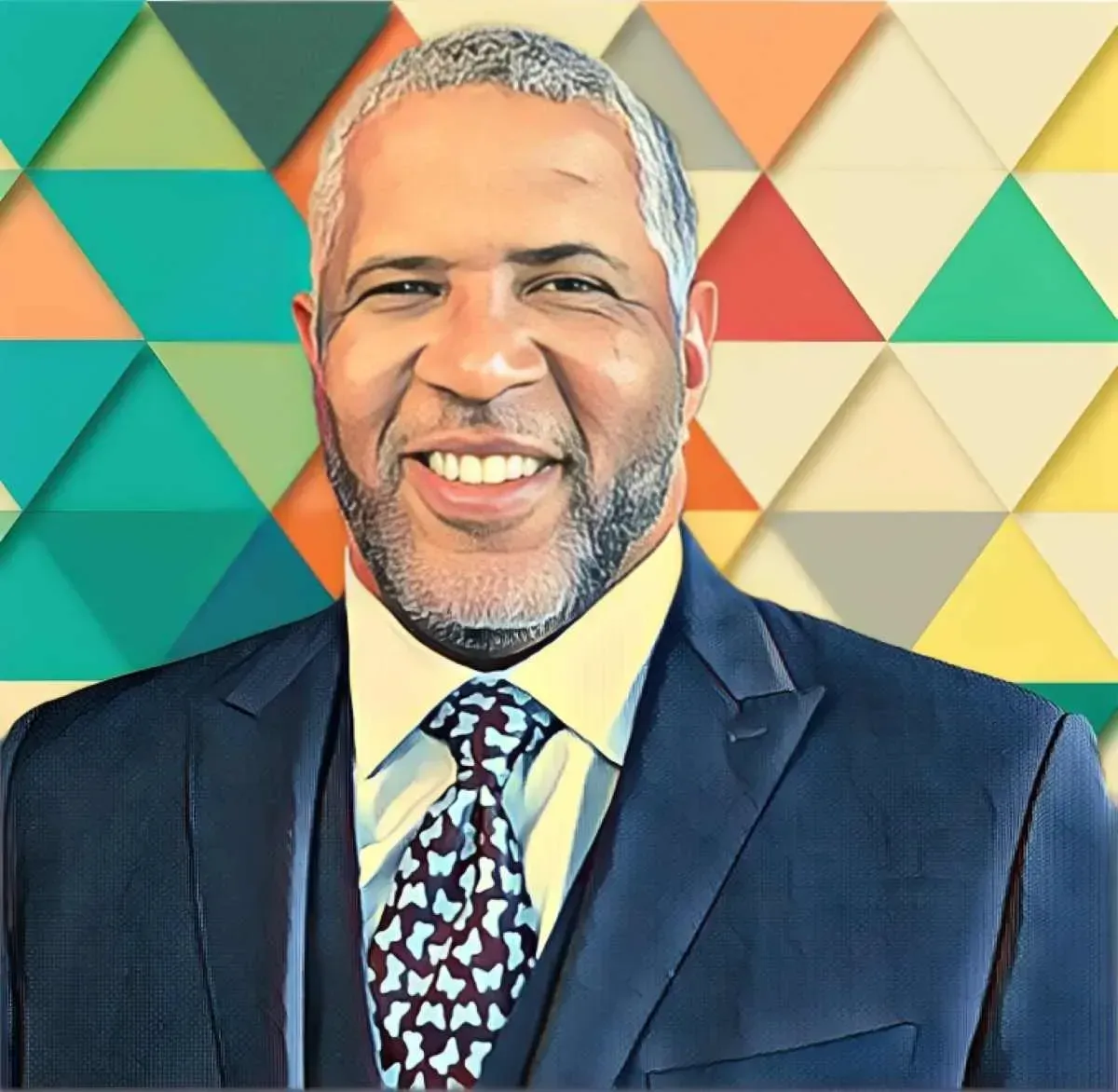
Robert F. Smith was not supposed to intern at Bell Labs. He was a high school student in Denver, Colorado, and the program did not accept applicants his age. He called the company every day for weeks until a manager relented and gave him a spot. That persistence, the refusal to take no from a system that was not designed to include him, became the operating principle of a career that would produce the largest Black-owned fortune in American history.
Smith was born on December 1, 1962, in Denver. Both of his parents held PhDs in education. His mother, Dr. Sylvia Myrna Smith, was a high school principal. His father, Dr. William Robert Smith, ran an elementary school. When Robert was an infant, his mother carried him to the March on Washington, where Dr. Martin Luther King Jr. delivered the speech that defined a generation. The family was middle class, deeply educated, and committed to institutions that served Black communities. His parents donated to the United Negro College Fund for over 50 years, regardless of what was happening in their personal finances. That commitment to giving back through institutional channels, rather than individual gestures, would become a defining feature of Smith's own approach to philanthropy decades later.
He studied chemical engineering at Cornell University, graduating in 1985. After college, he worked at Goodyear Tire and Rubber and then at Kraft General Foods, where he earned two U.S. and two European patents for coffee filtration systems. He was an engineer solving industrial problems, not a financier. He had no particular ambition to work on Wall Street, and nothing in his early career suggested he would end up managing one of the largest private equity firms in the world. That changed when he enrolled at Columbia Business School, graduating with his MBA in 1994 and entering a financial industry that had almost no Black professionals in senior dealmaking roles.
Goldman Sachs hired him into technology investment banking. He worked first in New York and then in Silicon Valley, becoming the first person at Goldman's San Francisco office to focus exclusively on mergers and acquisitions of technology and software companies. Over his tenure, he executed and advised on more than $50 billion worth of deals involving companies like Apple, Microsoft, eBay, and Texas Instruments. The experience gave him a front-row seat to the economics of enterprise software: high margins, recurring revenue, deep customer lock-in, and massive scalability. He learned that enterprise software companies, once embedded in a client's operations, became almost impossible to displace. The switching costs were too high, the data migration too painful, and the retraining too expensive. That insight became the intellectual foundation of everything he built next.
In 2000, he left Goldman and founded Vista Equity Partners. The thesis was narrow and deliberate. Vista would invest exclusively in enterprise software companies. Not hardware. Not consumer tech. Not social media. Software that businesses depended on to run payroll, manage supply chains, handle compliance, and process data. The kind of product that once installed, almost never gets ripped out. At a time when the dot-com bubble had just burst and most investors were retreating from technology, Smith was doubling down on the segment of the tech market that generated the most predictable cash flows.
Twenty-six years later, the numbers speak without qualification. Vista manages over $107 billion in equity assets. The firm has supervised more than 650 completed transactions representing over $350 billion in aggregate deal value. Its portfolio spans more than 90 enterprise software companies employing over 100,000 people globally. The returns have been extraordinary. A $1,000 investment in Vista's first fund would have produced returns that outpaced virtually every major asset class over the same period. Vista's track record has made it one of the most sought-after firms among institutional investors, pension funds, and endowments looking for exposure to software without the volatility of public technology stocks.
The operational engine behind those returns is Vista Consulting Group, the firm's proprietary management system that is deployed inside every portfolio company. VCG standardizes management practices, implements performance benchmarking, improves margins, and accelerates revenue growth. It is not a set of suggestions. It is a comprehensive operating framework that transforms how acquired companies run their businesses. That level of operational involvement is what separates Vista from the hundreds of private equity firms that have tried and failed to replicate its model in the software sector.
Smith's net worth now exceeds $10 billion, according to Forbes, making him the wealthiest Black person in the United States. He surpassed Oprah Winfrey in 2018, and the gap has only widened since. His fortune places him in rarified company not just among Black Americans but among all Americans, ranking him among the 100 richest people in the country.
But the moment that cemented his place in public consciousness had nothing to do with a deal. In May 2019, Smith delivered the commencement address at Morehouse College and stunned the graduating class by pledging to pay off every student loan held by the 396 graduates and their families. The gift totaled $34 million. It was the largest individual donation in the history of the historically Black college, and it sparked a national conversation about student debt, generational wealth, and what it means for Black capital to flow back into Black institutions. Students wept. Parents in the audience stood in disbelief. The moment went viral and transformed Smith from a name known primarily in financial circles into a figure of national significance.
He later co-funded the Student Freedom Initiative with $50 million from his Fund II Foundation, creating an income-contingent funding model for STEM students at historically Black colleges and universities. The initiative was designed not as charity but as infrastructure, a system that could scale beyond a single graduating class and provide sustainable funding for students pursuing careers in science, technology, engineering, and mathematics. The program reflected Smith's engineering background: he approached the problem of student debt the way he approached enterprise software, by building a system with repeatable economics and long-term scalability.
Smith's career has not been without controversy. In 2020, he reached a settlement with the Department of Justice related to tax issues involving offshore entities. The resolution included a $139 million payment and cooperation with federal investigators. Smith was not criminally charged, but the episode drew scrutiny to the complex financial structures that ultra-high-net-worth individuals use to manage their tax obligations. He addressed the matter publicly and moved forward, and the settlement did not diminish his standing among institutional investors or his role at Vista.
He rarely chases headlines. His philanthropy is structural, not performative. His wealth was built not on a single breakthrough product or a celebrity brand, but on the unsexy, compounding economics of business software sold to other businesses. It is a fortune constructed one recurring license fee at a time, across hundreds of companies, over a quarter century. In an industry that celebrates founders who build consumer products that everyone recognizes, Smith built his empire on products that most people will never see or use directly, but that run the back offices of corporations around the world.