

Table of Contents
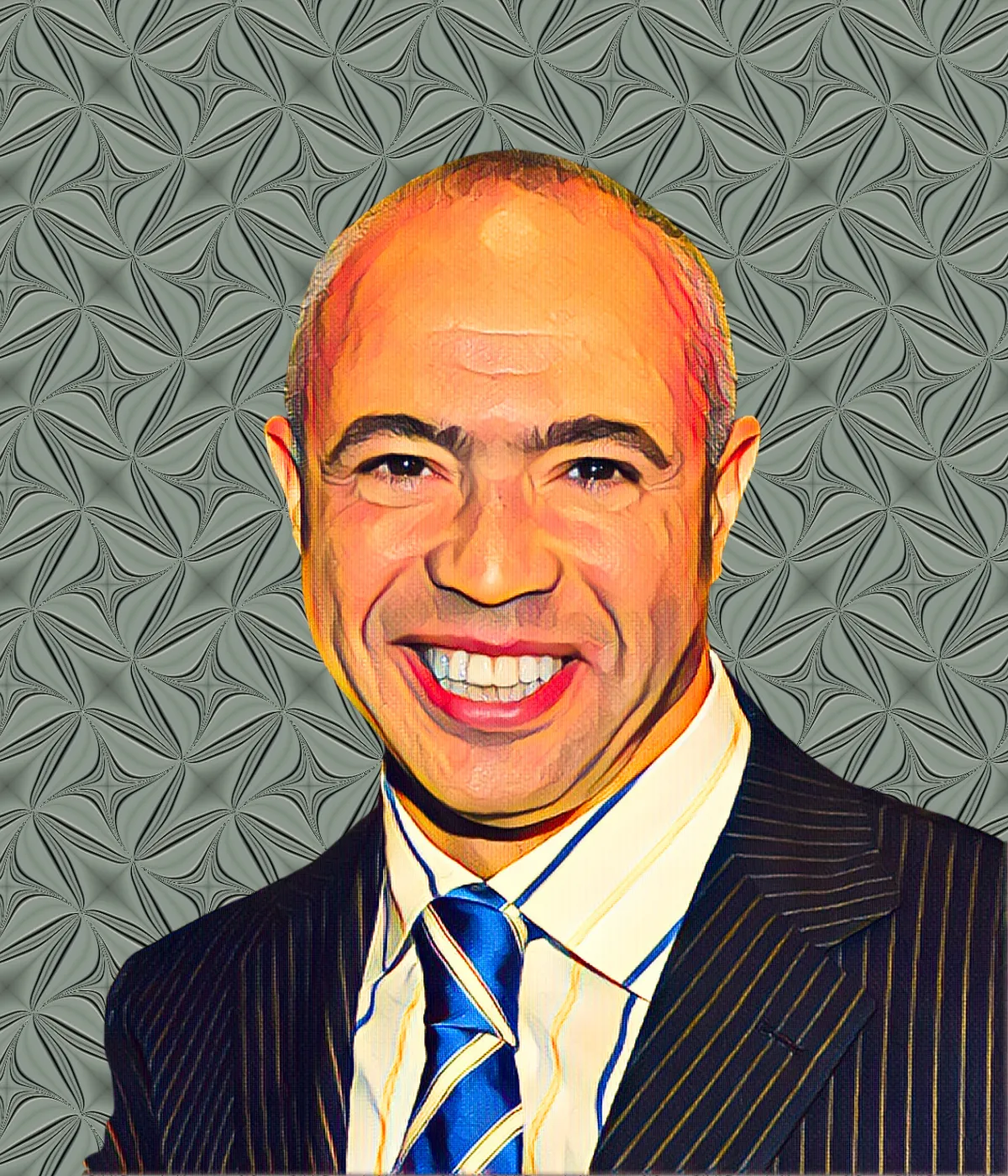
Stefan Kaluzny does not give keynote speeches. He does not appear on magazine covers. He has never posted on social media. Yet the managing director of Golden Gate Capital has quietly assembled one of the most consequential private equity track records in the United States, overseeing more than $60 billion in aggregate enterprise value across acquisitions that have reshaped multiple sectors of the American consumer economy.
Kaluzny, whose net worth Forbes has estimated at approximately $1.3 billion, represents a particular kind of wealth builder: one who operates almost entirely outside of public attention while controlling businesses that millions of Americans interact with daily. His portfolio has included Eddie Bauer, Express, Payless ShoeSource, California Pizza Kitchen, Red Lobster, Bob Evans, Zales, and dozens of other brands that occupy strip malls, shopping centers, and dining corridors across the country. The pattern has been consistent for more than two decades. Kaluzny identifies companies that are undervalued, operationally distressed, or strategically mismanaged, then acquires them through leveraged buyouts and restructures them for profitability.
He was born in Germany and raised in a household that gave him early exposure to both European business culture and the mechanics of international capital flows. Kaluzny attended Stanford University for his undergraduate degree, then earned an MBA from Stanford Graduate School of Business. That academic pedigree connected him to the tight network of Bay Area finance professionals who would become his collaborators and co-investors in the decades that followed.
After Stanford, Kaluzny joined Bain & Company, the management consulting firm known for producing some of the most influential private equity executives in the world. His time at Bain gave him the analytical frameworks for evaluating distressed businesses and the operational playbooks for turning them around. He later worked at Bain Capital, the investment firm founded by Mitt Romney, where he gained direct experience in leveraged acquisitions and portfolio management at significant scale. These two institutions shaped his approach: rigorous quantitative analysis combined with hands-on operational intervention in the businesses he acquired.
In 2000, Kaluzny co-founded Golden Gate Capital in San Francisco. The firm launched with a thesis that was unfashionable at the time. While most elite private equity firms were chasing technology companies during the dot-com era, Golden Gate focused on consumer-facing businesses in retail, dining, and financial services. The logic was straightforward. These businesses generated real cash flow, had tangible assets, and often traded at steep discounts when management teams failed to adapt to changing consumer behavior. Kaluzny believed that operational improvements, not financial engineering alone, could unlock enormous value in companies that the broader market had written off as terminal.
The results validated that thesis on a scale that few anticipated. Golden Gate Capital has raised multiple funds totaling billions in committed capital from institutional investors, pension funds, and endowments. The firm's aggregate deal volume has exceeded $60 billion in enterprise value. Kaluzny has personally led or overseen many of the firm's largest and most complex transactions, including the acquisitions of Payless ShoeSource, Eddie Bauer, and Express. Each deal followed a similar structure. Golden Gate acquired the company at a discount, installed new management or restructured existing leadership, cut costs, renegotiated supplier contracts, and repositioned the brand for a changed market.
The Payless acquisition in 2012 illustrated Kaluzny's methodology. The discount shoe retailer had struggled for years under the weight of changing consumer preferences and intensifying competition from online sellers. Golden Gate acquired the company, restructured its store portfolio, renegotiated its real estate leases, and streamlined its supply chain operations. The company filed for bankruptcy in 2019, but Golden Gate had already extracted significant returns during the holding period through dividend recapitalizations and operational improvements. Critics pointed to the bankruptcy as evidence that the private equity model prioritized investor returns over long-term business health. Supporters argued that Kaluzny's intervention extended the company's life by years and preserved thousands of jobs during a period when many similar retailers simply closed their doors permanently.
The Red Lobster investment, completed through a complex transaction involving Darden Restaurants, drew similar scrutiny from industry observers and labor advocates. Golden Gate's involvement in the casual dining chain raised questions about whether private equity ownership was compatible with the long-term health of restaurant brands that serve working-class and middle-class Americans. Kaluzny has never publicly responded to these criticisms. His firm does not issue press releases about its investments, does not maintain an active media relations operation, and does not participate in the industry conferences where other private equity executives build their public profiles and personal brands.
That deliberate invisibility is itself a strategy. In an era when private equity has become a political target, with legislators and regulators scrutinizing the industry's impact on workers, communities, and competition, Kaluzny's low profile has shielded Golden Gate from the level of public backlash directed at more visible firms like KKR, Blackstone, and Apollo Global Management. His name rarely appears in news coverage of the companies his firm owns, even when those companies undergo significant restructuring or workforce reductions.
What makes Kaluzny's story relevant to the broader narrative of Black wealth and capital allocation is the scale at which he operates without recognition. The private equity industry has historically been dominated by a small group of white male founders whose names became synonymous with financial power in the American economy. Kaluzny has built a portfolio that rivals many of those firms in transaction volume, yet he remains largely unknown outside of institutional finance circles. His estimated $1.3 billion net worth places him among a small group of Black billionaires in the United States, though he is seldom included in public discussions of Black wealth or economic power.
Golden Gate Capital currently manages a portfolio that spans retail, financial services, industrials, and technology-enabled services. The firm employs a team of more than 60 investment professionals and operates from offices in San Francisco. Kaluzny continues to serve as managing director, a title that understates his influence over the firm's overall strategy and investment decisions.
His board involvement has extended beyond Golden Gate's portfolio companies. Kaluzny has served as a director on multiple corporate boards, contributing governance oversight to businesses outside of the firm's direct ownership. These appointments reflect his standing in the broader business community as someone whose judgment on operations, capital allocation, and strategic positioning carries weight with institutional investors, corporate leaders, and fellow board members.
At an estimated $1.3 billion, Kaluzny's wealth is a product of two decades of compounding returns on leveraged investments in companies that other investors avoided or abandoned. He did not build a single iconic brand. He did not take a company public in a celebrated IPO. He did not create a product that consumers associate with innovation or disruption. Instead, he bought what others discarded, fixed what was broken, and extracted value where the market saw none.
The private equity industry produces billionaires at a rate that outpaces nearly every other sector of finance. Within that industry, Kaluzny stands as one of the most successful and least discussed practitioners of the craft. His career is a study in what happens when operational discipline meets patient capital.