


Table of Contents
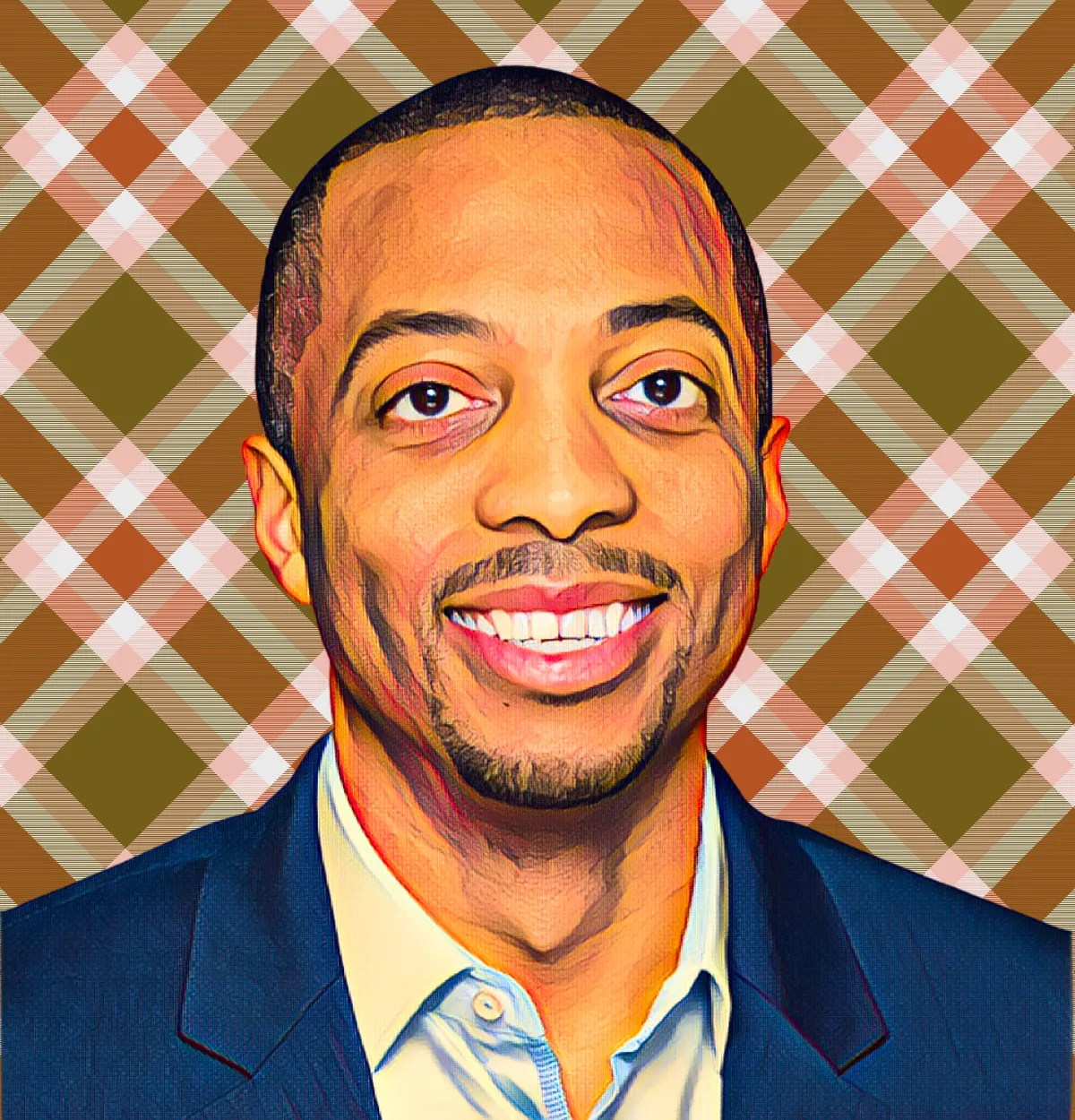
Aaron Holiday started at Goldman Sachs writing code, not pitching deals. His desk was in equities, his job was building software for program trading, and the work was technical enough that most people outside the building would not have understood it if he explained it. That was fine. He was learning something more useful: how capital moved, and why.
That knowledge, accumulated quietly over four years on Wall Street, became the intellectual foundation for one of the more interesting venture capital firms operating in the United States today.
The engineer who went to Wall Street
Holiday grew up and attended Morehouse College in Atlanta, graduating with a Bachelor of Science in Computer Science with honors. He then earned an MBA from Cornell University's Johnson School of Management, where he ran the BR Venture Fund, the school's student-operated investment vehicle. When Pacific Bio Sciences went public while he was managing the fund, Holiday handled the liquidity process himself. It was his first real encounter with what a successful exit actually required.
After Morehouse came Goldman Sachs, where he joined the equities program trading desk in 2004 and spent four years building algorithmic trading infrastructure. He moved next to GFI Group, a global inter-dealer brokerage, where he helped redesign the firm's foreign exchange options trading platform, replacing a manual, voice-driven system with software. He was not an investor yet. He was building the tools that investors used.
The pivot into venture capital began at Cornell Tech, where Holiday became the first Managing Entrepreneurial Officer, working alongside Greg Pass, the former Chief Technology Officer of Twitter, to build the campus Studio culture from scratch. The role gave him something Goldman could not: daily exposure to founders at the earliest, messiest stage of company building.
Building 645 ventures
In 2014, Holiday co-founded 645 Ventures with Nnamdi Okike, a Harvard-educated entrepreneur and former executive at Insight Partners. The name came from the telephone exchange code for Chillmark, Martha's Vineyard, a detail that said something about how the two founders thought: specific, deliberate, not obvious.
The firm's thesis was similarly precise. Holiday and Okike focused on seed and Series A rounds in software companies, specifically enterprise SaaS, infrastructure software and consumer technology. What distinguished 645 from most early-stage firms was not the sectors but the method. Holiday built proprietary software called Voyager to systematically source and score companies beyond personal networks. He co-authored the VC Investment Triangle framework. He applied what he had learned writing trading algorithms to the problem of picking startups, treating pattern recognition as something that could be taught to a machine, not just accumulated by experience.
Venture capital, Holiday argued, was not immune to the scientific method. The industry pushed back. "People said that it was ridiculous, and that venture is an art, not a science," he recalled. He kept building anyway.
The portfolio record
Eleven years in, the numbers are difficult to dismiss. 645 Ventures now manages more than $550 million in assets across more than 68 active portfolio companies, backed by university endowments, funds of funds and pension funds. More than 22 portfolio companies have been acquired.
The exits include FLY Labs, acquired by Google; Source3, acquired by Facebook; Spiketrap, acquired by Reddit; Resident, acquired by Ashley Furniture; and Abacus, acquired by Certify. FiscalNote went public on the Nasdaq under the ticker NOTE. Iterable, Goldbelly, Squire and Overtime are among the active companies that have scaled into category-defining positions.
In 2021, Holiday made the Midas Brink List, the annual ranking of venture investors positioned to break into the top tier of the industry.
He now sits on the governing board of Cornell Tech and the Apollo Theater Board, and is a member of the Young Presidents Organization, the global network of chief executives.
The Goldman Sachs coder who once built tools for other people's trades now runs the firm making the bets.