


Table of Contents
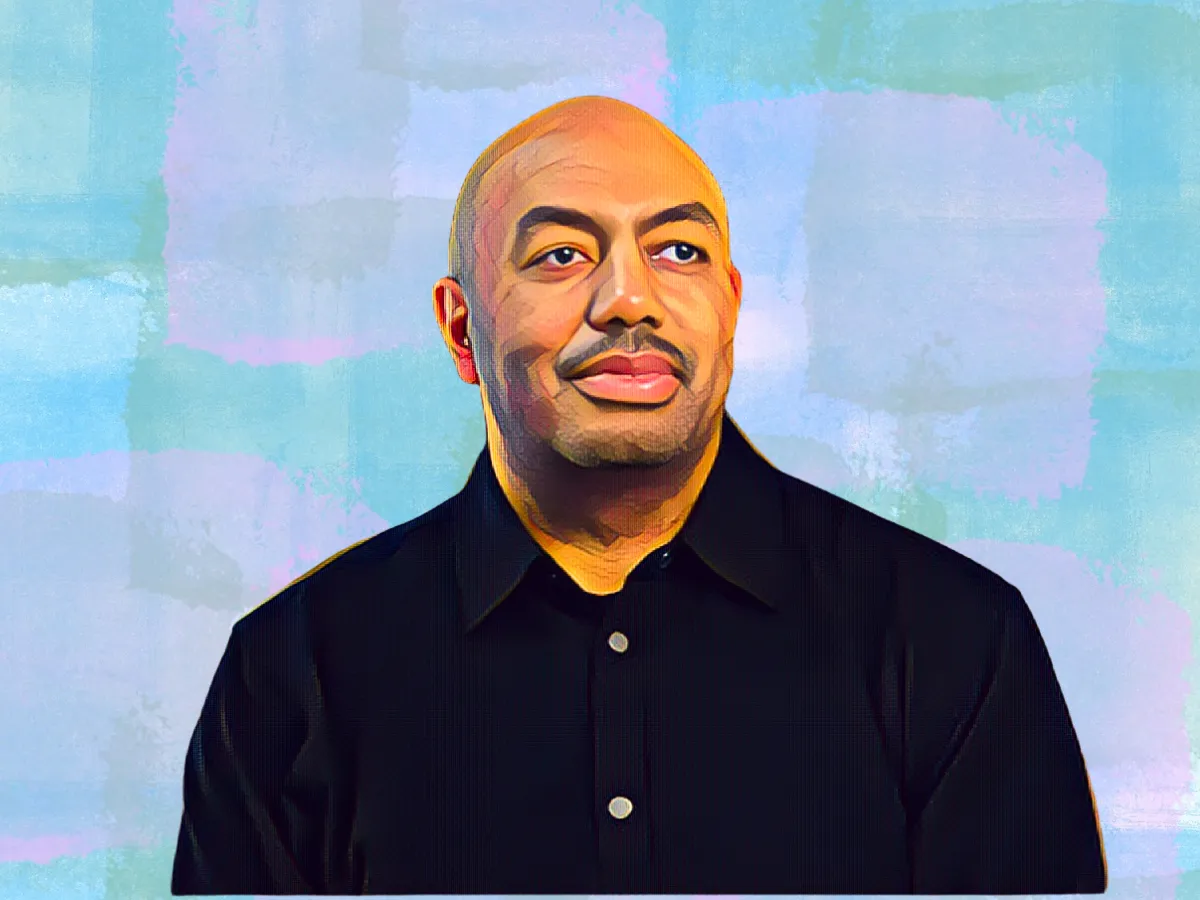
Carmichael Roberts has spent his career at the boundary where laboratory science becomes commercial enterprise. The chief investment officer of Breakthrough Energy and co-founder and managing partner of Material Impact, a Boston-based venture firm with nearly $800 million in assets under management, occupies a position in the global investment landscape that has no close equivalent. He simultaneously oversees one of the largest climate technology investment programs on earth, backed by Bill Gates and a consortium of the world's wealthiest individuals, while running his own independent fund dedicated to turning advances in materials science into scalable companies that solve real-world problems.
Roberts was born into a family that valued education and earned his bachelor's degree and PhD in organic chemistry from Duke University. The doctoral work gave him the deep technical foundation that would distinguish him from nearly every other venture capitalist in the industry. He was not trained to read financial statements and build models. He was trained to understand molecular structures, chemical reactions, and the physical properties of materials at the atomic level. After Duke, he completed a postdoctoral fellowship at Harvard University through the National Science Foundation, working in an environment where the boundary between pure research and potential commercial application was constantly being tested.
Roberts then earned an MBA from the MIT Sloan School of Management, adding the business training needed to translate scientific innovation into investable companies. The combination of a chemistry PhD from Duke, a Harvard postdoctoral fellowship, and an MIT MBA gave him a profile that was almost unprecedented in venture capital: a scientist with the technical depth to evaluate breakthroughs in materials science, chemistry, and engineering, and the financial training to structure the deals that bring those breakthroughs to market.
His early career provided the operational experience that theory alone cannot deliver. He worked in business development at GelTex Pharmaceuticals, a company that was later acquired by Genzyme for $1.3 billion. He then worked in new product and business development at Sentry Products, a life science venture wholly owned by Union Carbide Corporation, which was subsequently acquired by Dow Chemical. Both roles exposed him to the process of commercializing science-based products within large corporate structures and taught him how intellectual property moves from the laboratory to the marketplace.
Roberts then did something that most venture capitalists never attempt: he built companies himself. He co-founded Arsenal Medical, serving as president and CEO of a company that developed foam and fiber materials to treat traumatic injuries and vascular disease. He co-founded 480 Biomedical, a spinout from Arsenal that developed bioresorbable products to treat arterial disease. He co-founded Surface Logix, a drug development company using biophysical chemistry to create small molecule drugs with improved pharmacokinetic properties. He co-founded Nano-Terra, an electronics and industrial materials company. And he co-founded Diagnostics for All, a nonprofit organization that developed low-cost diagnostic tools using materials science platforms to serve patients in developing countries who lacked access to traditional laboratory infrastructure.
That record of company creation is what separates Roberts from investors who evaluate startups from the outside. He has sat in the founder's chair, hired teams, raised capital, navigated regulatory pathways, and made the product and market decisions that determine whether a science-based startup survives or fails. When he evaluates a company for investment, he draws on direct experience building the kind of company he is being asked to fund.
In 2007, Roberts joined North Bridge Venture Partners, where he focused on investing in companies that make products using chemistry, materials science, and materials engineering. The role formalized his transition from operator to investor while keeping him focused on the deep-tech sector where his scientific training provided the greatest competitive advantage.
He then co-founded Material Impact, a venture firm built around a thesis that nearly every major disruptive innovation in history can be traced back to an underlying advance in materials science. The fund takes a hands-on approach, often serving as the first institutional capital into companies that are spinning technology out of university laboratories. Material Impact does not simply write checks. It helps build companies from the laboratory bench, working with founders on product development, manufacturing strategy, and go-to-market execution. The firm's third fund closed at $352 million, bringing total assets under management to nearly $800 million. The portfolio spans approximately 30 companies across food and water systems, biomanufacturing, sustainable products, healthcare, artificial intelligence, robotics, data storage, sustainable manufacturing, and transportation.
The role that elevated Roberts to global prominence came when he was recruited to lead investing at Breakthrough Energy, the climate technology initiative founded by Bill Gates. Breakthrough Energy Ventures, the organization's venture capital arm, has raised over $3 billion across three funds. The first fund closed at $1 billion in 2016. The second secured $1.25 billion in 2021. The third raised $839 million in 2024. Roberts serves as chief investment officer of the broader Breakthrough Energy organization and co-leads the investment committee of Breakthrough Energy Ventures, making him one of the most influential decision-makers in global climate technology investing.
The portfolio under his oversight includes some of the most consequential climate technology companies in the world. Breakthrough Energy Ventures has backed Commonwealth Fusion Systems, which is developing advanced fusion energy technology. It has invested in Form Energy, which is building long-duration energy storage systems to support a fully renewable electric grid. It backed Boston Metal, which is developing emissions-free steel production, and Redwood Materials, which is building battery recycling infrastructure. These are not incremental improvements to existing systems. They are attempts to rebuild the industrial foundations of the global economy around technologies that eliminate carbon emissions at the source.
Roberts was ranked number one on the Boston Globe's Tech Power Players 50 list in 2022, a recognition that placed him above every other technology leader in one of the country's most innovation-dense metropolitan areas. He received the Edison Achievement Award for his significant contributions to innovative technology solutions. MIT's Technology Review named him one of the world's top 100 young innovators earlier in his career, identifying his potential long before his investment platforms reached their current scale.
His governance work reflects both his scientific roots and his investment stature. He serves as vice chairman of the board of trustees at Duke University, his alma mater, overseeing the strategic direction of a major research institution. He sits on the boards of the National Venture Capital Association, the Consumer Technology Association, and the Massachusetts General Hospital Physician Organization. He is a member of the Berklee College of Music board. He was selected by the Aspen Institute for its Finance Leaders Fellowship, a program that convenes senior leaders in the investment industry to examine the intersection of capital allocation and social impact.
Roberts represents something rare in the American investment landscape: a Black scientist who built companies from the laboratory bench, then built venture funds from the ground up, and now oversees billions of dollars in climate technology capital that is attempting to reshape the global energy system. His career is not a story about moving from one institution to the next. It is a story about building institutions where none existed, from Arsenal Medical to Material Impact to Breakthrough Energy, each one larger and more consequential than the last.