

Table of Contents
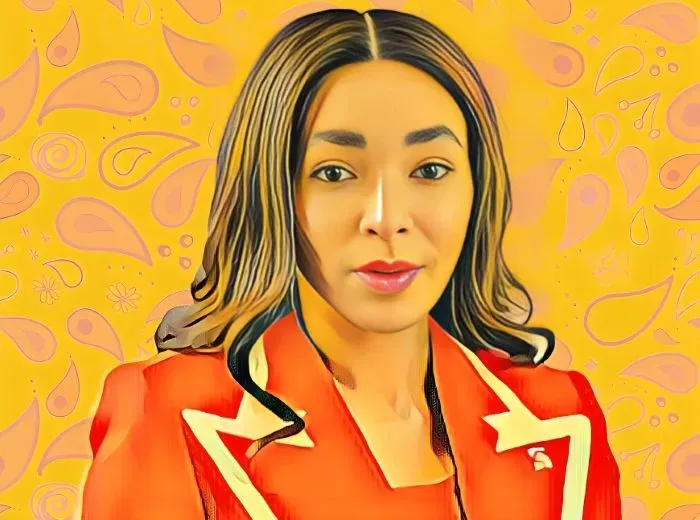
In 2009, Jackie Aina was a military reservist living in Hawaii, unhappily married, bored, and watching other people post makeup videos on YouTube. She had dropped out of California State University San Bernardino after two years of pre-med study to join the Army Reserve. She was 21. She had, as she put it later, known things she liked but had not yet discovered that the things she liked could also make her money. She picked up a camera and started filming herself doing makeup.
That camera, that year, that apartment in Hawaii, is where everything that followed began.
Today, Jackie Aina is one of the most commercially significant figures in the global beauty industry. Her YouTube channel has accumulated more than 3.5 million subscribers and over 400 million views. Her lifestyle and self-care brand, FORVR Mood, generated $700,000 in sales in its first four hours of trading, sold 200,000 candles within a year of launch, and posted $6 million in revenue by mid-2021 with projections pointing toward $10 million before the year was out. She has collaborated with Anastasia Beverly Hills, Too Faced, e.l.f. Cosmetics, Sigma Beauty and Artist Couture, and has built a brand partnership portfolio that includes Google, Olay, Dior Beauty and Amazon. She is represented by UTA. She owns a six-bedroom property in Arcadia, California.
The industry that once ignored women who looked like her now spends considerable resources trying to work with her.
San Gabriel Valley to the US Army
Jacquelyn Lonje Olayiwola Oyeshola Bolayemi Aina was born on August 4, 1987, in the San Gabriel Valley in Los Angeles. Her father is Nigerian of Yoruba descent. Her mother is African-American. She grew up in a household of seven children and, by her own account, a home that saw real financial hardship. There were periods of genuine scarcity, including stretches during which the family stayed in shelters. "Growing up, I had no leverage, I had no rich uncle," she said in one interview. "We got kicked out of a shelter, we couldn't get to another one quick enough."
Her father, as she has described him, had firm expectations. He wanted her to become a doctor or a lawyer. She enrolled at California State University San Bernardino and began pre-med coursework. She stayed two years before leaving to join the Army Reserve. She served for approximately eight years, spending a significant period stationed in Hawaii. It was there, during a marriage she later described as unhappy and that ended in divorce, that she started creating beauty content online.
She had loved makeup from childhood. Her mother and she had bonded over fragrance, one of the more affordable luxuries available to them. In the Army, she learned to do precise work within strict constraints: military-regulation makeup was allowed, and she explored how much artistry she could express within those limits. When she left active service, she enrolled at the Vidal Sassoon Academy in Los Angeles, trained as a licensed cosmetologist and began working for MAC Cosmetics, then for Bobbi Brown.
Building the channel, building the case
Jackie Aina launched her YouTube channel formally in 2009 while still stationed in Hawaii. The focus was immediate and deliberate: makeup content created specifically to address darker skin tones, which she felt were systematically ignored by the beauty industry and by the overwhelming majority of beauty content creators at the time.
The argument she was making was simple and structural. Foundation shade ranges did not include deep enough tones. Eye shadow palettes were designed with assumptions about skin colour that excluded Black women. Blush and lipstick colours were not universal. She said it plainly, on camera, and she kept saying it regardless of whether it made brands comfortable. "I talked about diversity in beauty when it wasn't the trendy thing to do," she said later. "I talked about diversity in beauty when people told me not to, because it wasn't going to make me mainstream."
The channel built steadily. She became the first YouTuber of colour to exceed one million subscribers. By the time she reached 2.4 million subscribers, she had become one of the most-followed beauty voices in the world, and the first beauty influencer of her generation to win the NAACP Image Award for YouTuber of the Year, in 2018, the inaugural year the category existed. She was named to TIME's list of the 25 Most Influential People on the Internet in 2019. The WWD Beauty Inc Awards named her Influencer of the Year the same year. Forbes listed her in its 30 Under 30 in the Arts and Style category. Glamour named her Woman of the Year. Refinery29 called her Beauty Innovator of the Year. She received the AdWeek Creator Visionary Award.
The awards registered the shift she had been arguing for since 2009. They also documented something more commercially important: the industry had decided she was right.
Reshaping the brands
Her collaborations were not vanity projects. They were structural interventions. In 2016, she worked with e.l.f. Cosmetics on an eyeshadow palette that sold out almost immediately. In 2017, she partnered with Sigma Beauty on a brush set. In December 2017, she launched two powder highlighters, La Bronze and La Peach, with Artist Couture.
The most consequential collaboration came with Too Faced. Aina had publicly criticized the shade range of the brand's Born This Way foundation as insufficient. Too Faced reached out to her, not in reaction to the criticism but, she later said, as part of an effort to diversify their products that had preceded her public comments. The collaboration expanded the foundation line from 24 shades to 35. Of the 11 new shades added, Aina formulated nine. Several of those shades sold out immediately after launch. "I've been very vocal about diversity in beauty ever since I started my channel," she said at the launch. "I talked about diversity in beauty when people told me not to."
The Anastasia Beverly Hills eyeshadow palette followed in August 2019, designed specifically to work on dark and deep-dark complexions, with Aina noting that her priority was serving that underserved market even though the palette was designed to work broadly.
FORVR Mood: building the brand
The brand partnerships built Aina's profile. They also funded the four years she and her partner Denis Asamoah, who has an investment banking background, spent building FORVR Mood, a luxury self-care brand that they self-funded entirely. "We were funding ourselves but then also trying to activate other products," she told one interviewer. "And when you're your own investor things just take time." She has acknowledged the capital outlay was significant, describing it only as "a lot of freaking money" and "the best freaking money I've ever spent."
FORVR Mood launched in August 2020, in the middle of the COVID-19 pandemic, with four scents: Hard to Get, I Am Her, NDA and You Remind Me. Before the launch, 45,000 customers were already on a waitlist. The brand opened at Sephora and generated $700,000 in its first four hours. Within a year, it had sold 200,000 candles with an average order value of $95. Revenue reached $6 million within a year of launch.
The brand's positioning was deliberate. Aina wanted it centred on Black women being taken care of. "I really wanted to center Black women being taken care of at the forefront, because that's something that I didn't really see a lot," she explained. The product line expanded from candles and fragrances into skincare and lifestyle, with subsequent drops continuing to sell out. FORVR Mood's Fine Fragrance Line, when it debuted at Sephora stores nationally, sold out within hours.
Beyond beauty
Aina has since extended into entertainment. She served as executive producer and star of "The Black Beauty Effect," a Netflix docuseries exploring the role of Black women in creating social change through beauty. She has also built a luxury lifestyle vertical, Lavishly Jackie, across Instagram, TikTok and YouTube, focusing on home and lifestyle content.
In May 2021, she interviewed President Joe Biden on the subject of COVID-19 vaccination, a moment that illustrated the distance she had travelled from the Army base apartment in Hawaii where it all started.
She married Denis Asamoah in October 2024, more than five years after their engagement. He had proposed on a private rooftop in New York. They run FORVR Mood together.
The brand she built, the following she cultivated and the collaborations she engineered did not happen because the industry was generous. They happened because she was persistent, because she was right, and because she understood, from the beginning, that the women the industry was ignoring had money to spend and faces that deserved to be seen.