


Table of Contents
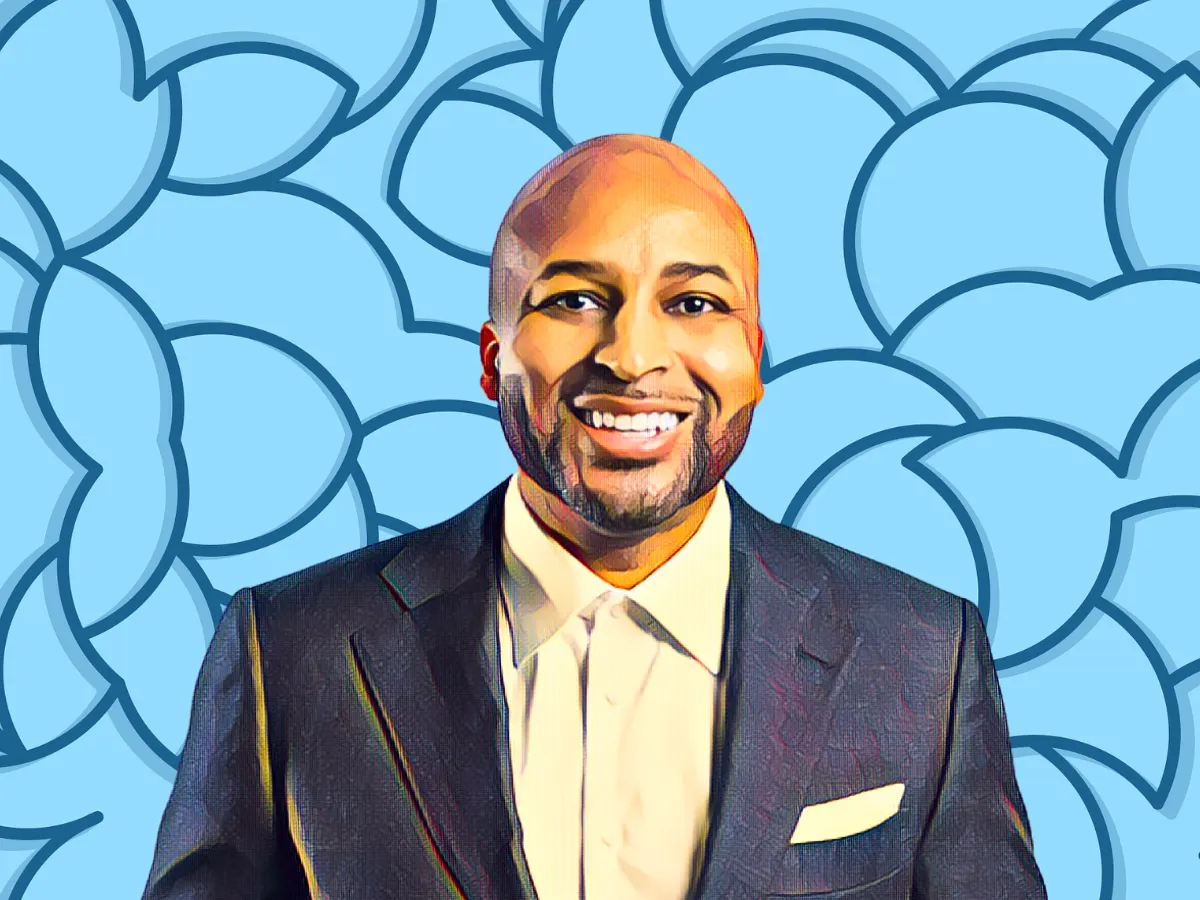
Levoyd E. Robinson has spent four decades turning a Howard University business degree into one of the most quietly influential credit investment platforms in American finance. As co-founder, chief executive officer and chief investment officer of Chicago-based CFI Partners, Robinson oversees more than $6 billion in assets under management, placing him among the small group of Black investors who have built institutional-scale alternative investment firms from the ground up. His inclusion on the ForbesBLK 50 Money Masters list of the wealthiest Black Americans in alternative investments reflects both the scale of the business he has built and the durability of a career that has moved from Wall Street trading desks to the upper tier of private credit.
Robinson, the son of a nurse and a plumber, grew up in a household where hard work was the default setting and higher education was treated as the surest path to mobility. He enrolled at Howard University in the mid-1980s, drawn to its reputation for producing Black professionals who shaped industries long closed to them. He graduated magna cum laude in 1987 with a bachelor of business administration, crediting faculty mentors and the broader Howard network with sharpening his interest in finance. He then pursued a master of business administration at the University of Wisconsin-Madison, concentrating in finance, investment and banking, and later earned the Chartered Financial Analyst designation, the credential most closely associated with institutional investment professionals.
His early career placed him inside some of the most demanding environments in global finance. Robinson built expertise across credit markets, structured products and distressed investing during a period when those disciplines were moving from the periphery of Wall Street to the center of institutional portfolios. That apprenticeship culminated in his role as managing director and head of global private debt at Citadel Investment Group, the Chicago hedge fund founded by Ken Griffin that grew into one of the largest alternative asset managers in the world. At Citadel, Robinson ran teams in the United States and London that executed mezzanine and special situations debt investments, high-yield and distressed loans, asset-based and structured financings, and cash and synthetic collateralized loan and debt obligations. It was a mandate that required him to underwrite risk across continents and across the full capital structure, and it gave him the operating experience to run his own firm.
In 2005, Robinson co-founded Chicago Fundamental Investment Partners, now known as CFI Partners, alongside Brad Couri, Dave Dieffenbacher, Eric Baer and Sean Haas. The founders set out to build out a credit-focused investment platform that combined rigorous fundamental analysis with proprietary portfolio construction and risk modeling. Two decades later, the firm manages portfolios anchored in senior secured loans and high-yield bonds, along with opportunistic positions across the broader credit spectrum. The strategy is designed to generate attractive risk-adjusted returns through full market cycles, and the firm's growth to more than $6 billion in assets under management is a direct reflection of its ability to deliver that mandate to pension funds, endowments, insurance companies and other institutional allocators who entrust it with long-duration capital. The firm's relationships with institutional allocators have deepened over time, with several long-tenured clients expanding commitments as CFI Partners has demonstrated its ability to protect capital in down markets and participate in the upside when credit spreads tighten.
Robinson's day-to-day role at CFI Partners spans both the chief executive and chief investment officer seats, an arrangement that reflects how closely the firm's commercial identity is tied to his investment judgment. He chairs the investment committee, sets portfolio-level risk parameters, and leads the research process that determines which issuers and instruments earn a place in the book. Colleagues describe an approach rooted in patient underwriting, a preference for businesses with defensible cash flows, and a willingness to pass on crowded trades when the margin of safety is thin. That discipline has allowed CFI Partners to maintain a steady client base through periods of extreme volatility in credit markets, including the global financial crisis that struck only a few years after the firm opened its doors and the sharp repricing of risk that followed in subsequent cycles.
The firm's Chicago base is deliberate. Robinson is part of a generation of investors who built serious capital allocation businesses outside the traditional New York axis, proving that scale in credit markets could be achieved from the Midwest with the right team and the right infrastructure. CFI Partners has grown into one of the more established independent credit managers in the city, and its longevity stands out in an industry where most funds do not survive their first decade. The combination of disciplined strategy, institutional-grade operations and a leadership team that has stayed together for more than twenty years has given the firm a reputation for consistency that is difficult to replicate.
Beyond CFI Partners, Robinson has become one of the more visible Black philanthropists in finance, channeling his success back to the institution that launched his career. In 2024, he donated $1.4 million to Howard University to establish a dedicated academic support lounge for students in the School of Business. The gift is designed to give undergraduates the kind of quiet, resource-rich study environment that peers at better-funded institutions take for granted, and it builds on a broader pattern of engagement with the university. Robinson has spoken publicly about the role Howard played in shaping his worldview and professional trajectory, and he has encouraged fellow alumni in finance to reinvest in the school so that future generations of Black business students have access to the same networks and mentors that helped him break into the industry. In 2025, Howard named Robinson to its Board of Trustees, formalizing a relationship that had already spanned decades of mentorship, recruiting and financial support, and giving him a direct seat at the table in shaping the long-term strategic direction of the university.
That posture has earned him a place on watch lists of Black donors whose giving is expected to grow in scale and visibility in the coming years. His philanthropic approach mirrors his investment philosophy: concentrated, long-term and oriented toward compounding outcomes rather than one-time gestures. Where some alumni give broadly across causes, Robinson has chosen to double down on an institution he knows intimately, treating Howard as a platform capable of producing generations of professionals who will follow him into capital allocation, corporate leadership and entrepreneurship.
Robinson's trajectory sits at the intersection of two stories that rarely overlap in American finance. One is the quiet rise of independent credit managers who have taken share from the biggest banks by building disciplined, focused platforms. The other is the slow expansion of Black ownership at the top of the alternative investment industry, where a handful of founders now oversee billions of dollars of institutional capital. At CFI Partners, Robinson has spent twenty years proving that a Howard graduate from a working-class Chicago household can build and sustain a firm that competes for the same mandates as the largest names in credit. At Howard, he is now working to ensure that the path he took is wider and better resourced for the students coming behind him, a legacy that is likely to outlast any single vintage of fund returns.