

Table of Contents
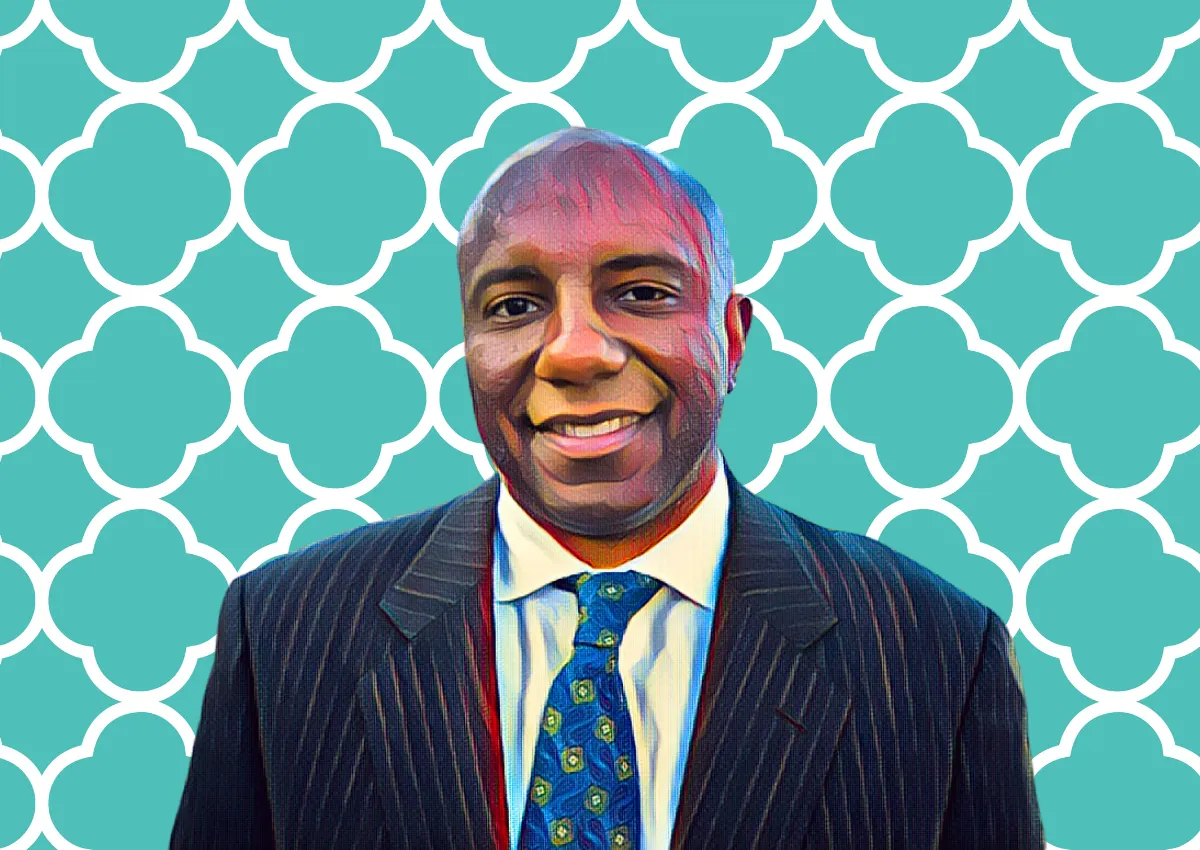
Howard Sanders was already running one of the most respected investment desks at Citigroup when he decided he had learned enough working for someone else.
It was 2011. Sanders had spent years managing Citi Holdings' proprietary investments in private equity, hedge funds and real estate, overseeing a portfolio that at its peak included management of the firm's $13.5 billion pension plan. During his tenure, Citi's pension performance ranked consistently in the top five among its peers, frequently landing at number one. That kind of record is the kind that earns a person a title, a raise and a reason to stay.
Sanders left anyway.
From Wharton to Wall Street
The decision made sense if you knew the arc. Sanders grew up with a worldview shaped at the University of Pennsylvania's Wharton School, where he graduated with a Bachelor of Science in 1988 and was deeply embedded in Black student life, active in his fraternity Kappa Alpha Psi, the Black Student League and Black Wharton. He later described that period as the foundation for a belief that compassion and Wall Street could occupy the same space.
After Wharton he moved into mergers and acquisitions at BT Wolfensohn, the M&A arm of Deutsche Bank, working as a vice president on deals spanning multiple industries. That was the technical grounding. When he earned his MBA from Harvard Business School in 1995, the combination of Wharton finance, Wall Street deal experience and Harvard strategy gave him a platform that Citigroup eventually put to full use.
At Citi he moved through several roles, first as Head of Strategy, Planning and Analysis at Citigroup Alternative Investments, then into pension management, and eventually into the proprietary investments seat at Citi Holdings that would define his pre-entrepreneurship chapter. Along the way he also taught as an adjunct professor at Columbia Business School, running a second-year course on private equity.
Building Auldbrass
The firm he founded, Auldbrass Partners, is a private equity secondaries firm that monitors over $1.3 billion in assets. It is structured as a 100 percent employee-owned, Minority-owned Business Enterprise. The name comes from Auldbrass Plantation in South Carolina, designed by Frank Lloyd Wright. Sanders' choice of that name reflected something deliberate: a reclamation of something historically weighted, turned into a vehicle for modern wealth creation.
The strategy is focused and disciplined. Auldbrass targets secondary transactions, acquiring LP interests and participating in GP-led opportunities across mid-market buyout, global buyout and growth equity. The firm targets gross returns of 2.0x MOIC and internal rates of return above 20 percent. It backs companies in SaaS, healthcare, EdTech and tech-enabled manufacturing and services, specifically those positioned for liquidity within three to five years.
The fund history tells the story of steady institutional validation. Secondary Opportunity Fund I closed in December 2014. Fund II closed in April 2019 at $185.6 million, including $92.9 million in co-investments. By January 2026, Auldbrass had launched its fourth fund with a $350 million target, backed by institutional investors including the Los Angeles City Employees' Retirement System. The firm's principals have now completed more than $5 billion in secondary transactions across their careers.
Sanders sits on the board of the New York City Partnership Foundation and serves as a trustee of the Riverside Church in New York City. He is a member of the Undergraduate Executive Board of the Wharton School.
He built Auldbrass in a corner of private equity that rewards patience and precision over hype. Thirteen years in, the firm monitors over $1.3 billion in assets, has closed four funds and is still entirely his.