


Table of Contents
For the past decade, some of Nigeria's wealthiest businesspeople have been generating electricity for the country, selling it to the government, and not getting fully paid. That arrangement, uncomfortable as it is, is now the subject of the most ambitious debt settlement in Nigerian power sector history.
President Bola Tinubu's administration has committed to paying N3.3 trillion ($2.36 billion) in legacy obligations accumulated between February 2015 and March 2025, money owed to the generation companies that kept the lights on, however dimly, through years of systematic underpayment. The men and companies on the receiving end of that settlement include some of the biggest names in Nigerian business.
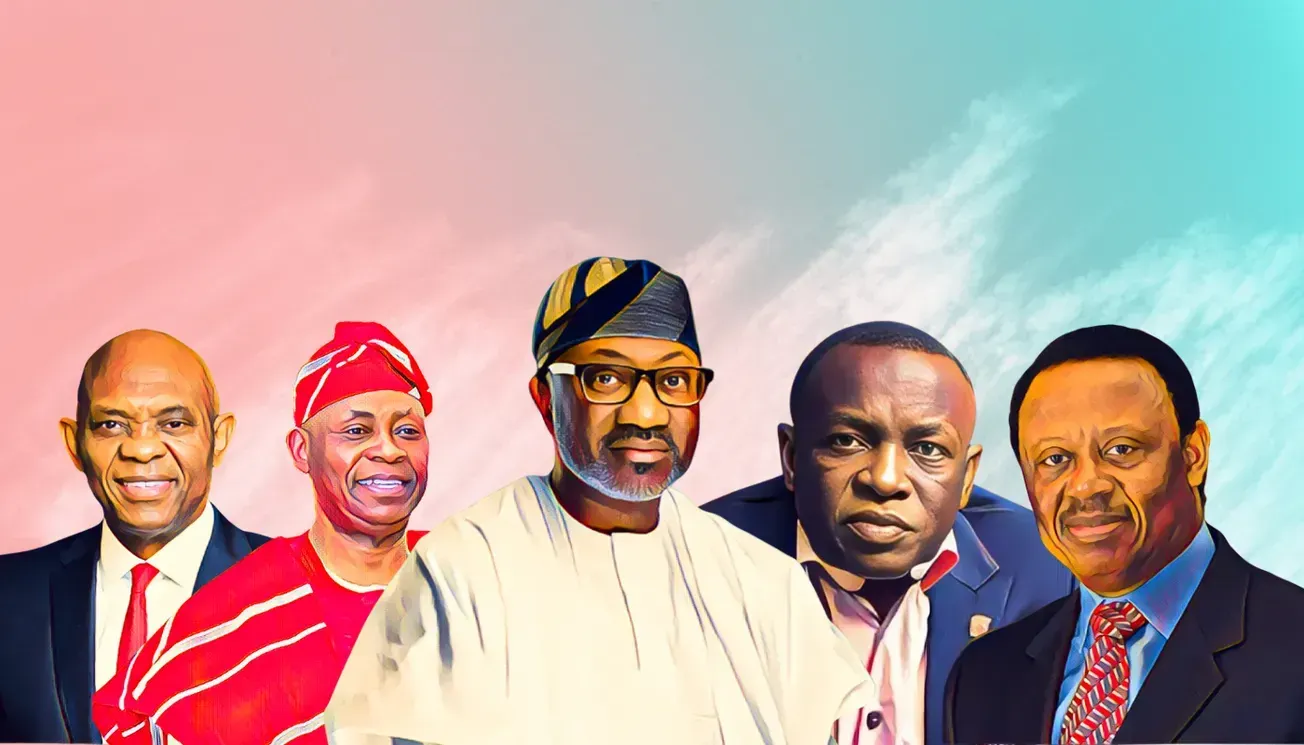
Tony Elumelu, chairman of Heirs Holdings and Transcorp, has two power generation entities in the settlement: Transcorp Delta in Ughelli, Delta State, and Afam Power, which operates the Afam complex in Oyigbo, Rivers State. Geregu Power Plc, the gas-fired plant in Ajaokuta, Kogi State, is also part of the agreement. Femi Otedola built the Geregu position before selling a controlling stake to Abdulaziz Yari in December 2025, though Otedola retains a residual holding. Egbin Power Plc, Nigeria's largest single generating station at 1,320 megawatts installed capacity in Ikorodu, Lagos, owned by Tonye Cole's Sahara Group, rounds out the most high-profile private sector participants.
Elumelu did not mince words when he walked out of a meeting with Tinubu at the Presidential Villa in February 2026. "All of us who are in the power sector are owed significantly," he told correspondents. "But in spite of that, we continue to generate electricity. We want to see the payments made so that there will be more provision of electricity to the country."
What is actually being paid
Of the N3.3 trillion ($2.36 billion) total, 15 power plants have signed settlement agreements covering N2.3 trillion ($1.64 billion). The government raised N501 billion ($357.86 million) through a capital market bond issued by NBET Finance Company Plc. That bond closed fully subscribed, split between N300 billion raised from pension funds and institutional investors and N201 billion in bonds allotted directly to participating generators, both structured as seven-year instruments at 17.50% coupon, fully guaranteed by the federal government. Of the N501 billion raised, N223 billion ($159.29 million) has been disbursed. That is approximately 6.8% of the N3.3 trillion total.
Disbursements are not unconditional. Generators must use proceeds to clear debts to gas suppliers and commit capital to plant rehabilitation and capacity expansion before further payments are released. The government says it intends to monitor how funds are deployed.
Why the generators are not satisfied
The industry's leading voice on this has been Joy Ogaji, CEO of the Association of Power Generation Companies. She does not accept the N3.3 trillion figure and has said so publicly, repeatedly. Her own running calculation puts total outstanding obligations significantly higher.
"From 2015 to December 2024, the debt profile grew to N4 trillion," she said. "In each month of 2025, there is a shortfall of N200 billion, so if you calculate N200 billion times 12, that is N2.4 trillion, making the whole debt N6.4 trillion after December 2025. We are already in March 2026. The debt grew to N6.6 trillion in January and N6.8 trillion in February. At the end of March, you need to add N200 billion again to make it N7 trillion."
She has also raised questions about process. The government used NBET, the Nigerian Bulk Electricity Trading Company, as its primary data source for calculating the debt. NBET acts as the intermediary that pays generators on behalf of the distribution companies. Ogaji argues that NBET cannot be the only arbiter of a debt it is itself party to. "Invoice settlement is done by market operations; NBET only pays. The true figures can only emerge after a proper reconciliation," she said.
The government's announced debt figure has also shifted over time. It was N2.3 trillion, then N2.8 trillion, then N3.3 trillion. Tinubu reportedly approved N4 trillion at a July 2024 meeting with power producers, a figure that has since been revised downward. Ogaji has asked, publicly, whether the new N3.3 trillion is a different amount from the N4 trillion approved in 2024 or a subset of it.
The structural problem that keeps producing the debt
Since privatisation in 2013, Nigeria's electricity sector has operated with a structural imbalance that produces new debt faster than it can be cleared. Distribution companies collect less revenue from consumers than the cost of electricity they receive. The shortfall is passed up the chain to generating companies. The generators, short of cash, cannot fully pay their gas suppliers. Gas suppliers cut deliveries. Less gas means less generation. Less generation means the grid struggles to supply.
That cycle has been running for more than a decade. Generation available to distribution companies stood at approximately 5,000 megawatts in 2025, having fallen to 3,345 megawatts as of April 3, 2026, partly because gas companies halted or reduced supply to thermal plants in response to unpaid bills. Nigeria's installed generation capacity stands at 15,500 megawatts. The amount actually being transmitted is a fraction of that. The country has a population of more than 220 million.
The private sector's stake
The businesspeople involved have not just been passive suppliers waiting for payment. They have invested significant capital into plants they expected the government to pay for on schedule. Transcorp Power reported revenue of N305.9 billion in full-year 2024, representing 115% growth from the N142.1 billion earned in 2023, with profit after tax rising 165% to N80 billion. Geregu reported revenue of N137.1 billion in 2024, up 65% from N82.9 billion in 2023.
Those returns exist on paper. In the background, the trade receivables tell a different story. Transcorp Power's receivables from NBET stood at N352.7 billion at the end of the first quarter of 2025. Geregu's trade receivables hit N147.6 billion in the same period. The gap between what is owed to these companies and what is actually in their bank accounts is the core dysfunction the N3.3 trillion settlement is intended to fix.
Whether N3.3 trillion is the right number, whether it can be fully funded, and whether the conditions attached to disbursements will accelerate or delay the money reaching the generators are the questions the industry is now watching very closely.