


Table of Contents
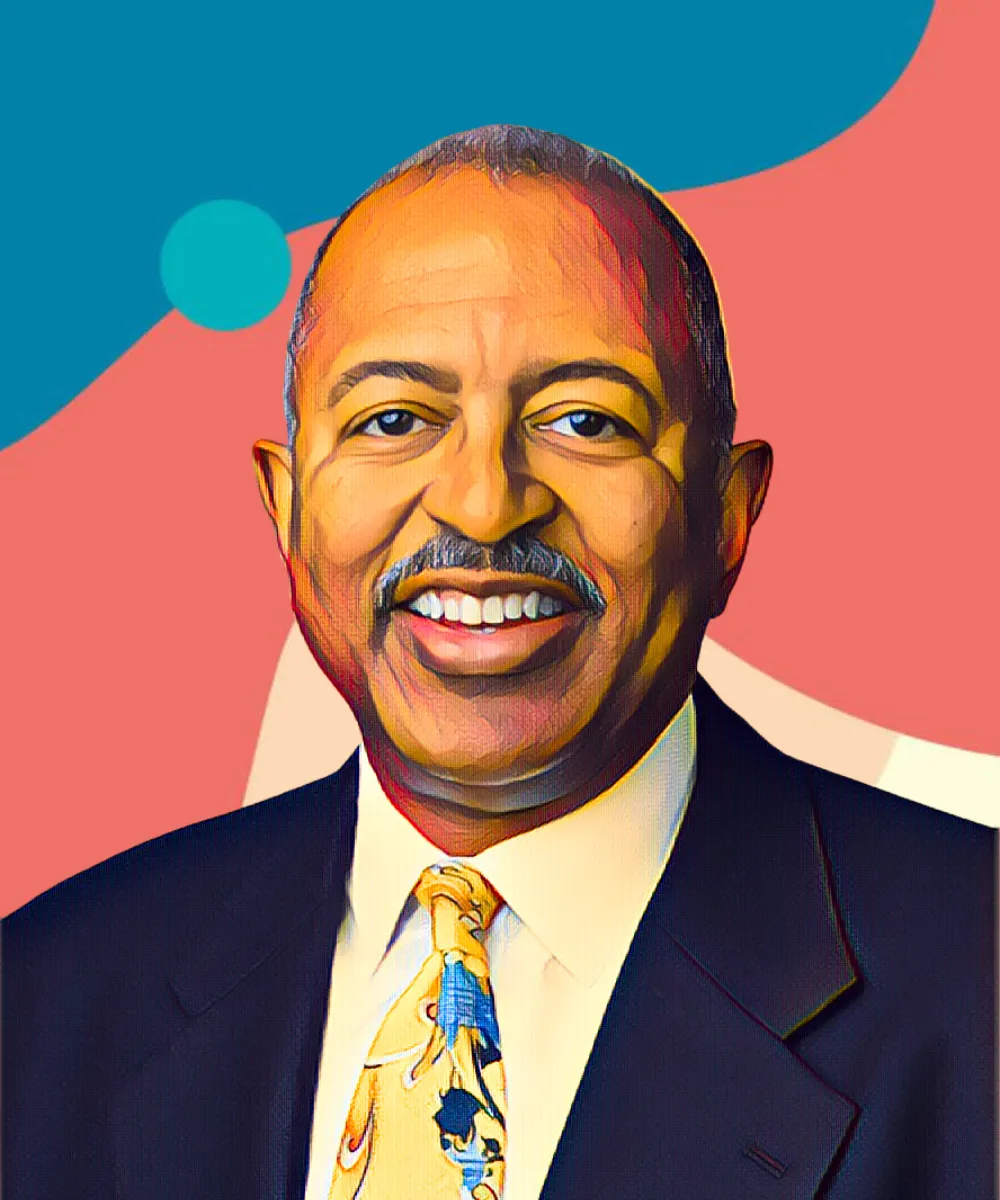
There was nothing particularly dramatic about the morning André Rice decided to leave Kraft Foods in 1986. No boardroom confrontation, no moment of revelation. He had simply worked through enough mergers and acquisitions to understand how wealth was actually structured, and he had decided that the next chapter would be one he wrote himself.
He was in his late twenties. He had no institutional brand behind him, no safety net from a family fortune, and no blueprint specific to what he wanted to build. What he had was three careers' worth of precision, a certified public accountant's obsession with detail, and a network sharpened inside two of the most demanding institutions in American finance.
Rice grew up with big ambitions and the academic record to support them. He graduated with a Bachelor of Science in accounting, with honors, from South Carolina State University in 1978, an HBCU in Orangeburg, South Carolina, that he has remained loyal to ever since. He is a life member of its national alumni association and stays active with his Class of 1978. From Orangeburg, he went directly to the University of Chicago Booth School of Business, one of the most competitive MBA programs in the country, completing his degree around 1980. He qualified as a Certified Public Accountant shortly after.
The institutional years
His first job was as an auditor at Peat, Marwick, Mitchell and Co., the firm now known as KPMG. The work was methodical and unforgiving. Auditing at that level does not leave room for approximation, and Rice absorbed the discipline fully. He stayed long enough to build a rigorous foundation, then moved to Goldman Sachs, where he worked in securities sales within the Private Client Group.
Goldman expanded his range. The Private Client Group operated at the intersection of high-net-worth individuals and institutional capital, and Rice spent his time there developing the commercial instincts that auditing alone cannot teach. He learned to read people and deals with the same attention he gave to financial statements.
He left Goldman for Kraft Foods, where he worked as a Senior Project Manager in the Mergers and Acquisitions department. The M&A environment suited him. Deals moved faster there, the stakes were higher, and the premium on judgment, not just technical knowledge, was obvious. He spent years inside that environment before deciding he had learned everything Kraft could teach him.
The 1986 pivot
Rice founded Rice Group Ltd. (RGL) in 1986, an investment services company built to identify and organize special investment opportunities for wealthy individuals. RGL organized multiple successful investment partnerships during its early years and provided select investment banking services to what was then the world's largest commodities trading firm. It was a lean, relationship-driven operation designed to generate value without noise, and it worked.
RGL did not make headlines. Rice was not interested in headlines. He built patiently, using a network that grew quietly across Chicago's financial community, and let the track record speak over time.
Building M²
By the late 1990s, Rice had identified a structural gap in the institutional investment market. Large pension funds were growing more interested in emerging managers, but the infrastructure to find, properly diligence, and support those managers was fragmented and underdeveloped. In 1999, he founded Muller & Monroe Asset Management, known as M², to fill that gap. RGL serves as the managing member of M².
The firm invests exclusively in small and emerging lower middle market fund managers. Its clients include some of the largest public pension plans in the United States, and it manages $1.7 billion on their behalf. M² is widely regarded as one of the most disciplined firms in its segment, with an investment process built around a deep and active network of relationships that allows it to perform due diligence well beyond what financial documents alone can reveal.
M² is also one of the longest-standing diverse-owned investment management firms in the country operating in the emerging manager space. That longevity is itself a credential. Firms with 25-year track records in institutional private equity are not built by accident.
Among M²'s institutional clients is CalPERS, the California Public Employees' Retirement System, which is among the largest pension funds in the world. Rice has spoken at CalPERS forums, and the relationship reflects the level of institutional trust the firm has built over decades.
The boardroom and beyond
In 2017, CNA Financial Corporation appointed Rice to its board of directors. CNA is one of the largest commercial insurance companies in the United States. He serves on the audit, compensation, and finance committees, and brings to that work the same rigor that shaped his career in deal-making and asset management.
He also sits on the board of the New America Alliance, a national organization that advances the interests of diverse business and investment leaders. His civic commitments run alongside: he has served on major city and county bodies under two Chicago mayors, Richard M. Daley and Rahm Emanuel, including the Chicago Cook Workforce Investment Board, the Chicago Metropolitan Agency for Planning, the Metropolitan Pier and Exposition Authority, and the Regional Transportation Authority. He is a member of the Executive Club of Chicago and The Chicago Club, institutions at the center of the city's business life.
Rice is on the Leadership Council of Prevent Child Abuse America and is a life member of Kappa Alpha Psi Fraternity, Inc.
Recognition
The Bond Buyer, the publication of record for the American public finance market, inducted Rice into its Hall of Fame. The National Association of Investment Companies inducted him into its Hall of Fame as well. Both recognitions came from industry insiders who judge by results, not by visibility, which is consistent with the way Rice has operated throughout his career.
He was also recognized as an EBONY Most Influential honoree, a designation reserved for Black Americans who have moved the needle in their fields.
The long game
Rice never ran the kind of firm whose deals show up in daily headlines. Muller & Monroe does not back the companies whose names appear in consumer culture. It backs the managers who back those companies, operating one level upstream from the transactions that generate the coverage.
That positioning was deliberate from the start. Rice built his career on the conviction that the real leverage in financial markets sits with the people who allocate capital, not just those who deploy it. Forty years of work, two firms, $1.7 billion under management, and a seat on the board of a major American insurance company later, the results are difficult to dispute.
He is a South Carolina State University honors graduate who walked into KPMG with a calculator and a plan, and he has been compounding ever since.