

Table of Contents
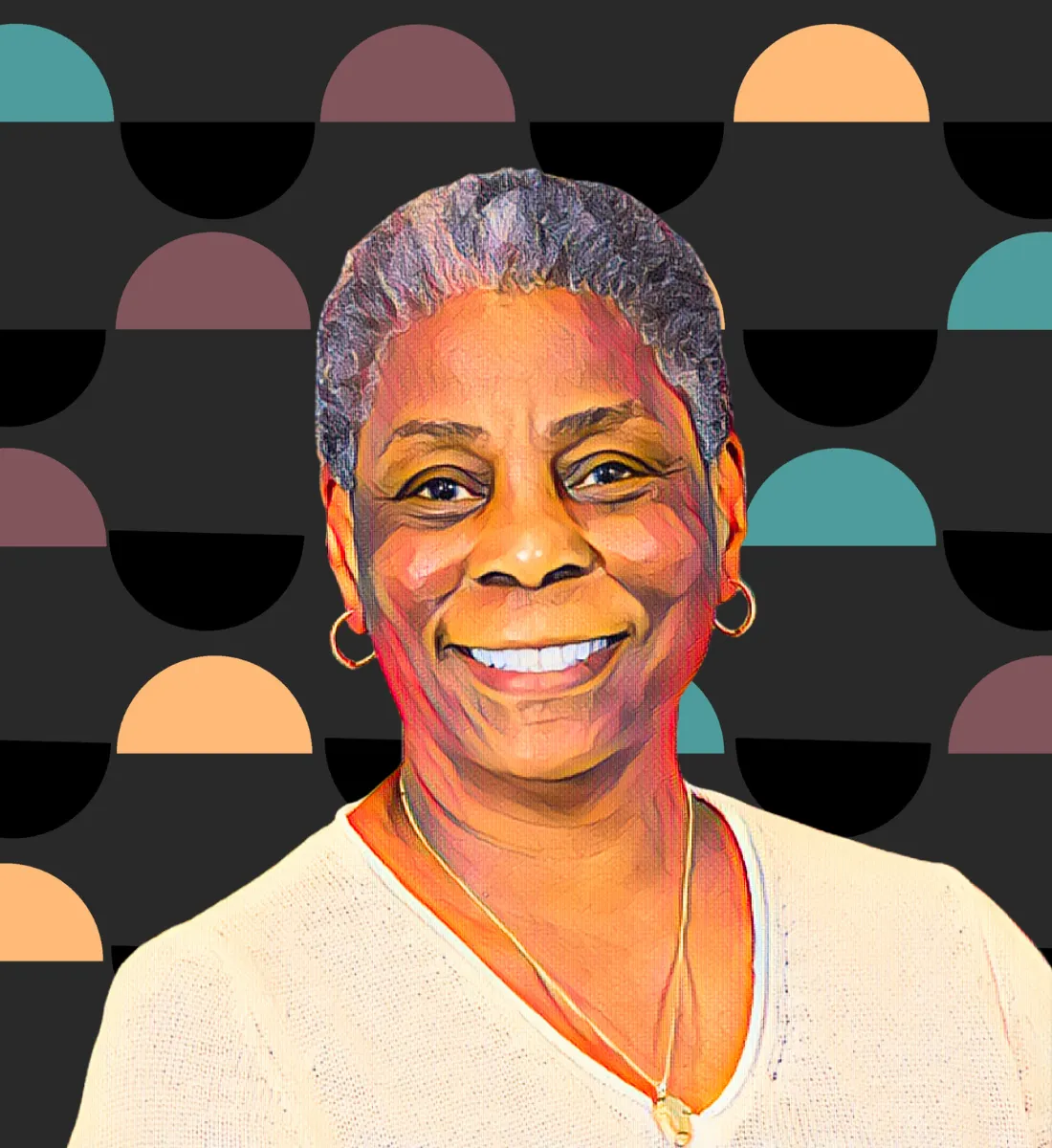
Ursula Burns grew up in a housing project on the Lower East Side of Manhattan. Her mother, Olga, ran a home daycare and took in ironing to pay for Catholic school tuition. She raised three children largely on her own, and she had a clear view of what education was worth. Burns absorbed that lesson early and never let it go.
She studied mechanical engineering at Polytechnic Institute of New York, now part of NYU, and earned a master's degree in the same discipline from Columbia University in 1981. That same year, she joined Xerox full-time, having first walked through the company's doors as a summer intern in 1980. What followed was a 37-year ascent that made corporate history.
From the factory floor to the CEO suite
Burns spent the 1980s in product development and planning. In 1990, she took a pivot that surprised even her, accepting a role as executive assistant to a senior Xerox executive. She later became executive assistant to Chairman and CEO Paul Allaire in 1991. Those were not stepping-stone roles. They were accelerants. She learned how decisions got made at the top of a company, who had influence and why, and how to operate at the level where strategy and accountability converge.
She rose through manufacturing and supply chain operations, becoming senior vice president of corporate strategic services in 2000. She worked alongside then-CEO Anne Mulcahy through a critical period of financial difficulty at Xerox, and the two built what both described as a genuine partnership.
In 2007, Burns became president of Xerox. Two years later, in July 2009, the board named her CEO. She became the first African American woman to lead a Fortune 500 company. She was also the first woman to succeed another woman as head of a Fortune 500 company, taking the seat directly from Mulcahy. Both records still carry weight.
Transforming Xerox and life after
Burns did not inherit an easy situation. Xerox was associated in the public mind with photocopy machines, a category that digital technology was making obsolete. Her response was to pivot the company toward services. In 2009, she led the $6.4 billion acquisition of Affiliated Computer Services, the largest in Xerox history, shifting the company's center of gravity toward business process outsourcing and managed services.
She saved close to $2 billion through contract negotiations with unionized workers, outsourcing decisions and workforce restructuring that ultimately affected around 19,000 positions. In 2016, she completed one of the more complex corporate separations of the decade, splitting Xerox into two independent publicly traded companies: Xerox Corporation, which retained the document technology business, and Conduent Incorporated, a business process services company.
Burns stepped down as CEO at the end of 2016 and left the board in 2017. She did not slow down.
She became Chairwoman of VEON, a Dutch telecommunications company, in 2017, then took on the dual role of Chairwoman and CEO from December 2018 through June 2020, steering the company through compliance and restructuring challenges. She is a founding partner of Integrum Holdings, a private equity firm, and serves as Non-Executive Chairwoman of Teneo Holdings, a global consulting and advisory firm.
Her board experience spans Uber Technologies, Taiwan Semiconductor Manufacturing Company, IHS Holding, Exxon Mobil, Nestlé and American Express. President Barack Obama appointed her to lead the White House national STEM education initiative in 2009 and named her vice chair of the President's Export Council in 2010, a role she held through 2016.
Burns published her memoir, "Where You Are Is Not Who You Are," drawing on her journey from the Lower East Side to the boardrooms of the world's largest companies. The title is precise. She has spent her career proving the point it makes.
Her mother took in ironing. Her daughter ran Xerox. That distance was not luck. It was engineering, in every sense of the word.