

Table of Contents
A former head of nickel trading at Glencore has emerged as the driving force behind a consortium acquiring Sumitomo Corp's failing stake in the Ambatovy nickel project in Madagascar, with South African billionaire Sandile Zungu's investment firm joining the deal as the African partner in a takeover that will cost the Japanese trading house $445 million in exit losses, Reuters reported on May 1.
Jason Kluk, who left Glencore in late 2024, is named in Jersey and UK registration documents as a director of Essenwood Partners, the Jersey-registered entity leading the AMRI consortium taking over Sumitomo's 54% stake alongside Zungu Investments Company. Kluk controls more than 75% of Essenwood Partners, according to the documents reviewed by Reuters.
Sumitomo will divest its stake to Ambatovy Mineral Resources Investment Holding Co, a Jersey-based entity, effectively paying $418 million to offload the asset. Sumitomo expects to record a loss of around 70 billion yen ($447 million) in the April to June quarter as a result, though the tax impact means the full-year earnings hit will be more limited. The deal is expected to close by the end of September 2026. Korea Mine Rehabilitation and Mineral Resources Corporation, the South Korean state entity known as KOMIR, retains its 45.83% stake and is not part of the transaction.
What Sumitomo is walking away from
Ambatovy is one of the world's largest nickel laterite operations, located in Toamasina Province on Madagascar's east coast. At full capacity it can produce approximately 40,000 tonnes of nickel and 4,000 tonnes of cobalt per year, making it a significant asset in the global critical minerals supply chain. In practice, it has rarely reached that capacity.
Sumitomo has invested a total of $3 billion in the project and booked cumulative losses of 400 billion yen, approximately $2.6 billion. The project produced approximately 28,000 tonnes of nickel and 2,500 tonnes of cobalt in 2024, well below its nameplate capacity. Operations were suspended again in February 2026 ahead of Cyclone Gezani and are expected to restart between May and June.
The problems have accumulated over more than 2 decades. Equipment malfunctions, pipeline ruptures, cyclone damage and chronic underproduction combined with a severe global nickel price crash, driven by a surge of low-cost Indonesian supply that halved prices from late 2022 through most of 2024, made the economics increasingly untenable. Sumitomo filed a debt restructuring plan with a UK court in August 2024, and the company's chief executive had previously said all options were being considered for the project's future.
Despite all of this, Ambatovy has been a significant contributor to Madagascar's economy. The project accounted for 25% of the total value of the country's exports in 2022.
Why the buyers see an opportunity
The acquisition bet rests on 2 things: nickel's improving price trajectory and Kluk's operational conviction. His involvement suggests he is confident of turning around a business that has caused Sumitomo to book cumulative losses of $2.6 billion.
The nickel market has shifted meaningfully since the depths of the 2023 and 2024 price collapse. Nickel prices are approaching 2-year highs, driven by reduced Indonesian production quotas and sulphur shortages tied to the US-Iran conflict disrupting global supply chains. A revival in nickel demand from the electric vehicle battery sector and a tightening of Indonesian export policy have both contributed to the price recovery.
Sumitomo said in a presentation that the AMRI consortium consisted of people with experience in managing nickel businesses with similar technology and scale to Ambatovy, as well as technical capabilities and nickel industry networks. Kluk's career at Glencore, one of the world's dominant commodities trading houses, gives him exactly that credential. He spent years at the centre of global nickel trading flows before leaving the Swiss-based company in late 2024.
Who Sandile Zungu is
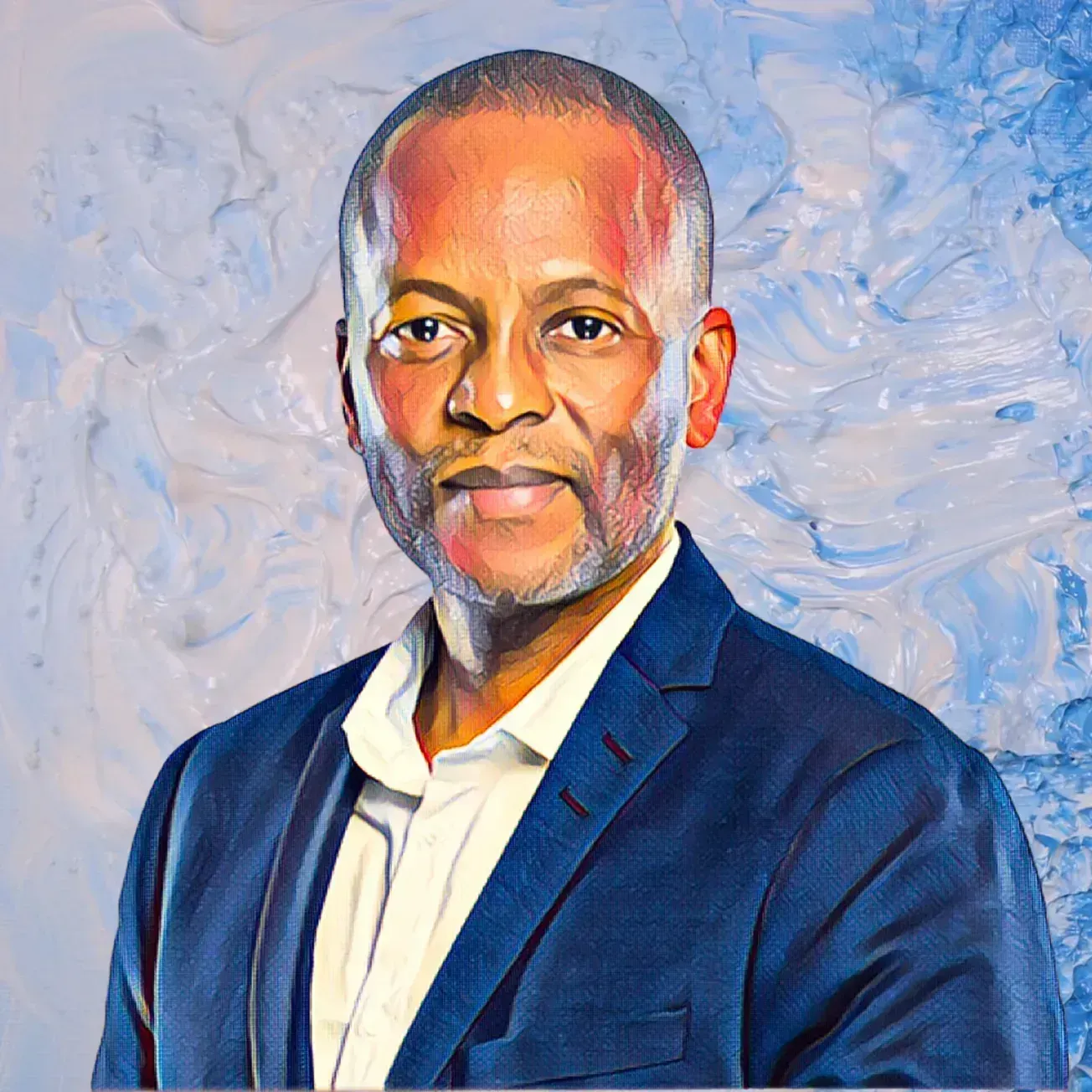
Sandile Zungu built Zungu Investments Company, known as Zico, into one of South Africa's most diversified black-owned investment groups over 2 decades. He grew up in Umlazi in KwaZulu-Natal, attended the prestigious Hilton College after secondary school, earned a BSc in Mechanical Engineering from the University of Cape Town, followed by an MBA from UCT's Graduate School of Business, and later completed a leadership programme at Harvard Business School.
He founded Sarhwu Investment Holdings in 1997 while still in his early 30s, growing it from nothing to more than R400 million in net assets within 3 years. After a period as executive director at New Africa Investments, he launched Zico in 2000, building it into a holding company with interests spanning thermal coal through a 25% stake in Seriti Resources, gold through a stake in Gold One, real estate, airports through Lanseria International, energy, media, education and sports through his ownership of AmaZulu FC.
In May 2025, Zungu led Sizekhaya Holdings to win South Africa's new R180 billion National Lottery licence, one of the largest commercial licences awarded in the country in recent years. He serves as non-executive director on the boards of Grindrod Limited and Novus Holdings and is Chancellor of Mangosuthu University of Technology. He is described by KwaZulu-Natal business media as a billionaire, though he has never publicly confirmed the value of his holdings.
The Ambatovy deal represents Zico's first significant African mining investment outside South Africa and its entry into the critical minerals supply chain at a moment when nickel, cobalt and other battery materials are attracting serious attention from investors positioning themselves for the energy transition.
Whether Kluk and Zungu can extract value from an asset that Sumitomo could not despite investing $3 billion will depend on operational execution at a technically complex nickel laterite facility, the durability of the current nickel price recovery and Madagascar's ability to remain a stable operating environment for a mine that generates a significant share of the country's export revenue. All 3 are open questions. But the price they are paying, or more precisely the price Sumitomo is paying them to take it on, suggests the buyers believe the downside is already baked in.
The intelligence satisfies curiosity. The paid briefings satisfy strategy.
Every Monday, Elite subscribers receive an Investor Memo breaking down the deal, the structure and the positioning behind the week's most consequential African wealth story - the kind of analysis that doesn't appear anywhere else.
Twice a month, a Wealth Intelligence brief profiles a single billionaire's holdings, cash flows and expansion pipeline in detail no public source matches.
→ Executive ($25/mo): Daily newsletter + Deep-Dive Reports
→ Elite ($75/mo): Everything above + Investor Memos + Wealth Intelligence + Quarterly Analyst Briefings
Subscribe now