

Table of Contents
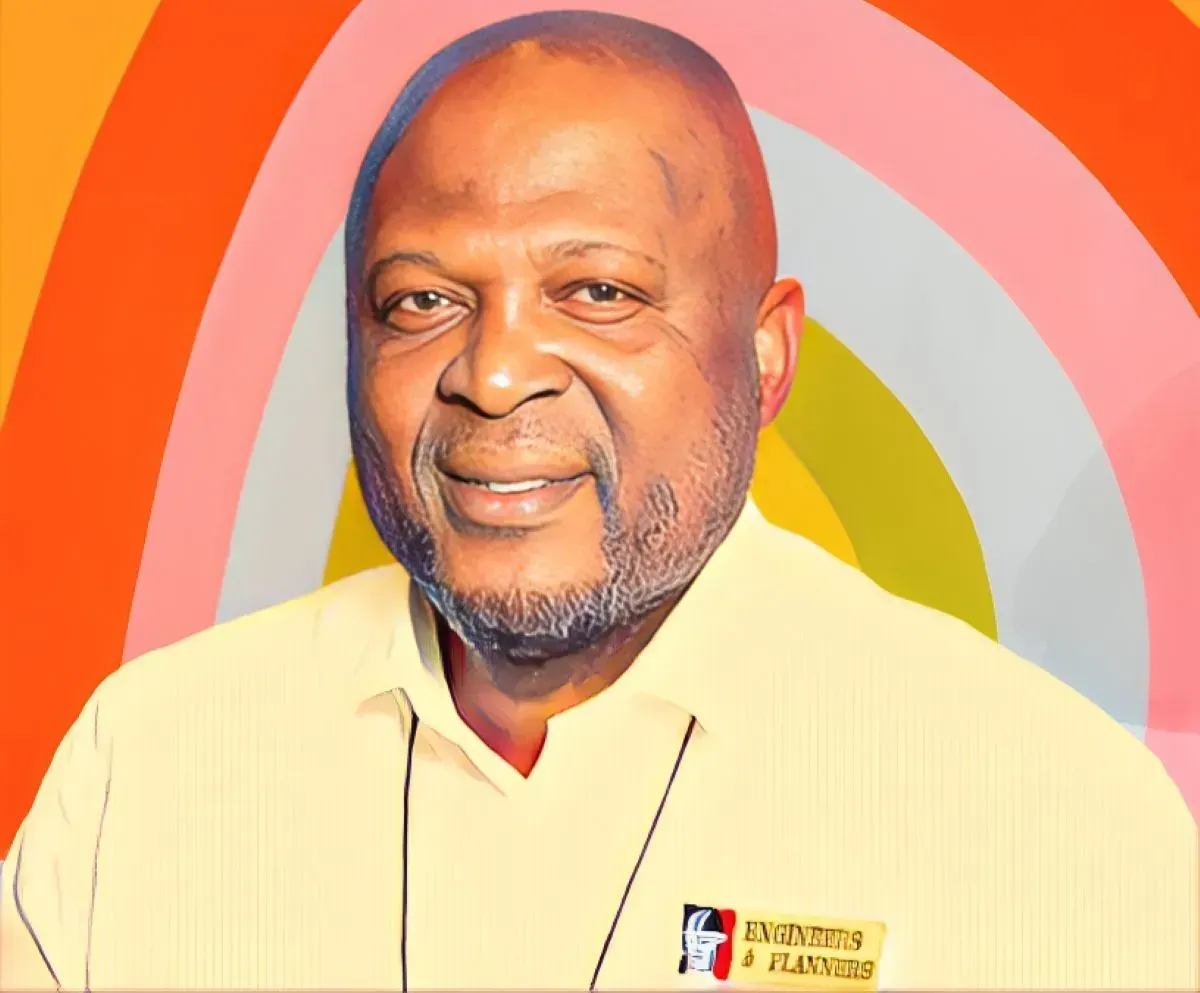
Ibrahim Mahama, owner of Engineers & Planners and one of Ghana's wealthiest businessmen, is facing allegations that his elder brother President John Dramani Mahama has shaped the country's mining reforms to disproportionately benefit his company, raising investor concerns about regulatory fairness in Africa's largest gold-producing nation.
The allegations, which the Mahama administration has strongly denied, center on E&P's emergence as the primary Ghanaian beneficiary of a series of regulatory changes the government says are designed to increase local participation in the country's gold sector. Critics including opposition politicians, foreign investors and industry analysts argue that E&P is the only Ghanaian company to have materially benefited from those changes so far, and that the timing and structure of key decisions raise questions about conflict of interest at the highest levels of government.
E&P has rejected the accusations as politically motivated, maintaining that no foreign investor has been deprived of assets through government action and that Ghana remains open to legitimate investment.
The controversy sits against the backdrop of two distinct but related disputes involving major international mining firms. Gold Fields, the South African mining giant, is currently involved in legal proceedings linked to its Tarkwa and Damang operations in Ghana, two of West Africa's most productive gold mines. E&P has historically been the primary contract mining operator at both sites and has separately announced plans to invest approximately $1.2 billion in operations there.
The second and more immediately contested dispute involves the Black Volta Gold Project in Ghana's Upper West Region, one of Africa's largest undeveloped gold assets. In October 2025, E&P finalized the $100 million acquisition of Azumah Resources Ghana and Upwest Resources, cementing full ownership of the Black Volta and Sankofa gold concessions. The transaction was financed through a $100 million facility from the ECOWAS Bank for Investment and Development and settled through payments to CANGOL PTE Ltd in London and IGIC PTE Ltd in Singapore. E&P described the acquisition as a historic milestone — the first time a large-scale gold mine in Ghana had come under full Ghanaian ownership.
But London-based INIHC and Singapore-backed Ibaera Capital, which had backed Azumah Resources, dispute the terms under which that acquisition was concluded. An ICC arbitration proceeding chaired by Nigerian senior advocate Funke Adekoya SAN, with co-arbitrators from Ghana and the United Kingdom, is examining claims and counterclaims that exceeded $100 million before the formal settlement of the Azumah acquisition. Azumah had filed a $100 million counterclaim against E&P accusing the company of contract breaches, fund misappropriation and unauthorized dealings. E&P disputed those characterizations entirely.
Ibrahim Mahama founded Engineers & Planners in 1997 with a focus on contract mining and civil earthworks. The company grew over three decades into the largest indigenously owned mining contractor in West Africa, winning major contracts at Tarkwa, Damang and Ahafo at a time when those sites were dominated entirely by foreign operators. E&P today employs over 4,500 workers and has diversified into cement production through Dzata Cement, truck distribution through Man Bosch Ghana and large-scale poultry farming. In January 2026, the University of Mines and Technology awarded Mahama an honorary doctorate for his contributions to mining, construction and philanthropy.
The broader mining reform question is a politically charged one. President John Mahama returned to power in January 2025 after defeating Nana Akufo-Addo in the December 2024 election, and his administration has made Ghanaian resource sovereignty a central policy theme. Opposition figures in the New Patriotic Party, including Wisdom Gomashie, co-head of the NPP's mining committee, have described the new mining regulations as an "outright land grab" that lacks transparency and risks damaging Ghana's standing among international investors. The government has insisted the reforms are necessary to ensure Ghanaian citizens capture greater value from the country's natural resource wealth.
Ghana produced 4.8 million ounces of gold in 2024, the highest output on record for the country and a figure that makes it Africa's largest gold producer by volume. The Black Volta project, once operational, is projected to produce an average of 163,000 ounces annually in its first five years, representing approximately 3 percent of current national output. Its defined resource stands at 2.8 million ounces, with the potential to more than double that figure.
The political sensitivity of the cronyism allegations derives partly from the scale of Ibrahim Mahama's profile. He is a billionaire by regional standards and one of the most consequential figures in Ghanaian industrial development. His relationship to the sitting president makes every significant contract or policy decision touching E&P a subject of public scrutiny regardless of its merits. The government's insistence that its reforms apply universally has not quieted the debate, and Gold Fields' legal proceedings and the unresolved dimensions of the Black Volta international dispute ensure the controversy will remain active through at least the first half of 2026.
The intelligence satisfies curiosity. The paid briefings satisfy strategy.
Every Monday, Elite subscribers receive an Investor Memo breaking down the deal, the structure and the positioning behind the week's most consequential African wealth story - the kind of analysis that doesn't appear anywhere else.
Twice a month, a Wealth Intelligence brief profiles a single billionaire's holdings, cash flows and expansion pipeline in detail no public source matches.
→ Executive ($25/mo): Daily newsletter + Deep-Dive Reports
→ Elite ($75/mo): Everything above + Investor Memos + Wealth Intelligence + Quarterly Analyst Briefings
Subscribe now