

Table of Contents
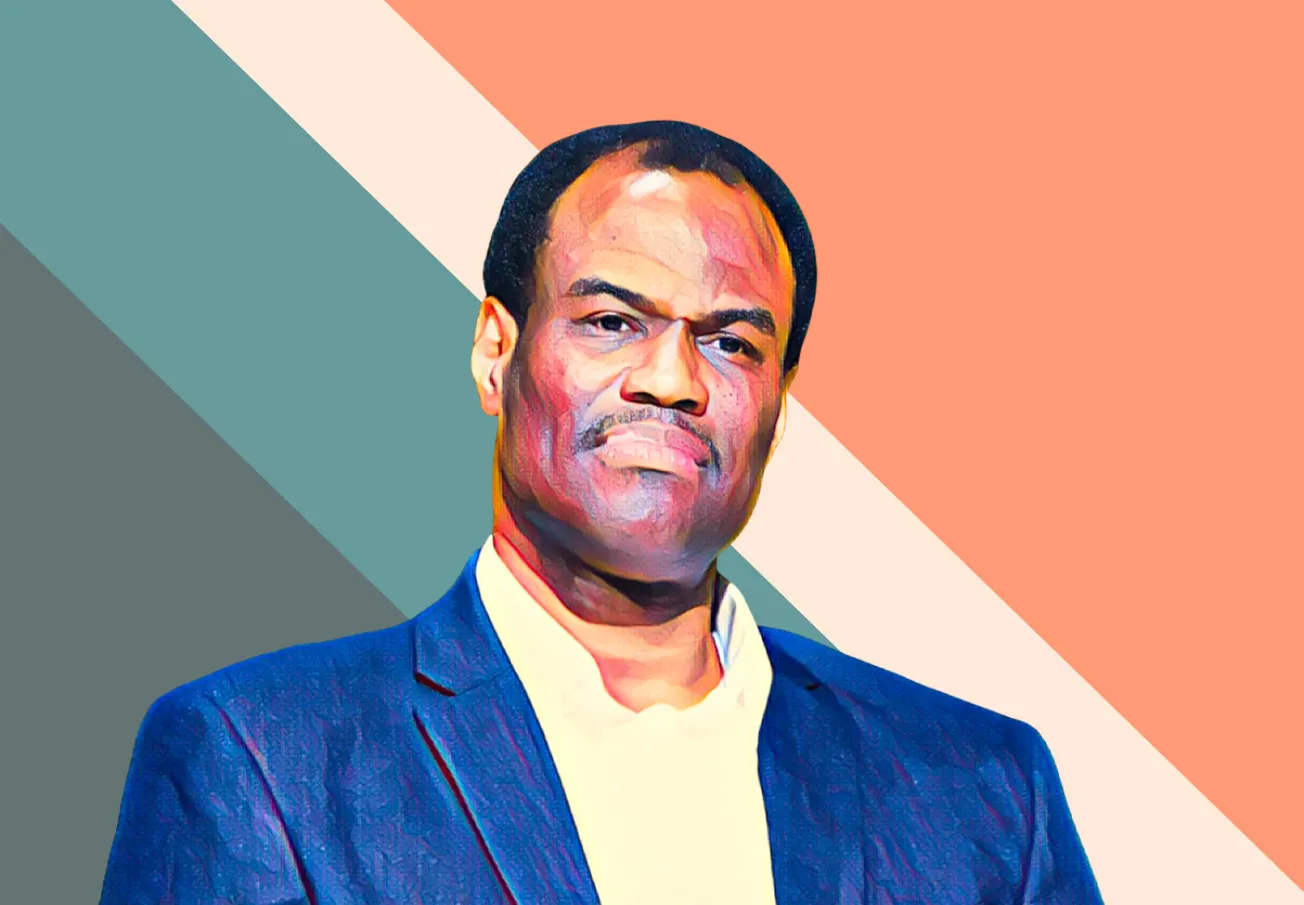
When the San Antonio Spurs made David Robinson the first overall pick of the 1987 NBA draft, they did something almost no team would dare to do. They waited. Robinson, a 7-foot-1 center out of the United States Naval Academy, owed the country two years of active-duty service, and he intended to honor it. While other rookies reported to training camp, the player who would become one of the greatest centers in history reported for duty as a commissioned naval officer. The Spurs held his rights and held their breath, betting that a man disciplined enough to serve would be worth the delay.
The bet paid off in ways that went far beyond basketball. The nickname stuck, and so did the temperament behind it. The Admiral built a Hall of Fame career, banking roughly $116 million (about 162 billion naira) in salary across 14 seasons, and then did the thing that separates him from nearly every athlete of his era. He turned that money into a real estate and private equity firm responsible for more than $3 billion in transactions, gave away tens of millions to build a school, and assembled a fortune now estimated at $200 million (about 280 billion naira).
The arc is not a story of a star who got rich and coasted. It is a story of a naval officer who treated his playing career as basic training for the business he always intended to build. Robinson left the game in 2003 and immediately set about constructing something durable, applying the same discipline to spreadsheets that he once applied to the paint.
Robinson was born on Aug. 6, 1965, in Key West, Florida, and raised largely in Virginia, a gifted student who arrived at the Naval Academy more interested in engineering than basketball. He grew several inches during his time at Annapolis, blossoming into a dominant college center while completing the rigorous academic and military demands of a service academy. The combination was unheard of, a future NBA superstar who was also a commissioned officer with a degree in mathematics.
His service commitment delayed his professional debut until 1989, and the wait did nothing to dull him. Robinson won Rookie of the Year, then proceeded to remake the Spurs into a perennial contender almost single-handedly. He was named Most Valuable Player in 1995, Defensive Player of the Year in 1992 and a scoring champion in 1994, and he made 10 All-Star teams. He represented the United States on the original Dream Team in 1992 and again in 1996, collecting Olympic gold and cementing his place among the best to ever play his position.
The crowning achievements came late. Paired with a young Tim Duncan in a frontcourt nicknamed the Twin Towers, Robinson won NBA championships in 1999 and 2003, the second coming in his final season, a storybook exit for a player who had given the franchise everything. He retired into the Hall of Fame, his jersey raised to the rafters, his reputation as one of the most respected men in the sport entirely intact.
The money matched the dominance. Across his 14 seasons, all with San Antonio, Robinson earned approximately $116 million in salary, with his pay peaking around $14.8 million in the 1998-99 season that delivered his first title. The figure made him one of the highest-paid players of his generation, the financial reward for a career spent as the cornerstone of a model franchise.
What distinguished Robinson was not the size of the paychecks but the seriousness with which he treated them. Even during his playing days he carried himself like an executive in waiting, a man whose Navy training had instilled a respect for planning, structure and delayed gratification. He did not spend his fortune chasing the trappings of fame. He studied how money compounds, surrounded himself with people who knew finance, and prepared for a second career that he intended to be every bit as ambitious as the first.
The preparation showed in his timing. Rather than wait until retirement to think about life after basketball, Robinson laid the groundwork while still in uniform, building relationships and absorbing the fundamentals of investing. By the time he played his final game in 2003, he was not a retiree wondering what to do next. He was an entrepreneur ready to deploy a fortune he had carefully protected.
The centerpiece of Robinson's post-basketball life is Admiral Capital Group, the real estate and private equity firm he co-founded in 2007 with Daniel Bassichis, a former Goldman Sachs banker. Robinson owns 51 percent of the company, a controlling stake that makes clear this was never a celebrity lending his name to someone else's fund. It was his enterprise, named for his own nickname, built to his own specifications.
The firm grew into a serious institutional player. Admiral has managed more than $1.4 billion in assets and, alongside its partners, deployed over $700 million of capital into transactions valued at more than $3 billion. Its strategy centers on commercial real estate in the country's largest markets, with investments spanning hotels, apartment complexes, office buildings and retail, typically value-add and core-plus assets in cities with strong job growth. A crucial early relationship was with USAA Real Estate, the investment arm tied to the insurer that serves military families, a fitting partner for a former officer and one that lent Admiral credibility and capital in its formative years.
The business reflected Robinson's values as much as his ambitions. He structured Admiral with an explicit social mission, dedicating a portion of its profits to community and charitable efforts, a way of making his investing serve the philanthropy that has always defined him. In November 2022 the firm rebranded as Vero Capital, marking its growth and a new chapter, with Bassichis stepping forward as managing partner. By then Robinson had proven the thesis he set out to test, that an athlete could build a genuine financial institution rather than simply a personal portfolio.
The partnership that built that institution has fractured in public. In December 2025, Robinson and Admiral Capital filed suit in Texas Business Court against Bassichis and entities tied to him, alleging breach of fiduciary duty, fraud and conversion, among other claims. The complaint accused Bassichis of misusing more than $34 million, including the diversion of roughly $18 million from one of Admiral's vehicles into a separate real estate venture without Robinson's approval.
The dispute is a striking turn for a partnership that lasted more than 15 years and built a firm worth managing billions. Bassichis characterized the matter as an isolated disagreement over the wind-down of certain assets, and the two men issued a joint statement saying they were engaged in constructive discussions and making progress toward a resolution, with their shared focus on protecting their investors. The episode is unresolved, and Robinson, who controls the majority of the company, is fighting to defend what he built. It is the rare moment of conflict in a career otherwise marked by partnership and trust.
Robinson's commercial appeal during his playing years rested on a reputation for character that brands found irresistible. Nike featured him prominently, including in its memorable Mr. Robinson's Neighborhood campaign that played on his clean-cut, family-friendly image, and he lent his name to other consumer products over the years. He was the antithesis of the controversial superstar, a pitchman who sold wholesomeness as convincingly as he protected the rim.
The endorsements mattered less for their dollar value than for what they revealed about his brand. Robinson understood that his image, built on service, faith and reliability, was an asset he could carry into business long after the sneaker deals ended. The same qualities that made him a trusted spokesman made investors comfortable handing him their capital. He turned a reputation into a currency, and then he turned that currency into a firm.
Robinson's personal real estate is comfortable rather than ostentatious, anchored by a Mediterranean-style home in the Shavano Park area of San Antonio. The roughly 8,175-square-foot residence sits on about two acres and carries five bedrooms, alongside the amenities of a man who never really left the game, including a full-sized basketball court stamped with the Spurs logo, plus tennis and volleyball courts, a pool and a gazebo. It is a family compound, not a trophy bought to impress strangers.
His more significant real estate is the kind most fans never see. Through Admiral Capital, Robinson has held stakes in hotels in Fort Worth and Las Vegas, apartment communities in Atlanta and the Seattle area, a three-building mixed-use portfolio in downtown Manhattan and office buildings from El Segundo to Atlanta. The properties are spread across the country, bought and sold according to investment logic rather than personal taste. For Robinson, real estate is less a status symbol than an asset class, the engine of a business that has always mattered more to him than any single address.
Robinson's philanthropy is as disciplined as his investing, and it predates his business career by years. While still playing, he began making promises to children that he kept to the letter. At a San Antonio elementary school in 1991 he pledged a scholarship to every fifth grader who finished high school and went on to college, and in 1998 he quadrupled the amount, ultimately writing checks to the students who held up their end.
The signature commitment came in 2001, when Robinson and his wife, Valerie, gave $9 million to establish the Carver Academy, a private school on San Antonio's near East Side, and his foundation has since raised close to $40 million for the institution. In 2012 he partnered the school with IDEA Public Schools, converting it into a publicly funded charter and expanding its reach to far more children. The David Robinson Foundation, which the couple founded in 1992, has anchored decades of giving rooted in education. The school is his proudest asset, the clearest expression of a man who measures wealth by what it can build in other people.
Robinson's immediate challenge is the courtroom, where the fight with his longtime partner will determine the shape of the firm he spent nearly two decades building. The outcome matters beyond the dollars, because Admiral Capital was always meant to be more than an investment vehicle. It was the funding source for his community work, the proof that an athlete could build something institutional and lasting.
The longer story is already secure. Robinson, now in his sixties and an inductee of the Texas Business Hall of Fame, has spent the years since his retirement demonstrating that a disciplined fortune outlasts a brilliant career. He earned $116 million playing basketball, but the school he built, the firm he founded and the standard he set will define him long after the salary figures are forgotten. The officer who made the Spurs wait turned out to be playing a far longer game than anyone realized.
The intelligence satisfies curiosity. The paid briefings satisfy strategy.
Every Monday, Elite subscribers receive an Investor Memo breaking down the deal, the structure and the positioning behind the week's most consequential African wealth story - the kind of analysis that doesn't appear anywhere else.
Twice a month, a Wealth Intelligence brief profiles a single billionaire's holdings, cash flows and expansion pipeline in detail no public source matches.
→ Executive ($25/mo): Daily newsletter + Deep-Dive Reports
→ Elite ($75/mo): Everything above + Investor Memos + Wealth Intelligence + Quarterly Analyst Briefings
Subscribe now