

Table of Contents
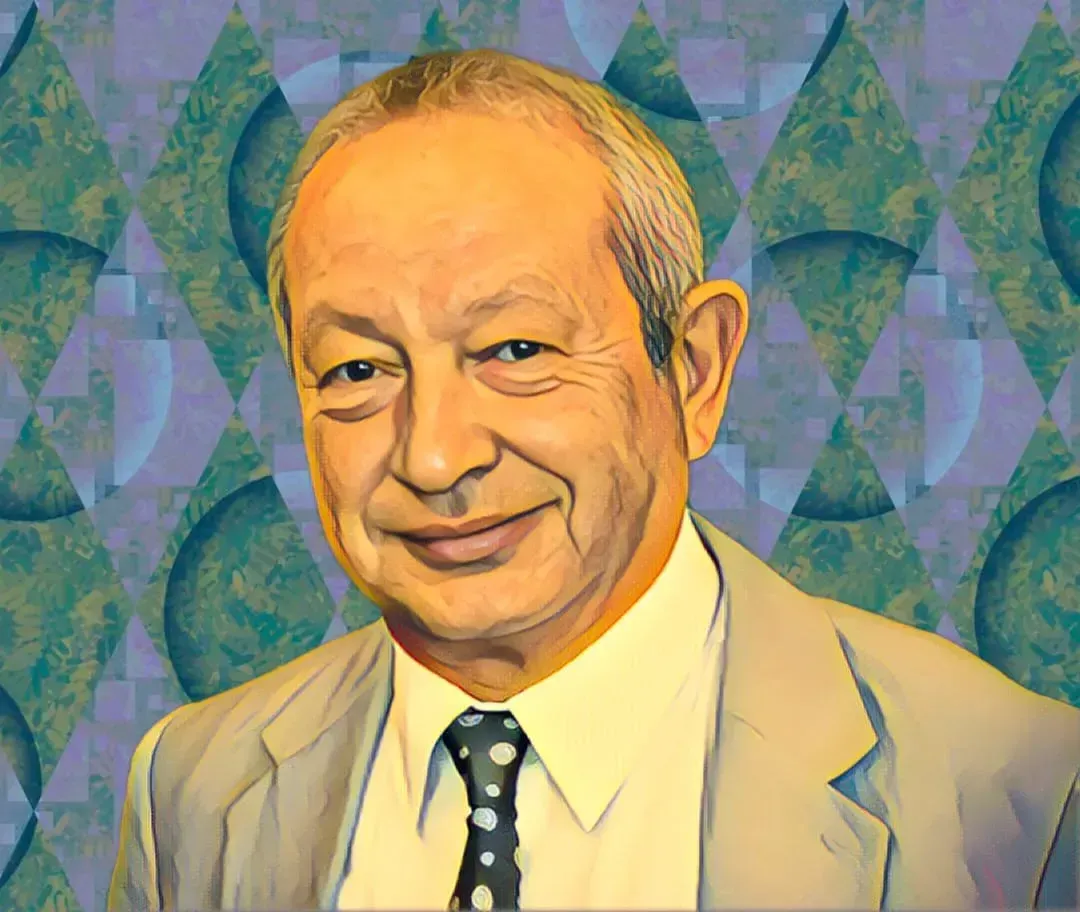
Egyptian billionaire Naguib Sawiris met Syrian President Ahmed al-Sharaa at the People's Palace in Damascus on Wednesday, according to Syrian state television, in what appears to be the opening move in Sawiris's effort to resolve years of outstanding financial claims in a country that cost him dearly under the previous regime.
Syrian state broadcaster al-Ikhbareya aired a photograph of the two men together but did not disclose what was discussed at the meeting, giving no indication of whether any agreements were reached or whether further talks are planned. The meeting was the first publicly documented encounter between Sawiris and Syria's post-Assad leadership since the fall of Bashar al-Assad's government.
The backstory runs deep. In the early 2000s, Sawiris's Orascom Telecom Holding entered Syria through a 25 percent stake in Syriatel, the country's largest mobile network operator, at a time when the Assad government was beginning a selective liberalisation of the Syrian economy. To get the licence, Orascom had to partner with Rami Makhlouf, Bashar al-Assad's maternal cousin and the most powerful businessman in the country, who controlled the remaining 75 percent through his entity Drex Technologies. Sawiris has since been candid about the arrangement. "This decision was wrong, but I had no other option if I wanted to invest in that country," he said in public remarks.
The partnership unravelled badly. A financial dispute between Orascom and the Syrian side led a Syrian court to freeze Orascom's local assets, estimated at approximately $49 million. Makhlouf's brother, Ehab Makhlouf, was appointed as interim caretaker of Syriatel during the legal proceedings, further concentrating control in the family's hands and effectively squeezing Orascom out of the company it had helped to build. The dispute left Sawiris with unresolved financial obligations in the country and a soured experience that became one of the more talked-about examples of the risks of investing in markets where political access and commercial arrangements were effectively indistinguishable.
The Syrian landscape today looks nothing like the one Sawiris navigated two decades ago. Al-Sharaa, whose forces ousted Assad in December 2024 after a rapid military campaign that ended five decades of Assad family rule, is now overseeing a transition government that has been actively courting foreign investors to help rebuild an economy devastated by more than a decade of civil war. Makhlouf himself fell out of favour with the Assad regime years before its collapse, with Assad forces seizing some of his assets in 2020 following a public dispute over tax obligations. His current whereabouts and the status of his business interests under the new government are unclear.
For Sawiris, the Damascus meeting signals something specific: that he believes the new Syrian government represents a genuine opportunity to revisit the claims that were never resolved under the old one. Whether those claims relate to the frozen Orascom assets, to outstanding financial obligations from the Syriatel dispute, or to potential new investment discussions is not known from the state television broadcast. But Sawiris is not a man who travels to Damascus for a photograph. His track record of pursuing financial claims through international arbitration and bilateral diplomacy suggests the meeting had a clear commercial purpose even if nothing was disclosed publicly.
Sawiris, 71, is the eldest son of Onsi Sawiris, the patriarch of Egypt's most prominent business dynasty. He founded Orascom Telecom Holding in 1997 and built it into one of the largest mobile telecommunications groups in the developing world, with operations across Egypt, Algeria, Pakistan, Iraq, Bangladesh, North Korea and several African markets. He merged Orascom Telecom with Russia's VimpelCom in 2011 in a deal that created the world's sixth-largest mobile telecommunications provider at the time. He subsequently sold his VimpelCom stake for approximately $4.1 billion and has since deployed that capital through Orascom Investment Holding, La Mancha Resources, which invests in gold mining through stakes in Endeavour Mining and other gold producers, and Ora Developers, his luxury real estate company with projects in Grenada, Cyprus and Pakistan.
His net worth is estimated at approximately $3.8 billion, making him one of the wealthiest Egyptians and a prominent figure in the broader Sawiris family, which also includes his brothers Nassef Sawiris, the chairman of OCI Global and one of Egypt's richest individuals, and Samih Sawiris, the founder of El Gouna on Egypt's Red Sea coast. The family's combined wealth makes it the most prominent business dynasty in Egyptian private sector history.
Syria's reconstruction needs are estimated in the hundreds of billions of dollars. Al-Sharaa's government has been meeting with investors, governments and multilateral institutions since taking power in an effort to begin mobilising capital for the rebuild. Sawiris arriving at the People's Palace in Damascus is one data point in a larger pattern of the business world beginning to engage seriously with post-Assad Syria.
The intelligence satisfies curiosity. The paid briefings satisfy strategy.
Every Monday, Elite subscribers receive an Investor Memo breaking down the deal, the structure and the positioning behind the week's most consequential African wealth story - the kind of analysis that doesn't appear anywhere else.
Twice a month, a Wealth Intelligence brief profiles a single billionaire's holdings, cash flows and expansion pipeline in detail no public source matches.
→ Executive ($25/mo): Daily newsletter + Deep-Dive Reports
→ Elite ($75/mo): Everything above + Investor Memos + Wealth Intelligence + Quarterly Analyst Briefings
Subscribe now