

Table of Contents
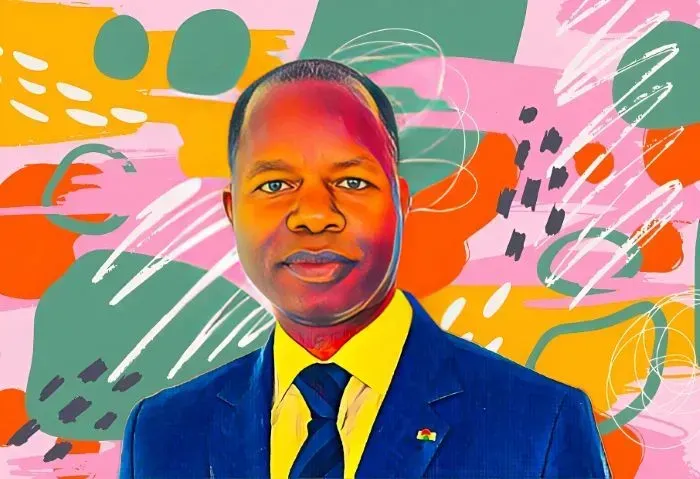
Coris Holding, the banking group founded by Burkinabè businessman Idrissa Nassa, has signed an €80 million financing agreement with the ECOWAS Bank for Investment and Development to lend into West African food, energy and agricultural supply chains.
The facility is about $93.6 million. It was approved at the bank's 98th ordinary board session on June 16 as part of a wider package of $75 million and €105 million, and formalised this week.
The money will be channelled through Coris subsidiaries to businesses across the region, with the stated emphasis on small and medium-sized enterprises and productive sectors rather than consumer lending.
George Agyekum Donkor, president and chairman of EBID, said the transaction went beyond a financing arrangement and reflected shared confidence in African institutions. He described the partnership as expanding access to long-term finance for smaller businesses, supporting regional integration, job creation and what he called sustainable prosperity.
Ouattara, speaking for Coris Holding, called the agreement a milestone in the group's ambition to deepen its contribution to financing West African economies, and said the credit line would enhance the capacity of its subsidiaries to support businesses that create value.
The second facility in thirty months
This is not the first time EBID has lent to Coris on this scale.
The bank granted the group a €70 million facility in January 2024, aimed at small and medium-sized enterprises across Togo, Burkina Faso, Benin, Côte d'Ivoire and Senegal, and targeted specifically at companies processing and distributing agricultural products.
Taken together the two facilities come to €150 million, roughly $175.5 million, by Billionaires.Africa's calculation. That makes Coris among the largest private-sector recipients of ECOWAS bank money in the region.
The problem the lending is aimed at is severe. EBID has cited an estimated 49.5 million people affected by food crisis across West Africa, with prices for some staples reaching double their five-year averages. Agricultural processing and distribution businesses in the region are typically too small for international lenders and too capital-hungry for local commercial banks, which is the gap a wholesale credit line through a regional bank is designed to fill.
The agreement sits inside EBID's GRO strategy for 2026 to 2030, an acronym for growth, resilience and optimisation.
A group expanding in every direction
The financing arrives during the most active period in Coris Holding's history.
Nassa built the bank in Burkina Faso, a landlocked West African country of about 23 million people, and it has become one of the larger banking groups in francophone West Africa. It is now pushing into Central Africa on the back of a rule change.
The group completed the purchase of Société Générale's Chadian business in December 2024, renaming it Coris Bank International Tchad and taking 67.8% ownership. That gave it a licence inside CEMAC, the six-country Central African monetary bloc, which since January 2025 has allowed a bank authorised in one member state to open branches in the others.
It has since incorporated a Cameroonian subsidiary in Douala with share capital of 26 billion CFA francs, about €39.6 million, subject to regulatory approval. It has secured approvals in Gabon and intends to build a headquarters in Libreville. And a delegation met CEMAC's commissioner for the common market in Bangui on July 30 to discuss opening in the Central African Republic.
Coris is among a small group of African-owned banks expanding across the continent as European lenders retreat. Société Générale and BNP Paribas have spent several years selling African subsidiaries, and the buyers have increasingly been regional groups rather than global ones.
Neither party disclosed the tenor of the facility, the pricing, or how the €80 million will be allocated between the group's markets.
The intelligence satisfies curiosity. The paid briefings satisfy strategy.
Every Monday, Elite subscribers receive an Investor Memo breaking down the deal, the structure and the positioning behind the week's most consequential African wealth story - the kind of analysis that doesn't appear anywhere else.
Twice a month, a Wealth Intelligence brief profiles a single billionaire's holdings, cash flows and expansion pipeline in detail no public source matches.
→ Executive ($25/mo): Daily newsletter + Deep-Dive Reports
→ Elite ($75/mo): Everything above + Investor Memos + Wealth Intelligence + Quarterly Analyst Briefings
Subscribe now