


Table of Contents
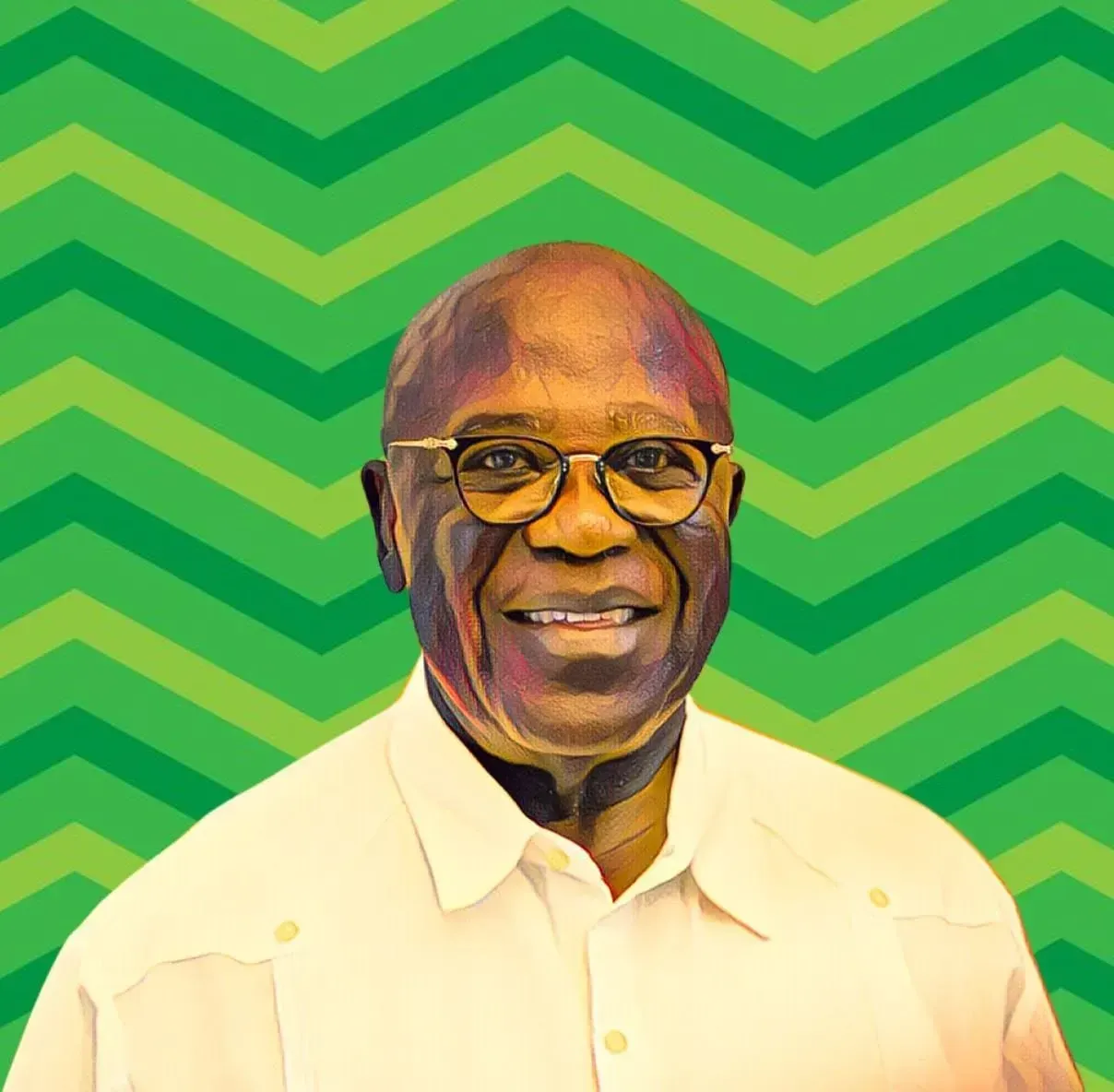
Sir Sam Jonah, the Ghanaian mining executive who built Ashanti Goldfields into a continental business, has taken the Nigerian government to international arbitration in Paris over 501 hectares of land on the approach road to Abuja airport.
JonahCapital Nigeria Limited, the company through which he holds the investment, has activated the arbitration clause in its development lease against the Federal Capital Development Authority and the Federal Capital Territory Authority. The case is before the International Chamber of Commerce.
The land carries a value in the region of $500 million at prevailing Abuja rates, by Billionaires.Africa's calculation. Neither party has published a figure for the claim.
Nyesom Wike, the minister of the Federal Capital Territory, confirmed the proceedings this week and indicated the government would wait for them to conclude. "The other party has gone to arbitration and we say okay, until you finish from arbitration," he said.
The lease
The agreement dates to May 28, 2007, when the FCT minister of the day and JonahCapital executed a development lease under the government's Mass Housing Scheme. It was registered on June 5 that year and granted development rights over Plot 4 in Cadastral Zone E30, Lugbe West, an area of roughly 501 hectares.
What was built there became River Park Estate, planned as a mixed-use development combining housing, shopping centres, offices, healthcare facilities and places of worship, and now one of the larger private residential developments in the Nigerian capital.
The FCDA terminated the lease on November 5, 2025. JonahCapital says it ran until June 2030, and is challenging the termination as unlawful.
What the company alleges
Its case rests on three claimed breaches, none of which has been tested.
The company says the FCDA failed to provide primary infrastructure required under the agreement, including roads, electricity and water, forcing the developer to finance and build it at what it describes as enormous cost.
It says Clause 7.7 of the lease requires building approval fees to be deferred, and that the authority demanded them upfront.
And it says the FCDA has fenced portions of the disputed land while the arbitration is under way.
The company also says that individuals and entities who were neither allottees nor parties to the agreement began asserting ownership claims over parts of the estate during construction, producing years of litigation.
Wike's position is narrower. He has acknowledged that the FCDA contracted with JonahCapital, and specifically not with Paulo Homes Limited, a company JonahCapital later brought in to help obtain building approvals. His argument is that the lease expired and the authority recovered the land.
He has previously said the administration decided to demolish structures put up by Paulo Homes and withdraw certificates of occupancy issued through it, with a view to reissuing them directly to homeowners.
A criminal charge running alongside
The arbitration is not the only proceeding.
The Nigeria Police Force has filed a 26-count charge at the FCT High Court, marked CR/402/2025, against Jonah, Kojo Ansah, Victor Quainoo, the lawyer Abu Arome and Mobus Property Nigeria Limited. The charge alleges forgery of company documents in an attempt to take over JonahCapital Nigeria Limited and Houses for Africa Nigeria Limited, and claims the defendants unlawfully increased share capital and allocated 99 million shares to themselves using falsified paperwork.
The allegations have not been tested and Jonah denies them.
He has responded through diplomatic rather than legal channels. In December he submitted an eleven-page petition to Ghana's foreign minister, Samuel Okudzeto Ablakwa, alleging unlawful action by Nigeria's Corporate Affairs Commission, which he says cancelled all corporate filings for both companies on December 8, reverting their status to their incorporation dates and threatening his ownership interests. He accused Nigerian authorities of expropriating shares and sidelining the courts while litigation was pending.
Ablakwa raised the matter at the 95th Ordinary Session of the ECOWAS Council of Ministers in Abuja that month, describing what he called unfair treatment and harassment of Ghanaian businesses by Nigerian authorities and citing the JonahCapital case directly.
The minister had visited the estate earlier in the year, describing it in a public post as a magnificent 501-hectare development owned by Jonah's JonahCapital and Mobus, and pledging diplomatic support as the company navigated local difficulties. Ghanaian residents of the estate appealed to Presidents Bola Tinubu and John Mahama over the dispute in July.
Why Paris
Taking the case to the ICC removes it from the jurisdiction where one party is the state.
An arbitral award is enforceable across the more than 170 countries party to the New York Convention, which means a foreign investor holding one can pursue government assets abroad if it goes unpaid. That is why arbitration clauses appear in agreements of this kind and why governments generally prefer to settle before reaching them.
Nigeria has reason for caution. The country spent years contesting the Process and Industrial Developments award, which reached billions of dollars before an English court set it aside in 2023 on grounds of fraud.
The man behind it
Jonah is among the most prominent business figures Ghana has produced. He ran Ashanti Goldfields for two decades, taking it from a state-controlled miner to a company listed in London and New York, and later served as president of AngloGold Ashanti after the two merged in 2004.
He was made an honorary Knight Commander of the Order of the British Empire in 2003 and has since built an investment business spanning mining, energy and property across the continent.
The Abuja estate is among his largest holdings outside Ghana, and it is now the subject of proceedings on two continents.
No timetable has been set for the arbitration. The criminal case remains before the FCT High Court.
The intelligence satisfies curiosity. The paid briefings satisfy strategy.
Every Monday, Elite subscribers receive an Investor Memo breaking down the deal, the structure and the positioning behind the week's most consequential African wealth story - the kind of analysis that doesn't appear anywhere else.
Twice a month, a Wealth Intelligence brief profiles a single billionaire's holdings, cash flows and expansion pipeline in detail no public source matches.
→ Executive ($25/mo): Daily newsletter + Deep-Dive Reports
→ Elite ($75/mo): Everything above + Investor Memos + Wealth Intelligence + Quarterly Analyst Briefings
Subscribe now