


Table of Contents
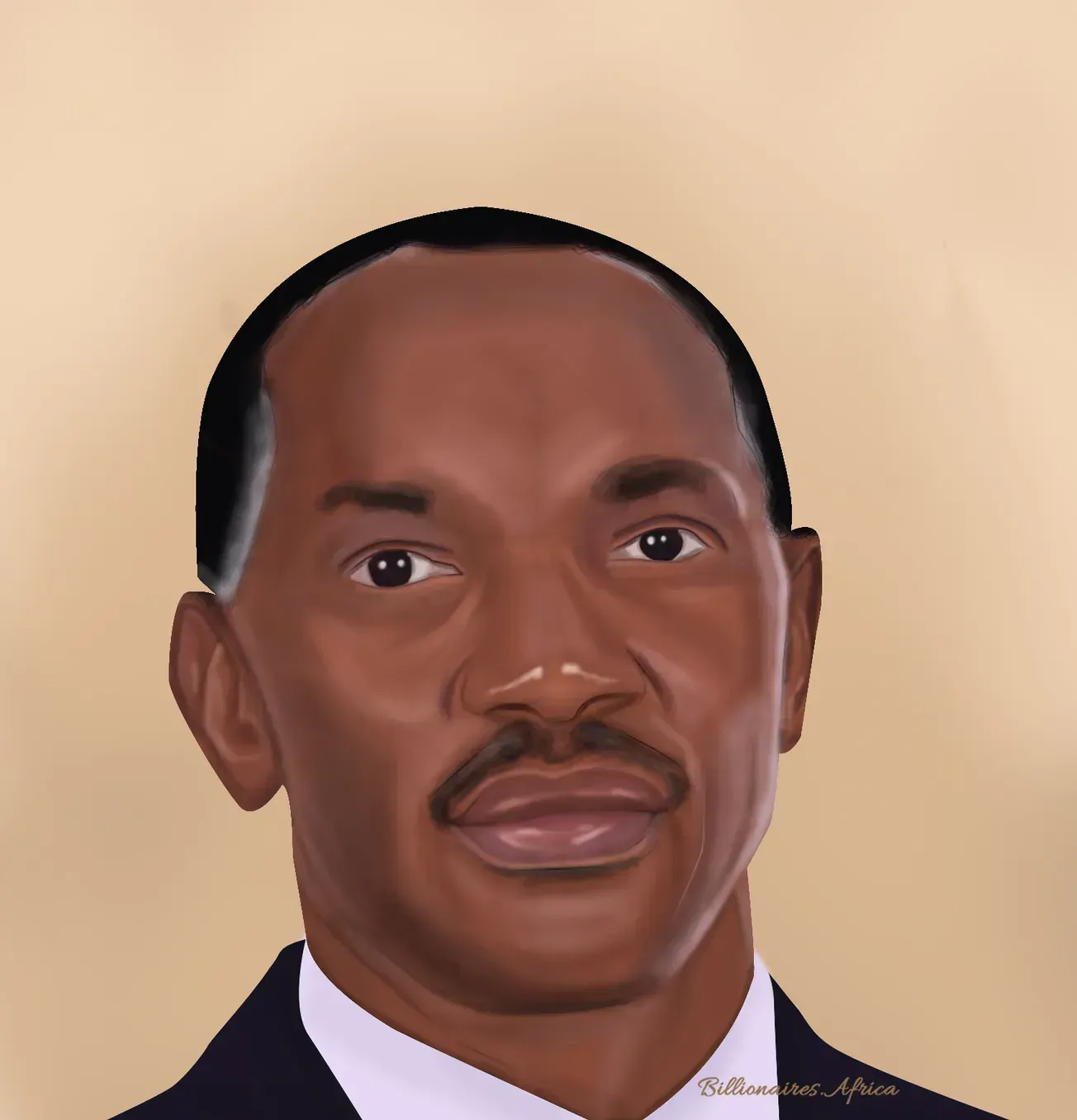
Kenya's High Court has barred police and prosecutors from arresting or charging Gideon Muriuki, the chief executive and largest individual shareholder of Co-operative Bank of Kenya, four days before he was due in a Nairobi courtroom to answer money laundering-related charges.
Justice Gregory Mutai issued interim conservatory orders on Friday restraining the Director of Public Prosecutions and the Directorate of Criminal Investigations from arresting, presenting for plea, charging or prosecuting the bank and Muriuki. The judge certified as urgent a Notice of Motion dated Aug. 6 and admitted it for hearing during the court recess.
The orders stay proceedings in Milimani Chief Magistrate's Court Criminal Case No. E451 of 2026, Republic versus Salim Mohammed Busaidy and six others, along with any other criminal proceedings arising from the investigations the bank and its chief executive are challenging.
Justice Mutai directed the petitioners to serve the court documents on the respondents within three working days, after which the respondents have 14 days to file responses. The matter comes up for mention on Oct. 12 for compliance and further directions. The orders hold until the application is heard with all parties present.
What prosecutors allege
The Office of the Director of Public Prosecutions said on Wednesday it would charge the chief executives of Co-operative Bank, KCB Group and NCBA with failing to report suspicious transactions, an offence under the Proceeds of Crime and Anti-Money Laundering Act. Muriuki, KCB's Paul Russo and NCBA's John Gachora were required to appear before the Milimani court on Aug. 11 to take plea.
The charges trace back to money that prosecutors say drained out of First Assurance Investment Limited over roughly six years. Investigators allege that Busaidy, a former director of the investment company and a former nominated member of a county assembly, forged the signature of his co-director Issa Abdalla Issa Timamy, now governor of Lamu County, on company cheques, making withdrawals appear properly authorised. Prosecutors put the sum at 363,320,459 shillings, or about $2.8 million at the Aug. 7 rate of 129.4 shillings to the dollar, a Billionaires.Africa calculation. Busaidy has denied the charges against him.
The case marks the most serious action Kenyan prosecutors have taken against sitting bank chief executives. Regulators have previously gone after the institutions rather than the individuals running them. The Central Bank of Kenya fined five lenders a combined 392.5 million shillings in 2018 over failures to report suspicious transactions linked to the theft of funds at the National Youth Service. Standard Chartered Kenya, Equity, Diamond Trust, Co-operative Bank and KCB were all penalised.
NCBA takes the same route
Co-operative Bank is not alone in going to the High Court. NCBA Bank Kenya PLC and Gachora obtained conservatory orders of their own in the same criminal case, arguing through their advocates that the decision to charge them was unlawful, unconstitutional and rested on a misreading of the anti-money laundering statute.
Their central argument is that the duty to report suspicious and unusual transactions sits with the reporting institution, discharged through its designated Money Laundering Reporting Officer and internal compliance structures, and that nothing in the Act or its regulations creates personal criminal liability for a bank's chief executive. They describe the prosecution as an abuse of the criminal justice process.
Muriuki's stake in the bank
Muriuki has run Co-operative Bank since 2001, when the board handed him a lender that had reported a 2.3 billion shilling loss the previous year. He joined in 1996 as a senior corporate manager and became director of corporate and institutional banking in 1999.
The bank posted a record pre-tax profit of 40.3 billion shillings for the year ended December 2025, up 15.8 percent, on total assets of 827.4 billion shillings. It paid a first-ever interim dividend of one shilling a share in December 2025 and a final dividend of 1.50 shillings in June, a 67 percent increase on the previous year.
Regulatory filings show Muriuki held 135 million Co-op Bank shares in December 2025, a 2.3 percent stake and a record for him, after buying 5.5 million shares over the preceding seven months. He had added 12 million shares in the first five months of 2025, lifting his holding from 2 percent, the level he had maintained for years. The position makes him the bank's largest individual shareholder, ahead of the investor Baloobhai Patel, who stopped accumulating at 100 million shares.
Co-op Bank shares closed at 35.80 shillings on Friday, up 1.6 percent, valuing Muriuki's disclosed stake at roughly 4.83 billion shillings, or about $37.4 million, a Billionaires.Africa calculation. The stock touched an all-time high of 36.60 shillings on June 22 and has more than doubled over the past year. Kenya's co-operative movement controls the lender through Co-op Holdings Co-operative Society Limited, which owns 64.56 percent.
The prosecution lands in the middle of the biggest corporate change at the bank in a quarter century. The board approved a reorganisation in April that converts the listed company into a non-operating holding company named Co-opbank Group PLC, with a new wholly owned subsidiary, Co-op Bank Kenya Limited, taking over the Kenyan banking business. Shareholders were asked to vote on the plan at an annual general meeting on May 15, and the structure requires clearance from the Central Bank of Kenya, the Capital Markets Authority and the Registrar of Companies.
Co-op Bank is due to release half-year results on Aug. 13, two days after the plea date the court has now suspended.
The intelligence satisfies curiosity. The paid briefings satisfy strategy.
Every Monday, Elite subscribers receive an Investor Memo breaking down the deal, the structure and the positioning behind the week's most consequential African wealth story - the kind of analysis that doesn't appear anywhere else.
Twice a month, a Wealth Intelligence brief profiles a single billionaire's holdings, cash flows and expansion pipeline in detail no public source matches.
→ Executive ($25/mo): Daily newsletter + Deep-Dive Reports
→ Elite ($75/mo): Everything above + Investor Memos + Wealth Intelligence + Quarterly Analyst Briefings
Subscribe now