

Table of Contents
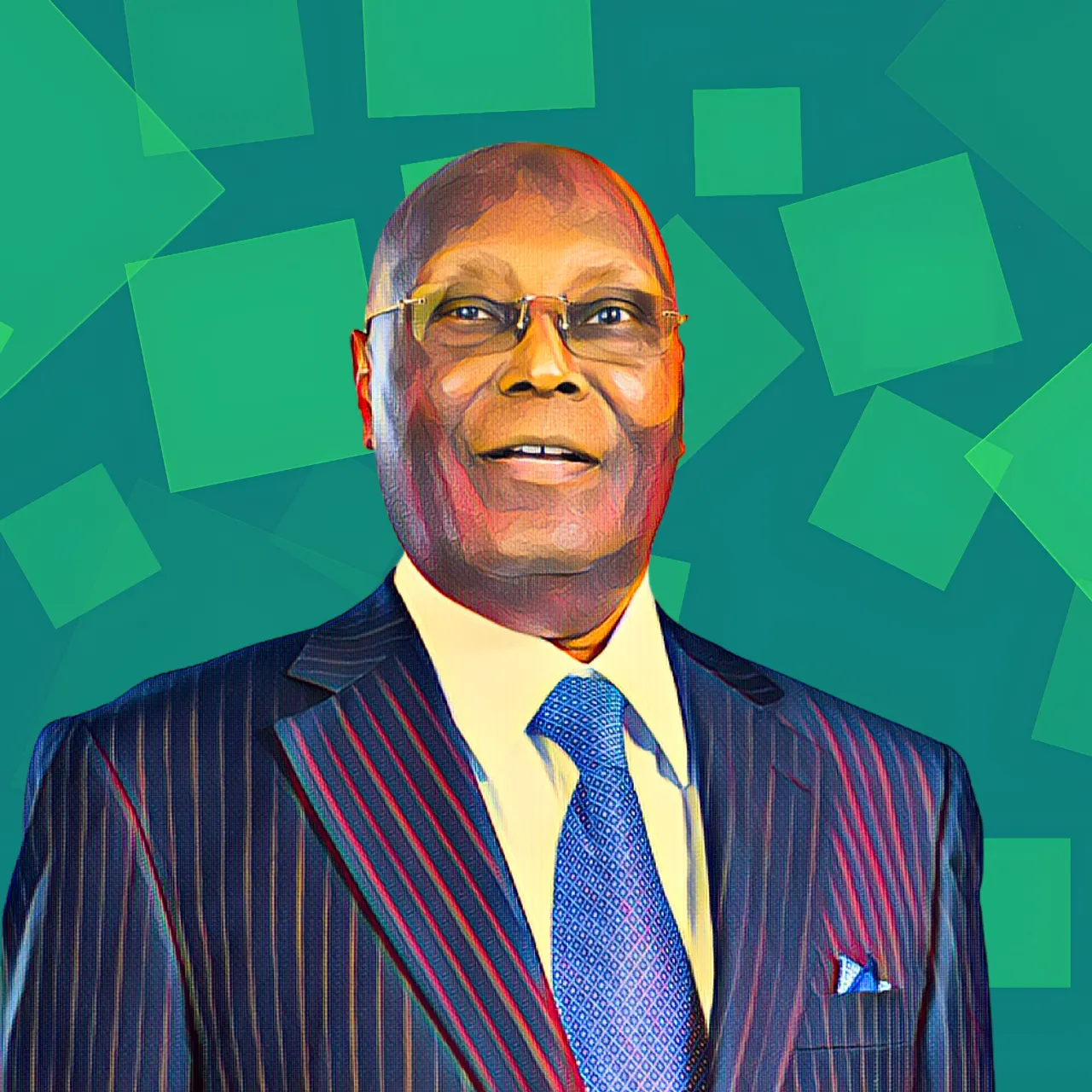
Atiku Abubakar has contested Nigeria's presidency four times and is expected to try again in 2027. He served as vice president under Olusegun Obasanjo from 1999 to 2007, spent 20 years in the Nigeria Customs Service before that, and has been building companies in Adamawa, the northeastern state where he was born, since the 1970s.
Those companies now sit inside a single holding structure. Abubakar created Priam Group in December 2019, folding in businesses that had operated separately since the 1990s along with their assets, liabilities, staff contracts and welfare obligations. Paul Ibe, his media adviser, said the restructuring was meant to deliver operating efficiency, cost control and stronger corporate governance.
The group lists 11 sectors: manufacturing, media, banking, logistics, agriculture, printing, education, eateries, beverages, real estate and animal feed processing. Abubakar holds further shareholdings in companies inside and outside Nigeria that fall outside the Priam structure.
Almost every operating asset lies within reach of Yola, the Adamawa capital, where he built his first house on a ₦31,000 loan in 1974.
The university
The American University of Nigeria is the largest institution in the group and the only one that publishes numbers.
Abubakar founded ABTI Academy, a private primary and secondary school now known as AUN Academy, in Yola in 2002, then approached American University in Washington for help creating a university on the same model. Regulators licensed it as ABTI University in 2003, and construction began in October 2004 on land donated by the 11th Lamido of Adamawa, the late Alhaji Aliyu Musdafa. The institution took its current name in 2007.
The founding board of trustees included the Nobel laureate Archbishop Desmond Tutu, the American University professor Robert Pastor, and Robert McNamara, the former United States defence secretary. An inaugural class of 124 students enrolled in autumn 2005, and the pioneer class of 92 students graduated in 2009. The university says every class since has graduated on schedule.
The campus covers more than 2,500 acres of savannah on the Yola southern bypass, most of it formerly farmland. Sixteen buildings stand on the main site, among them nine residence halls, a cafeteria, a commencement hall, the School of Arts and Sciences building, the Peter Okocha building housing the School of Law, and the Robert A. Pastor Library and E-Learning Center, which contains the Atiku Center for Leadership, Entrepreneurship and Development. A north campus across the road holds a faculty housing village and a community development centre.
Five schools operate there, covering arts and sciences, business and entrepreneurship, information technology and computing, law, and engineering. Enrolment runs between 1,200 and 1,500 students taught by roughly 100 academic staff, and an acceptance rate of 30 to 39 percent makes it one of the more selective universities in the country.
The fee schedule is public. Undergraduates pay ₦81,400 a credit hour, or ₦2,442,000 across a standard 15-credit academic year, with mandatory health, technology, sports and activity charges adding about ₦396,400 and compulsory meal plans running between ₦615,826 and ₦1,526,178. At the upper end of the enrolment range, tuition and mandatory fees alone come to roughly ₦4.26 billion, about $3.11 million at ₦1,368.22 to the dollar, before housing and meal charges, according to Billionaires.Africa calculations.
AUN operates as a non-profit and takes no government subvention, funding itself through tuition, endowments and grants. The National Universities Commission accredits it, Google has described it as the most information technology-intensive university in Africa, and DeWayne P. Frazier serves as president.
Abubakar has said the idea came from Peace Corps volunteers who taught him as a boy, and that he waited until private education became legal again in 1993 to act on it. The American Peace Corps gave him its first Harry Wofford Global Citizenship Award in 2011.
The factories
The manufacturing businesses sit in and around Yola and supply northern Nigerian markets.
Rico Gado Nigeria produces animal feed. Abubakar founded it with Portuguese partners and it runs two factories, including a Yola plant with capacity of 20 tonnes an hour, serving poultry and livestock farmers across the northeast. Priam announced a second feed mill for Abuja and expected to commission it by June 2020 after delays securing equipment.
Adamawa Plastics manufactures plastic products. Abubakar separately commissioned a woven sack factory and shrink laminate plants in May 2021 with capacity above 9 million sacks a year, supplying the bags that grain, cement and fertiliser move in.
Adama Beverages Limited was incorporated on Jan. 2, 2004 and manufactures fruit drinks and table water under the Faro brand. It processes oranges, mangoes and pineapples that would otherwise spoil in a state with limited cold storage, and distributes through a third-party logistics arrangement with branches in Umuahia, Abuja and Kano. Faro Bottling Company operates alongside it.
Priam also completed a feasibility study for a rice mill on the River Benue in Adamawa, which would place processing capacity beside one of the larger rice-growing corridors in the north.
Media, construction and the rest
Gotel Communications is the largest media business in the group, running television, radio and multimedia platforms across much of northern Nigeria from Yola under managing director Mohammed el-Yakub. TV Gotel ranks among the better-known Kannywood stations in the region.
Gotel's move into the Priam structure was rough. El-Yakub acknowledged in December 2019 that the station had entered late and that integration produced teething problems, with the group assuming responsibility for salaries and payment of arrears beginning on Dec. 24 that year.
Prodeco was incorporated in March 1996 as a property development company and has since taken on building, marine and infrastructural construction for clients in the oil and gas industry.
Gese Derdirabe Farms works land near Yola. Standard Microfinance Bank covers financial services. Abubakar holds the Nigerian franchise for Chicken Cottage, the British fried chicken chain, with outlets in Abuja and Yola. Gainful Employment International Limited completes the operating group.
Intels
Priam was assembled after Abubakar built and then exited a far larger business.
Gabriele Volpi, an Italian businessman who later took Nigerian citizenship, approached him in the early 1980s about building a logistics company inside Nigeria's ports. Abubakar was then a serving customs officer, several years before he reached the deputy directorship he would hold by 1987, running enforcement and drugs. They incorporated Nigeria Container Services, later renamed Integrated Logistics Services Nigeria Limited.
Intels grew into the dominant provider of integrated services to Nigeria's oil and gas industry, operating from Onne Port in Rivers State and from Lagos, with activities in Angola, South Africa, Namibia, South Sudan and Italy. The company was reported to employ more than 10,000 people. Its most valuable asset was a 17-year agreement with the Nigerian Ports Authority allowing it to collect boats pilotage revenue on the agency's behalf.
Abubakar Malami, then attorney general and minister of justice, wrote to the NPA in 2017 arguing the arrangement breached sections 80(1) and 80(10) of the constitution under the Treasury Single Account policy, and directed managing director Hadiza Bala Usman to terminate it. The NPA said Intels had refused to remit pilotage revenue in its custody, putting the figure at roughly $207.6 million. Intels rejected the accusation and said the agency owed it money.
The government broke what officials described as the company's near-monopoly on oil and gas cargo handling in April 2020, and the NPA terminated the pilotage agreement that September.
Abubakar sold $60 million of shares between December 2018 and January 2019, then continued in tranches until the transaction closed in December 2020, with Orlean Invest Group, the parent company, as buyer. The total exceeded $100 million.
Ibe announced the exit in January 2021 and blamed the government, saying there should be a marked difference between politics and business. Tommaso Ruffinoni, the Intels spokesperson, confirmed that Abubakar had left with his family as of December 2020, and that two of his sons, Adamu and Aminu Atiku Abubakar, had ended their employment there.
That $100 million remains the largest verified figure attached to Abubakar's business career.
What the group does not disclose
Priam Group is private. None of its companies trades on the Nigerian Exchange and none publishes financial statements, which leaves the university's fee schedule as the only window into the group's economics.
Abubakar has described himself as the largest private sector investor and employer in Nigeria, and figures put forward on his behalf have been withdrawn once already. El-Yakub, the Gotel managing director, told Sahara Reporters in November 2018 that Abubakar had approved a ₦33,000 minimum wage covering more than 100,000 people on his payroll, then issued a statement calling the 100,000 figure a fabrication and declining to give Gotel's own headcount. The International Centre for Investigative Reporting noted that ExxonMobil, then the ninth-largest company in the world by revenue, employed 69,600 people globally in 2017. Other estimates put the Priam workforce at around 50,000, unverified.
Published estimates of Abubakar's personal wealth range from $81 million to $2.2 billion, all of them from aggregator sites rather than filings or market prices. Forbes has never listed him.
He received the title of Turaki of Adamawa in 1982 and was elevated to Waziri of Adamawa in 2017. He chaired the National Economic Council as vice president, completed a master's degree in international relations at Anglia Ruskin University in 2021, and retained a United States lobbying firm on a $1.2 million contract in April ahead of the 2027 election, which he is expected to contest under the African Democratic Congress.
Priam has not published a timeline for the River Benue rice mill or the Abuja feed plant, the two expansion projects it announced when the group was formed.
The intelligence satisfies curiosity. The paid briefings satisfy strategy.
Every Monday, Elite subscribers receive an Investor Memo breaking down the deal, the structure and the positioning behind the week's most consequential African wealth story - the kind of analysis that doesn't appear anywhere else.
Twice a month, a Wealth Intelligence brief profiles a single billionaire's holdings, cash flows and expansion pipeline in detail no public source matches.
→ Executive ($25/mo): Daily newsletter + Deep-Dive Reports
→ Elite ($75/mo): Everything above + Investor Memos + Wealth Intelligence + Quarterly Analyst Briefings
Subscribe now