


Table of Contents
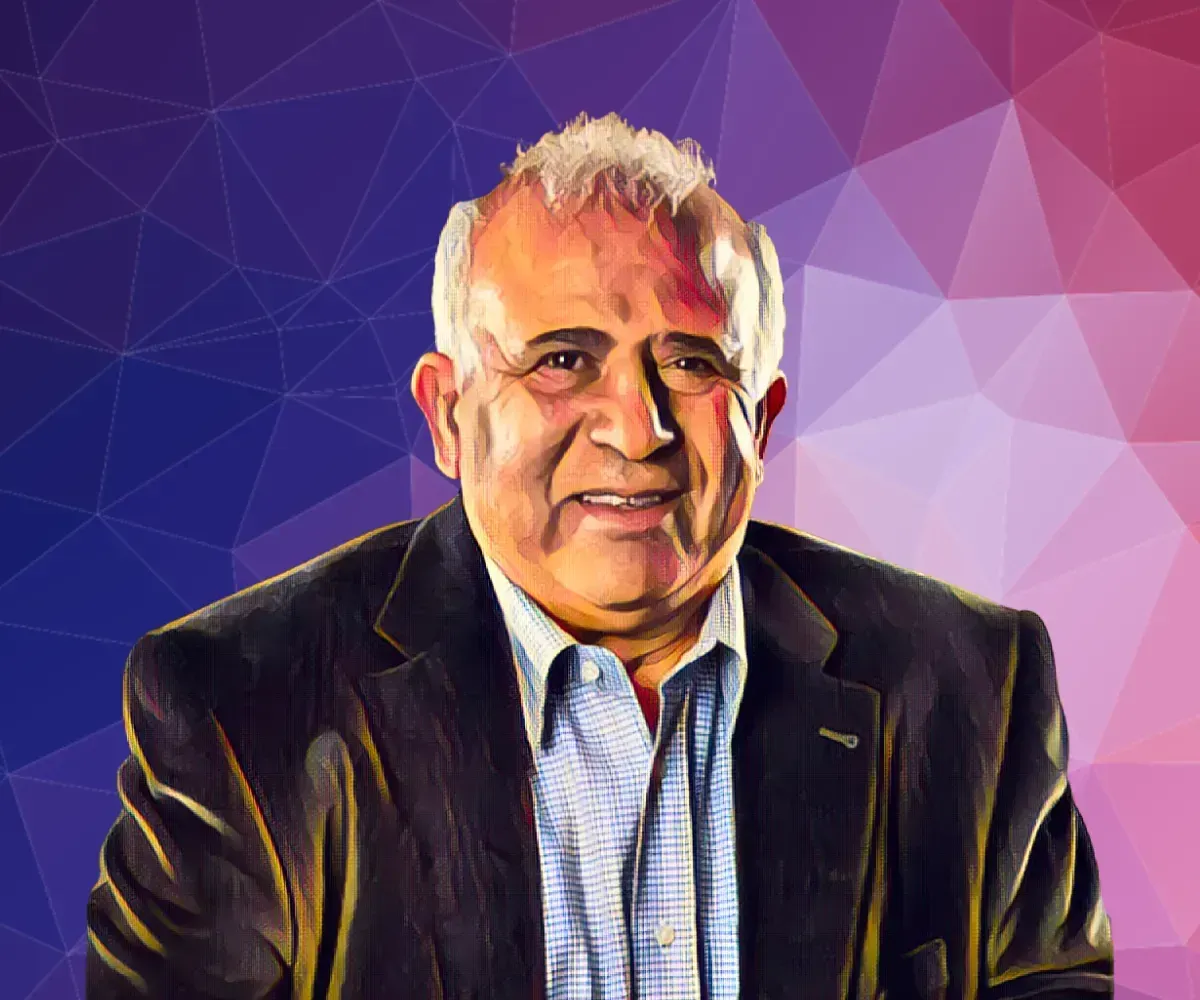
Dylan Taylor built his first fortune in electronics, finance and real estate. Then, at 37, he shifted his focus to space full-time, founding Space For Humanity in 2017 and Voyager Technologies two years later. That bet paid off in a way few expected: when Voyager went public on the New York Stock Exchange last year, it hit a $3.8 billion valuation and made Taylor a billionaire at 53.
Now he is making another bet, this one on the moon.
Taylor told Fortune this week that humans will "definitely" be living and working on the moon by the early 2030s, putting a concrete timeline on predictions that Elon Musk, Jeff Bezos and Sam Altman have also made but left deliberately vague. "The next step would be the moon. That'll happen in the 2030s, probably early 2030s," Taylor said. "We'll have a moon base, people living and working on the moon."
He went further. By 2032 or 2033, Taylor said, people sitting on their porches in upstate New York will be able to look up and see lights on the moon, because humans will be living and working there.
Taylor is not speaking purely from ambition. Voyager holds the NASA contract for the seventh Private Astronaut Mission to the International Space Station, targeted for launch in 2028. Through its Voyager Lunar Systems division, formed after acquiring Astrobotic Technology, the company holds an approximately $298 million NASA contract for two lunar landers, with the first mission targeting the lunar south pole no earlier than November 2026.
Voyager has also made a multi-million-dollar strategic investment in Max Space, a company developing next-generation expandable habitats designed for sustained lunar operations.
The first jobs on the moon, Taylor argued, will not be the kind that humanoid robots like Elon Musk's Optimus can handle alone. Resource mining, orbital data center construction and power grid installation are the roles he sees opening first, work that requires human judgment and adaptability in environments where robotics still falls short.
Low Earth orbit attracted more than $45 billion in investment in 2025, double the amount from the previous year, according to a Deutsche Bank report, a figure Taylor cited as evidence that the industry is moving from aspiration to infrastructure at speed.
Taylor flew to space himself on a 2021 Blue Origin flight, becoming the 606th person to leave Earth's atmosphere. The experience, he said, reinforced rather than tempered his confidence in the timeline.
On Mars, Taylor was measured. He agrees with Musk on the need to diversify humanity's presence beyond Earth as insurance against existential risks, including an asteroid collision, but he sees the moon as the credible near-term target and Mars as a longer-horizon contingency.
The distance and radiation exposure involved in a Mars journey present challenges that the moon does not, and the moon's proximity means errors are survivable in a way they would not be on an 18-month round trip to another planet.
Musk missed his original 2024 target for a manned Mars mission, a deadline he set back in 2016, and now predicts crewed missions starting in 2028. Bezos has said millions of people will be living in space by 2045. Altman has suggested the current generation of college graduates could hold well-paid jobs off Earth.
Taylor's version of that future is closer, more specific and, by the standards of this industry, unusually grounded in contracts already signed and hardware already in production.
The intelligence satisfies curiosity. The paid briefings satisfy strategy.
Every Monday, Elite subscribers receive an Investor Memo...
Subscribe now