

Table of Contents
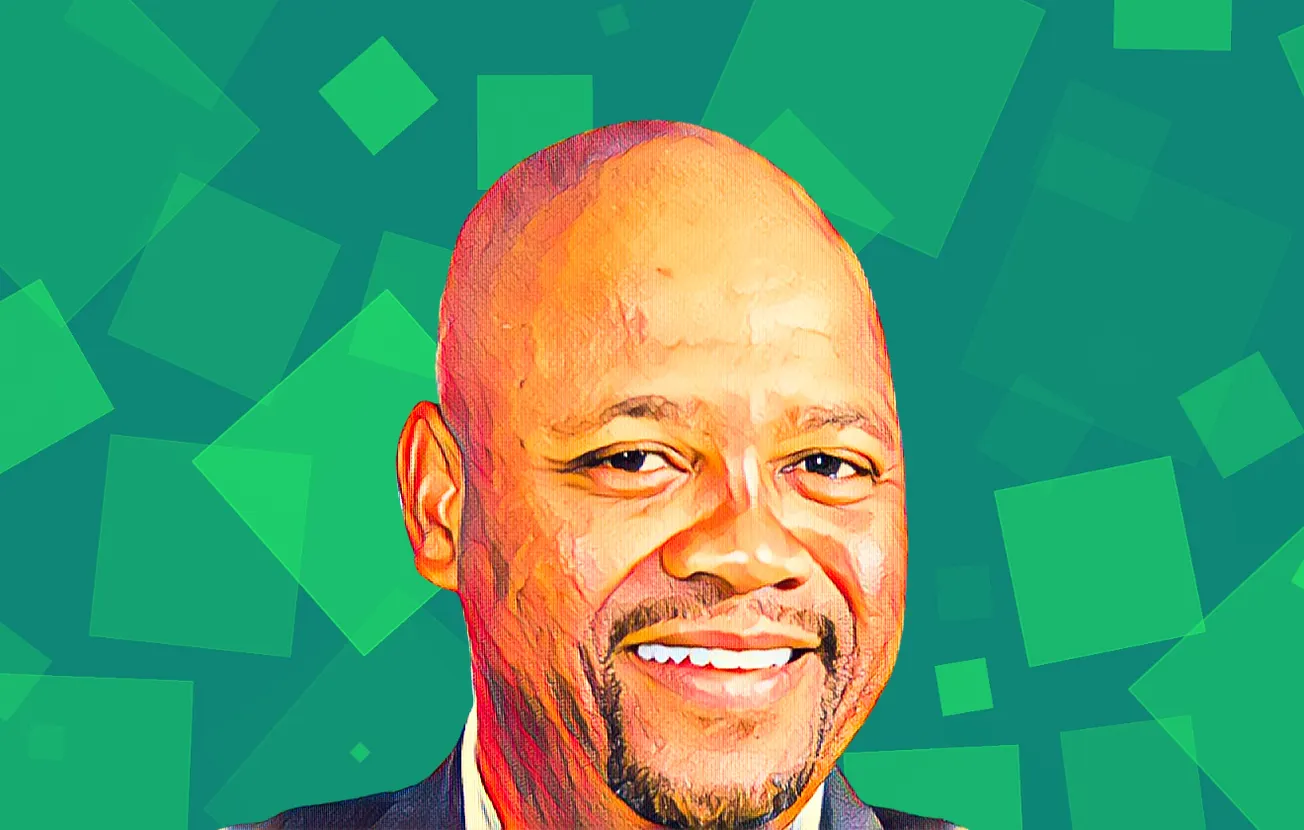
Simphiwe Mehlomakulu will take a stake in the 580 petrol stations Shell is selling in South Africa, ending a two-year auction in which the buyer needed a Black-owned partner to complete the deal.
Reatile Group, the energy investment company Mehlomakulu co-founded in 2003 and chairs, has agreed terms with ADNOC Distribution to acquire a minority equity interest in Shell Downstream South Africa. The Abu Dhabi company signed a definitive agreement in July to buy the business outright at an implied enterprise value of about $1 billion, roughly R16 billion at 16.03 to the dollar.
Neither party disclosed what Reatile is paying or how large its holding will be. ADNOC has said 28 percent of the business will go to a local empowerment partner and an employee stock ownership plan combined, leaving it with 72 percent.
"The partnership with Reatile Group as our local partner marks an important step in our commitment to South Africa," said Bader Saeed Al Lamki, chief executive of ADNOC Distribution. "Reatile Group has a deep understanding of the South African energy sector, its regulatory environment and operating requirements."
The assets are among the largest to change hands in South African fuel retail. Shell Downstream South Africa runs about 580 company-owned and dealer-owned service stations alongside wholesale fuels, aviation, marine and lubricants operations. It operated 360 convenience stores and sold roughly 3.5 billion litres of fuel in 2025, close to a tenth of the national market.
Twenty-three years from a R5 million loan
Mehlomakulu built the company that qualified him for this through gas cylinders.
He spent almost a decade at Sasol from 1993, working across its technologies, phenolics and solvents divisions, the last as global export manager. He moved to Old Mutual in 2000, joined PetroSA in 2002 running trading, supply and logistics, and became managing director of PetroSA Europe the following year.
He left months later to start his own business, incorporating Reatile in September 2003 with a R5 million commercial bank loan and his own capital at risk, alongside co-founders including Leven Moodley and Sizwe Hopa. The name is Tswana for we have grown.
They chose liquefied petroleum gas because South African households, restaurants and small businesses used it every day and demand kept climbing. Reatile Gaz opened in 2006 with three employees. It had eleven by 2010 and around 90 by the time it merged with Easigas.
Standard Bank backed him early, taking 15 percent and lifting that to 35 percent in 2012. Reatile bought the LPG cylinder business of Air Products and later Engen's bulk LPG operation, and the combined Easigas-Reatile Gaz took market leadership in South African LPG. Mehlomakulu won the Exceptional Entrepreneur award at EY's Southern Africa World Entrepreneur Awards in 2017.
The group has since completed more than 34 acquisitions, disposals and mergers, extending into pipeline gas, fuel storage, bitumen, renewable energy, battery storage and liquefied natural gas infrastructure. It bought 30 percent of Sasol's Mozambique pipeline with African Infrastructure Investment Managers, and holds interests in Egoli Gas, Vopak Terminal Durban, Pragma Africa and Rubis Asphalt South Africa.
Renewables are growing fastest. Reatile is equity partner to the independent power producer Anthem on the Notsi Solar Project in the Free State, a 475MW plant that reached financial close in March with 20-year offtake agreements to Discovery Green and NOA, and the largest single-phase solar development in the country. The group is working toward a 6GW pipeline.
RMB provided R4.45 billion in February, split between a R3.35 billion holding company facility and R1.1 billion ring-fenced for renewables, one of the largest such facilities its family office division has arranged.
Why ADNOC needed him
South Africa's Broad-Based Black Economic Empowerment framework makes local ownership a practical requirement for foreign buyers in sectors with heavy consumer and infrastructure exposure, and ADNOC said from the outset that it would seek a partner with a deep understanding of the sector and its regulatory environment.
The company entered a market that has consolidated around foreign trading houses. Glencore took 75 percent of Chevron's South African business in 2018, now Astron Energy. Vitol's Vivo Energy became market leader after buying a majority of Engen from Petronas in 2024. ADNOC becomes the third-largest operator.
For ADNOC Distribution this is the largest overseas acquisition it has made, and South Africa becomes its fourth retail market after the United Arab Emirates, Saudi Arabia and Egypt. The network grows about 55 percent to nearly 1,600 stations, convenience stores rise 70 percent to around 900, and annual fuel volumes increase roughly 20 percent to 19.2 billion litres. The company told investors it expects earnings per share to rise about 6 percent in the first full year, and that South Africa's regulated pricing framework delivers margins per litre comparable to the UAE while insulating returns from inflation and currency swings.
The end of 124 years
The sale closes Shell's direct fuel retailing in South Africa after more than a century.
The company halted its Sapref refinery in Durban indefinitely in 2022 and sold its 50 percent stake to the state-owned Central Energy Fund in May 2024 for a nominal one rand, then put the rest of its downstream business up for sale.
Aramco, Sasol, Trafigura's Puma Energy and Glencore all examined the assets during an auction that ran close to two years. The commodity trader Gunvor emerged as preferred bidder before negotiations collapsed, and ADNOC secured the deal in July. BofA Securities advised, with A&O Shearman and ENS as legal counsel.
Completion is expected in 2027, subject to approval by South Africa's competition authorities. The Shell brand remains on the forecourts under a long-term licensing agreement, so motorists will notice nothing at the pump.
The intelligence satisfies curiosity. The paid briefings satisfy strategy.
Every Monday, Elite subscribers receive an Investor Memo breaking down the deal, the structure and the positioning behind the week's most consequential African wealth story - the kind of analysis that doesn't appear anywhere else.
Twice a month, a Wealth Intelligence brief profiles a single billionaire's holdings, cash flows and expansion pipeline in detail no public source matches.
→ Executive ($25/mo): Daily newsletter + Deep-Dive Reports
→ Elite ($75/mo): Everything above + Investor Memos + Wealth Intelligence + Quarterly Analyst Briefings
Subscribe now