

Table of Contents
South African wine producers shipped 264 million litres abroad last year, a drop of 13.8% by volume, and the industry that produced it is smaller than it was a decade ago by almost every measure that counts.
Vineyard area has fallen 12% since 2014, from 99,472 hectares to 87,848. More than twice as many hectares were pulled out of the ground as went into it in 2023. Production costs have roughly doubled over the decade, rising faster than both headline inflation and producer prices. When Vinpro last surveyed grower profitability in detail, only about 12% of producers were earning a sustainable return, close to a third were making losses, and almost half were bringing in net revenue too low to justify staying.
One producer who is not in that position runs 91 hectares in the Stellenboschkloof valley and sends three-quarters of what she makes overseas.
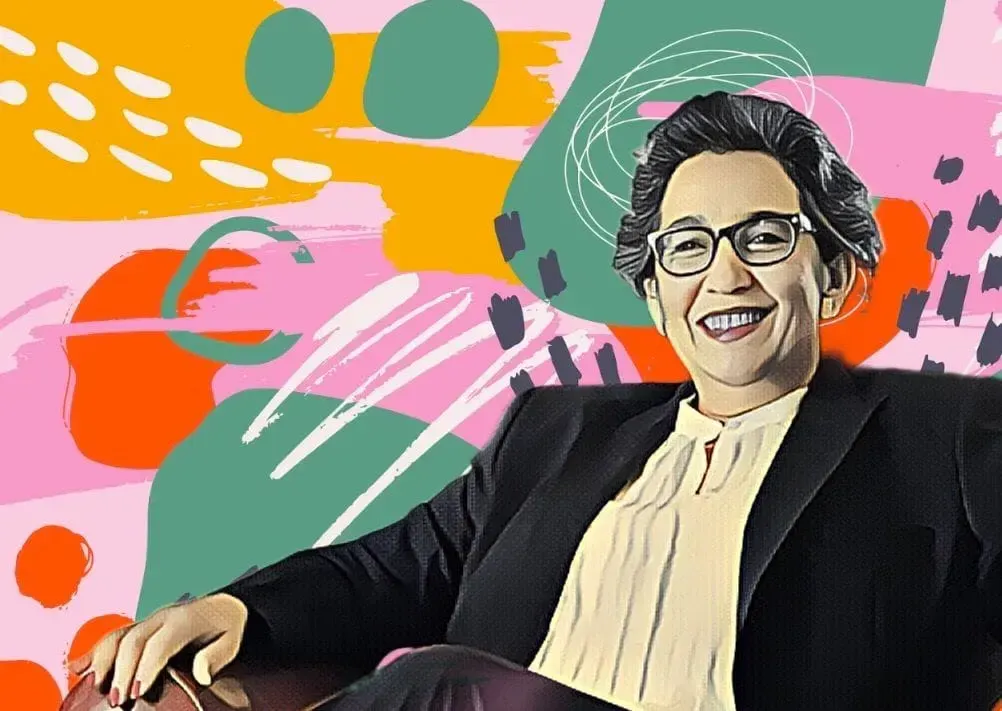
Wendy Appelbaum bought De Morgenzon with her husband Hylton in 2003. The estate now produces around 750,000 bottles a year and exports the bulk of it to the United Kingdom, the United States, Canada, Sweden, Belgium and the Netherlands. Those are the markets that held up while the rest of the industry contracted, and the segment she operates in is the one the export data suggests is working.
Where the money still is
The headline decline conceals a split.
Bulk wine, shipped in tanks and bottled elsewhere, collapsed. Volumes fell nearly 20% to 146.4 million litres, and the value dropped 13.4% in rand terms to 2.1 billion rand, or 11.4% in dollars to $117 million.
Packaged wine, bottled and branded at origin, held. Volumes slipped 4.6% to 117.6 million litres, revenue fell 2% in rand to 7.7 billion, and measured in dollars it actually rose 0.4% to $431 million. Overall export value came to 9.8 billion rand, down 4.7% in local currency and 2.4% in dollars at $548.5 million.
Siobhan Thompson, chief executive of Wines of South Africa, said the results showed that a long-term approach of "prioritising value over volume and focusing on key markets is proving resilient," pointing to value growth in Britain, Canada and Sweden.
Those are three of the six markets De Morgenzon supplies.
The structural criticism of South African wine is that too much of it has been sold on price. Analysis published in January argued that the country's wine is positioned internationally as "good value" rather than premium, which limits pricing power and entrenches the reliance on bulk shipments that just fell apart. Port inefficiencies and packaging costs compound the problem for anyone trying to move bottles rather than tanks.
An estate exporting branded bottles into Britain, North America and Scandinavia is doing the thing the industry's own analysts say more producers need to do. It also requires capital that most growers do not have, and Appelbaum has never pretended otherwise about where hers came from.
The morning sun
De Morgenzon means the morning sun, named for being the first part of its valley to catch the light.
The land was once part of Uiterwyk, among the oldest farms in South Africa, leased to Dirk Cauchet in 1682 and granted to him by the governor in 1699. Vines went in during the 1700s. The site is a steep bowl with 200 metres of elevation from bottom to top, windy and exposed, which demands heavy vineyard management including leaf pulling to balance sun against the constant breeze.
The maiden vintage was a 2005 Chenin Blanc. The estate's standing rose sharply from the 2010 vintage, when the Appelbaums hired Carl van der Merwe, previously the winemaker at Quoin Rock, and its Chenin Blanc, Chardonnay and Maestro white blend became fixtures near the top of South African ratings. A second label, DMZ, blends estate fruit with grapes bought from Elgin, Durbanville and elsewhere, and sells at a lower price point. The farm also presses olive oil.
Baroque music plays continuously through the vineyards and gardens. Hylton Appelbaum created Classic FM South Africa in 1997 and still chairs it, which explains the sound system. The couple argue that an ecologically diverse and biologically active environment produces better fruit, and the wildflowers that come up between the rows in spring are treated as part of the farming rather than decoration.
Appelbaum breeds racehorses as well.
The auction
The episode that made her nationally known had nothing to do with wine sales and everything to do with a farm she never got.
In December 2011 the South African Revenue Service put Quoin Rock, a Stellenbosch estate of roughly 200 hectares, under the hammer. It had been seized from the businessman Dave King over an alleged 2.8 billion rand tax bill after a long legal fight. The auctioneer was Rael Levitt, chief executive of Auction Alliance, then the largest auction house in the country with turnover around 6 billion rand a year. He opened the bidding at 75 million rand and told the room he was the Cape Town mafia.
Six bidders had registered. Whitey Basson of Shoprite, at the time the highest-paid executive in South Africa, would not go beyond 50 million rand. Appelbaum, who already owned an estate in the same district, bid 55 million and declined to move past 60 million. The hammer came down to her.
She subsequently learned that one of the other bidders in the room, a man named Gideon Leygonie, had not been buying the farm. Leygonie later told investigators that Levitt had instructed him ten minutes before the auction to bid as a proxy on behalf of an offshore buyer. A bid of 60 million rand attributed to him was reportedly retracted by Levitt afterwards.
Appelbaum complained to the National Consumer Commission in January 2012. Levitt sued her for defamation and fought the case in the press, and the liquidators rejected her bid.
Weekend Argus broke the wider story the following month, reporting allegations that Auction Alliance had paid liquidators, attorneys and bank staff to route business to it. The company had already been criticised in a judgment the previous year over a Garden Route resort auction. The Estate Agency Affairs Board opened an inquiry. Banks began pulling away.
The commission ruled in March. It found that Levitt had run a mock auction using a ghost bidder in contravention of section 45 of the Consumer Protection Act, imposed the maximum administrative fine of 10% of turnover, and held the board jointly liable. Levitt faced a personal fine of up to 1 million rand. Commissioner Mamodupi Mohlala said the conduct was serious enough that closing the company should be considered.
Appelbaum was present for the announcement and said the case was "much bigger than me," adding that it mattered for justice to be seen to be done.
Levitt resigned and Auction Alliance wound down over the following months. He acknowledged publicly that coverage had made the business unsustainable, while maintaining then and since that vendor bidding is routine at auctions worldwide, from art rooms in London to cattle sales in Texas, and that its use had been disclosed.
The legal conclusion was less clean than the commercial one. The National Consumer Tribunal later overturned the commission's rulings on procedural grounds, finding the process technically flawed, and Levitt was exonerated. Weekend Argus subsequently obtained, under access-to-information legislation, a written statement in which Levitt set out how he and a property developer named Ariel Gerbi had handled the aftermath.
Quoin Rock eventually sold for 85 million rand to the Ukrainian energy magnate Vitaly Gayduk and has released little wine since 2012. Appelbaum did not get the farm. She hired its winemaker.
Liberty, and the boardroom
Wendy Gordon was born in Johannesburg in 1960, the only daughter of three children born to Donald Gordon and his wife Peggy, alongside brothers Richard and Graeme.
Her father founded the Liberty Life Association of Africa in 1957 with 100,000 rand, having qualified as a chartered accountant at Kessel Feinstein. Liberty listed on the Johannesburg exchange in 1967. He built Sandton City, founded Liberty International in 1980, and retired in 1999 after 42 years with the group worth 40 billion rand. The Financial Mail named him Achiever of the Century in South African financial services, and he was knighted in 2005 for services to business and the arts.
Appelbaum has described the household as almost like growing up in a business school, while making clear that nothing was expected of her. Being a girl in the 1970s, she has said, meant nobody assumed she would do anything, and working was her own decision. She read psychology at the University of the Witwatersrand, joined Liberty, became one of its largest individual shareholders and took a seat on the board of Liberty Investors.
Her account of her first board meeting has outlived most of what else is written about her. Her father, chairing, asked for questions and moved to proceed in what she counted as perhaps a single sentence. She asked whether that had been one sentence or two. He said two. She said in that case she did have a question. He put an arm around her afterwards and told her, "Darling, nobody questions me in my boardroom." She replied that this might have been how things worked before, but not while she was at the table.
In 1994 she co-founded Women's Investment Portfolio Holdings, known as Wiphold, and served as deputy chairman. Built to bring ordinary South African women into shareholding, it became the first female-controlled company to list on the Johannesburg exchange, with assets above a billion rand. She sold her stake soon after the listing. She went on to serve as deputy chairman of Connection Group Holdings, then the country's largest computer and technology retailer, and as a director of Sphere Holdings, a black empowerment company in financial services and mining, and later of Wesgro.
She did not succeed her father at Liberty. He sold the family's control after retiring, and told Business Report that his daughter was terribly miserable about it but was "better off at home looking after my grandchildren" than running the business.
She dropped her maiden name when she married, having decided she did not want to be permanently introduced as Donald Gordon's daughter.
The estimates she rejects
Figures for Appelbaum's wealth circulate widely and rest on very little.
Forbes put her at $183 million in 2012 and listed her among ten female millionaires to watch in Africa. She called the estimate complete rubbish and offered no correction. A figure of 2.6 billion rand appears across South African media, which converts to roughly $162 million at current rates. None of it is anchored to a disclosed shareholding, because her assets are private. De Morgenzon publishes no accounts, and she exited Wiphold and Liberty Investors years ago.
The philanthropy is better documented. Appelbaum has directed more than $23 million, about 274 million rand, into giving. She runs the Wendy Appelbaum Foundation, which funds health and education programmes for South African women, and founded the Wendy Appelbaum Institute for Women's Health. Her family donated 120 million rand to establish the Wits Donald Gordon Medical Centre in Parktown in 2002, South Africa's first private teaching hospital, and funded the acquisition of Kenridge Hospital. Her father's endowment created the Gordon Institute of Business Science at the University of Pretoria in 2000. She sits on the medical centre's board and is a trustee of the Donald Gordon Foundation and of the World Wide Fund for Nature South Africa.
Donald Gordon died on 21 November 2019 at 89, after a long illness. Johann Rupert called him one of South Africa's greatest sons.
The industry his daughter now works in is contracting around her. Vines older than 20 years have risen from a fifth of South Africa's plantings to more than a third, against a recommended ceiling of about 15%, and one analysis described the vineyard sector as caught in a self-reinforcing downward cycle. The 2023 harvest was the smallest in nearly two decades, with production at 0.93 billion litres against 1.18 billion in 2014. Roughly 60% of what the country makes is still sold at home, into a market with its own constraints, and the export share that remains is where the value has to come from.
The intelligence satisfies curiosity. The paid briefings satisfy strategy.
Every Monday, Elite subscribers receive an Investor Memo breaking down the deal, the structure and the positioning behind the week's most consequential African wealth story - the kind of analysis that doesn't appear anywhere else.
Twice a month, a Wealth Intelligence brief profiles a single billionaire's holdings, cash flows and expansion pipeline in detail no public source matches.
→ Executive ($25/mo): Daily newsletter + Deep-Dive Reports
→ Elite ($75/mo): Everything above + Investor Memos + Wealth Intelligence + Quarterly Analyst Briefings
Subscribe now