

Table of Contents
Two African billionaire businesses have joined Vodafone to build Egypt's first sovereign artificial intelligence data centre, in a project the Egyptian government expects to attract $1 billion in foreign direct investment.
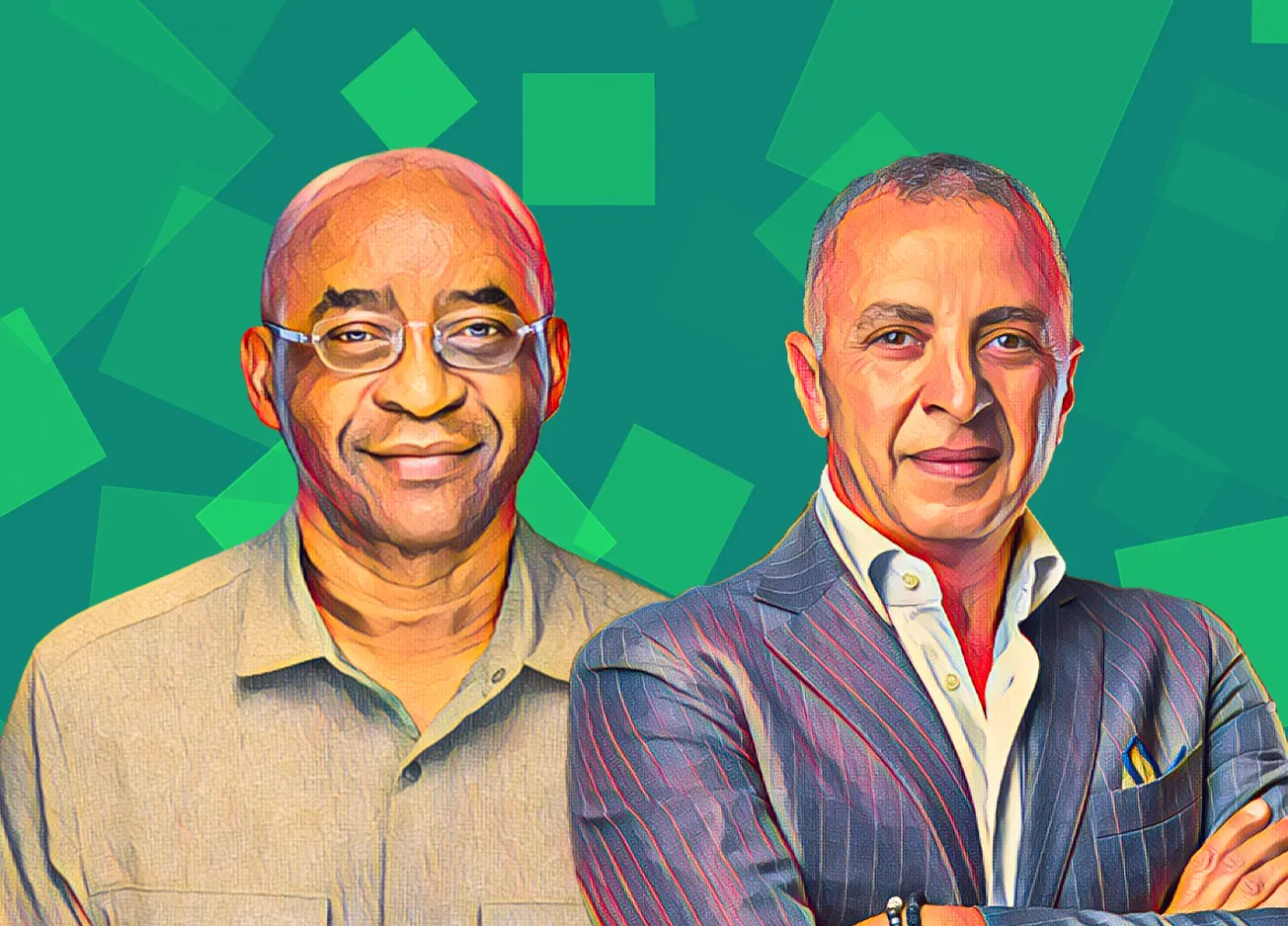
Vodafone Business, Cassava Technologies and Elsewedy Electric signed an agreement in Cairo on Tuesday, Sept. 8, to establish Africa Data Centres Egypt. Cassava is the pan-African technology group founded and chaired by the Zimbabwean billionaire Strive Masiyiwa. Elsewedy Electric is the Cairo-listed energy and infrastructure group run by Ahmed El Sewedy and controlled by his family.
Egypt's Ministry of Communications and Information Technology, which witnessed the signing, said the venture will start with 20 megawatts of capacity built over three years and expand to 200 megawatts. It expects $200 million in foreign direct investment initially, rising to $1 billion once the project is complete, and up to 200 direct and 2,000 indirect jobs.
Vodafone Business and Cassava signed a separate but related agreement the same day to launch what they describe as Egypt's first AI data centre inside the wider project.
Raafat Hendy, Egypt's minister of communications and information technology, said the venture will strengthen the country's digital infrastructure and improve data sovereignty by allowing sensitive data to be stored and processed inside Egypt rather than on servers abroad.
What is actually being built
The facility is what the industry calls an AI factory, a data centre packed with graphics processing units rather than the conventional servers that run websites and corporate software. GPUs are the chips that train and run artificial intelligence models, and Nvidia Corp. supplies the overwhelming majority of them worldwide.
Cassava is Nvidia's official cloud partner in Africa, a designation that gives it access to the chipmaker's reference designs and priority on hardware. The Egyptian site will use Nvidia accelerated computing supplied through Cassava and will sell GPU-as-a-Service, meaning customers rent computing time rather than buying their own hardware, said Mahmoud El-Khatib, vice president of enterprise business at Vodafone Egypt.
Ahmed El Beheiry, group chief technology and AI officer at Cassava Technologies and chief executive of Cassava AI, said the aim is for African businesses to build technology rather than only buy it.
Each company brings a different piece. Vodafone Business supplies cloud and enterprise customer relationships, Elsewedy Electric supplies power, construction and project delivery, and Cassava supplies data centre operations and the Nvidia relationship.
Masiyiwa and the Cassava build-out
Masiyiwa, 65, is Zimbabwe's richest man and one of the few African billionaires whose fortune was built in technology rather than resources or consumer goods. Forbes ranked him 14th among Africa's wealthiest in its 2026 list, and its real-time tracker put his net worth at $2.2 billion in late August. He lives in London and sits on the boards of Netflix, the Gates Foundation and the National Geographic Society.
He founded Econet Wireless Zimbabwe in 1998 after a five-year court fight to break the state monopoly on telecommunications, a battle he won at the Supreme Court. Econet Global grew out of that, and Cassava Technologies was carved out of the group's infrastructure assets. The company was formerly known as Liquid Technologies and now runs five businesses: Liquid Intelligent Technologies in fibre, Africa Data Centres in colocation, Liquid C2 in cloud and cybersecurity, Cassava AI, and Sasai Fintech. Hardy Pemhiwa is president and group chief executive.
Google took a direct equity stake in Cassava in December 2024 as part of a $90 million equity round. Nvidia made its own strategic investment in November 2025.
Egypt has been on Cassava's roadmap from the beginning. When the company announced its AI factory plan with Nvidia in March 2025, it named South Africa, Egypt, Kenya, Morocco and Nigeria as the five countries where it would deploy around 12,000 GPUs. The South African facility went live first. By March 2026 Cassava put the total Nvidia-related programme at roughly $700 million. Tuesday's agreement is the Egyptian leg of that plan arriving.
The El Sewedy family's part
Elsewedy Electric was founded in 1938 by the El Sewedy family as a small trader in electrical equipment. It is now an industrial conglomerate making cables, transformers, meters and wind turbines, and running engineering and contracting operations. It operates in 60 countries, owns more than 34 industrial plants and exports to over 110 countries.
The family still controls it. Ahmed El Sewedy, the president and chief executive, holds 25.52 percent of the company, or 546,252,820 shares. His brother Sadek, the non-executive chairman, holds 25.53 percent, or 546,502,820 shares. A third brother, Mohammed, holds 18.01 percent. The three together own roughly 69 percent of a company with about 2.14 billion shares in issue on the Egyptian Exchange. Billionaires.Africa last valued the two brothers' combined holding at about $1.8 billion in June 2026.
The company reported revenue of 231.98 billion Egyptian pounds, about $4.58 billion, for 2024, up 52.4 percent, and net profit of 17.46 billion pounds, roughly $344.74 million, up 72.6 percent.
Power is the constraint that makes Elsewedy's involvement matter. A 200-megawatt data centre campus needs roughly as much electricity as a small city, and Egypt has spent the past decade adding generation capacity while managing periodic shortages. Elsewedy builds substations, cables and transmission infrastructure, which is the part of a data centre project that most often slips.
Egypt has been courting this kind of investment as it tries to position itself as a computing hub between Africa, the Middle East and southern Europe, helped by the subsea cables that make landfall on its Mediterranean and Red Sea coasts. Neither the companies nor the ministry disclosed how the initial $200 million will be split among the three partners, when construction begins, or where in Egypt the campus will be built.
The intelligence satisfies curiosity. The paid briefings satisfy strategy.
Every Monday, Elite subscribers receive an Investor Memo breaking down the deal, the structure and the positioning behind the week's most consequential African wealth story - the kind of analysis that doesn't appear anywhere else.
Twice a month, a Wealth Intelligence brief profiles a single billionaire's holdings, cash flows and expansion pipeline in detail no public source matches.
→ Executive ($25/mo): Daily newsletter + Deep-Dive Reports
→ Elite ($75/mo): Everything above + Investor Memos + Wealth Intelligence + Quarterly Analyst Briefings
Subscribe now