

Table of Contents
Dilip Shanghvi paid off 879 crore rupees and kept his company private. Tata Sons paid off more than 21,000 crore and has just been told it cannot.
Both were placed on the same Reserve Bank of India list in 2022, a register of upper layer non-bank lenders required to float on a stock exchange within three years. Shanghvi Finance, which holds the Sun Pharmaceutical Industries founder's stake in the company he built, cleared its borrowings and was released in 2023. The central bank rejected Tata Sons' application to leave the same category in a letter received by its company secretary and chief financial officer on Saturday.
India's largest conglomerate must now list for the first time in its history.
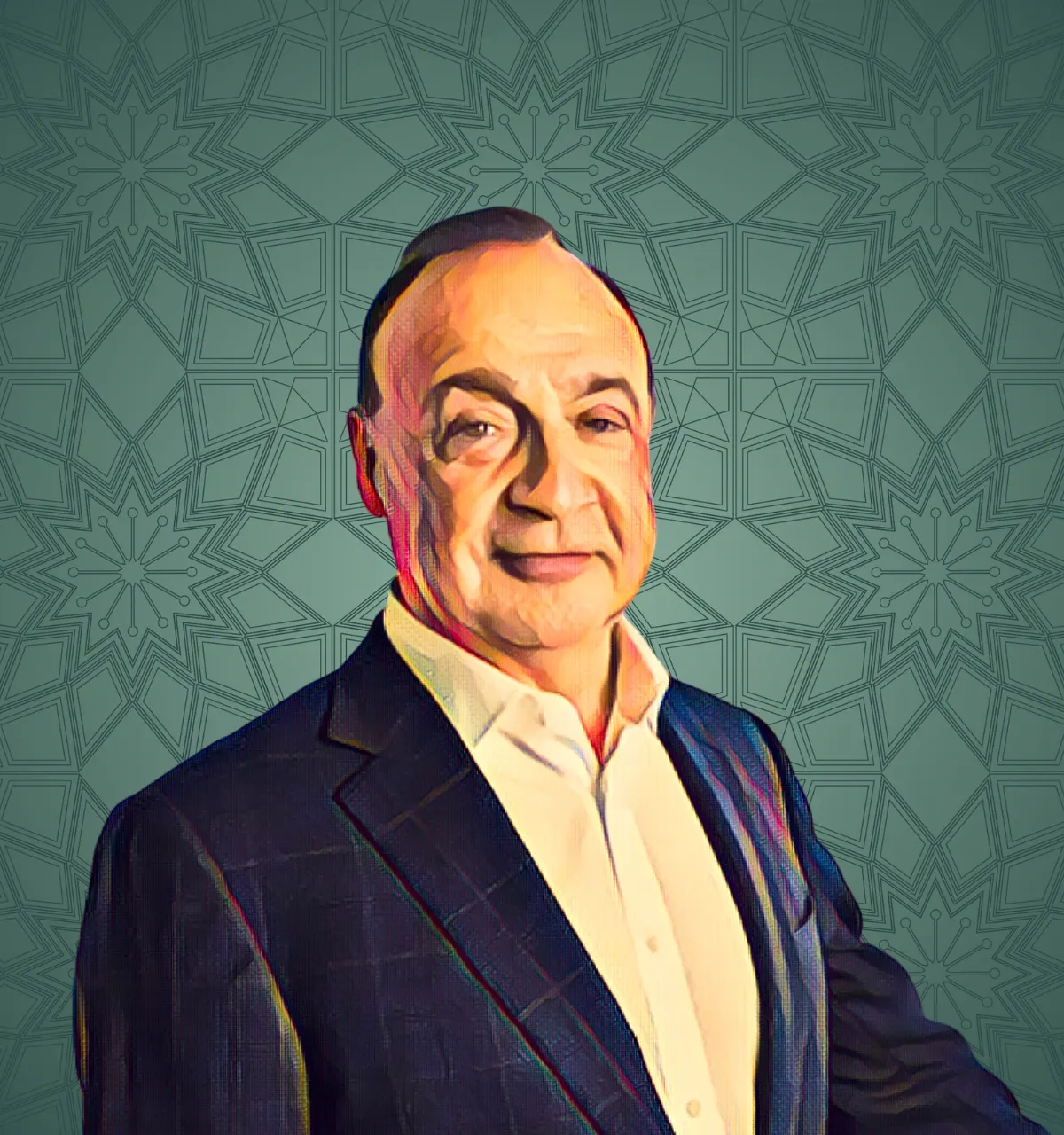
Shanghvi is not a conventional Indian tycoon. He is 70, born in Amreli in Gujarat to a Jain family and raised in Kolkata, where his father ran a small wholesale business selling generic medicines. He took a commerce degree at the University of Calcutta, borrowed roughly $200 from his father, and started Sun Pharmaceutical Industries in 1983 with five psychiatric drugs and a marketing team of two people.
Forbes values him at $25.9 billion.
Sun Pharma is now the most valuable listed pharmaceutical company in India, with revenue of 52,578 crore rupees, about $5.5 billion, net income of 11,984 crore and more than 41,000 employees. Two-thirds of its sales come from outside India. The family holds 54.48% of it.
The transaction that made it was the 2014 purchase of Ranbaxy, a competitor in serious trouble with American regulators that most of the industry regarded as unsalvageable. Shanghvi turned it around, and briefly overtook Mukesh Ambani as India's richest man the following year.
He is also one of the country's quietest businessmen. He gives few interviews, avoids public disputes, and is routinely described in Indian business coverage as secretive.
Shanghvi Finance is the vehicle through which he owns roughly 40% of Sun Pharma, along with a similar holding in Sun Pharma Advanced Research. It exists to hold shares, which is what makes it a core investment company in the eyes of the regulator, and what brought it onto the list in the first place.
Getting off it was a matter of arithmetic. The company repaid short-term loans of 341 crore rupees during the 2022 financial year and cleared the remaining promoter loans of 538 crore by December 2022. With no borrowings left, it no longer looked like a lender to anyone, and the Reserve Bank declassified it the following year.
Tata Sons did the same thing at a scale that dwarfs it and got nowhere.
The holding company repaid more than 21,000 crore rupees during 2024, becoming net debt-free, having carried borrowings of about $2.43 billion as recently as March 2023. It applied in March 2024 to surrender its registration entirely, which would have taken it out of the framework and let it operate as an unregistered holding company.
Corporate lawyers said publicly last October that the regulator should extend it the same relief, since Tata Sons no longer fitted the profile of a leveraged lender either.
What separates the two cases appears to be size rather than debt. The Reserve Bank's framework, introduced in October 2021, says the ten largest eligible non-bank lenders by asset size remain in the upper layer regardless of any other factor, and Tata Sons holds assets well above the one lakh crore rupee threshold at which a company qualifies automatically. Shanghvi Finance is not in that bracket. It entered the list through a scoring methodology, and clearing its debt moved it below the score.
Tata Sons cannot move below anything. It is too large.
There is a further detail about Shanghvi that is worth stating plainly. He has served as a director on the Reserve Bank of India's central board, the body that oversees the institution's general affairs. Central board directors are non-executive and do not take decisions on individual licensing applications, which are handled by the supervisory departments, and whether he held the position at the time of the 2023 declassification is not established in the public record.
Governor Sanjay Malhotra was asked about the Tata Sons case at a monetary policy press conference last October and gave nothing away, saying only that an entity holding a registration could do business until that registration was cancelled.
The group has complied with the framework once already. Tata Capital, its financial services arm, listed in October 2025.
What a Tata Sons listing would do is open a company that has never been open. It would force disclosure of finances the group has kept private for a century, and it would dilute the control of Tata Trusts, the philanthropic entities that hold the majority and have resisted a flotation for as long as the question has existed.
One shareholder wants it. The Shapoorji Pallonji group, controlled by the Mistry family, holds 18.5% of Tata Sons and asked for a public offering at the annual meeting in September 2024. Tata Sons refused. A listing would give the Mistrys a market price for a stake they have been unable to sell, because shares in an unlisted holding company cannot be traded.
Tata Sons can challenge the rejection in court. Lawyers say the odds are poor, because Indian judges apply a narrow standard of review to decisions on regulatory and economic policy.
Shanghvi, meanwhile, still owns his company outright.
The intelligence satisfies curiosity. The paid briefings satisfy strategy.
Every Monday, Elite subscribers receive an Investor Memo breaking down the deal, the structure and the positioning behind the week's most consequential African wealth story - the kind of analysis that doesn't appear anywhere else.
Twice a month, a Wealth Intelligence brief profiles a single billionaire's holdings, cash flows and expansion pipeline in detail no public source matches.
→ Executive ($25/mo): Daily newsletter + Deep-Dive Reports
→ Elite ($75/mo): Everything above + Investor Memos + Wealth Intelligence + Quarterly Analyst Briefings
Subscribe now