

Table of Contents
On a 75,000 square metre site off the Lagos-Ibadan expressway, eight warehouses of 7,500 square metres each produce pickup trucks, boats, surgical syringes, brake pads, face masks and chocolate wafers.
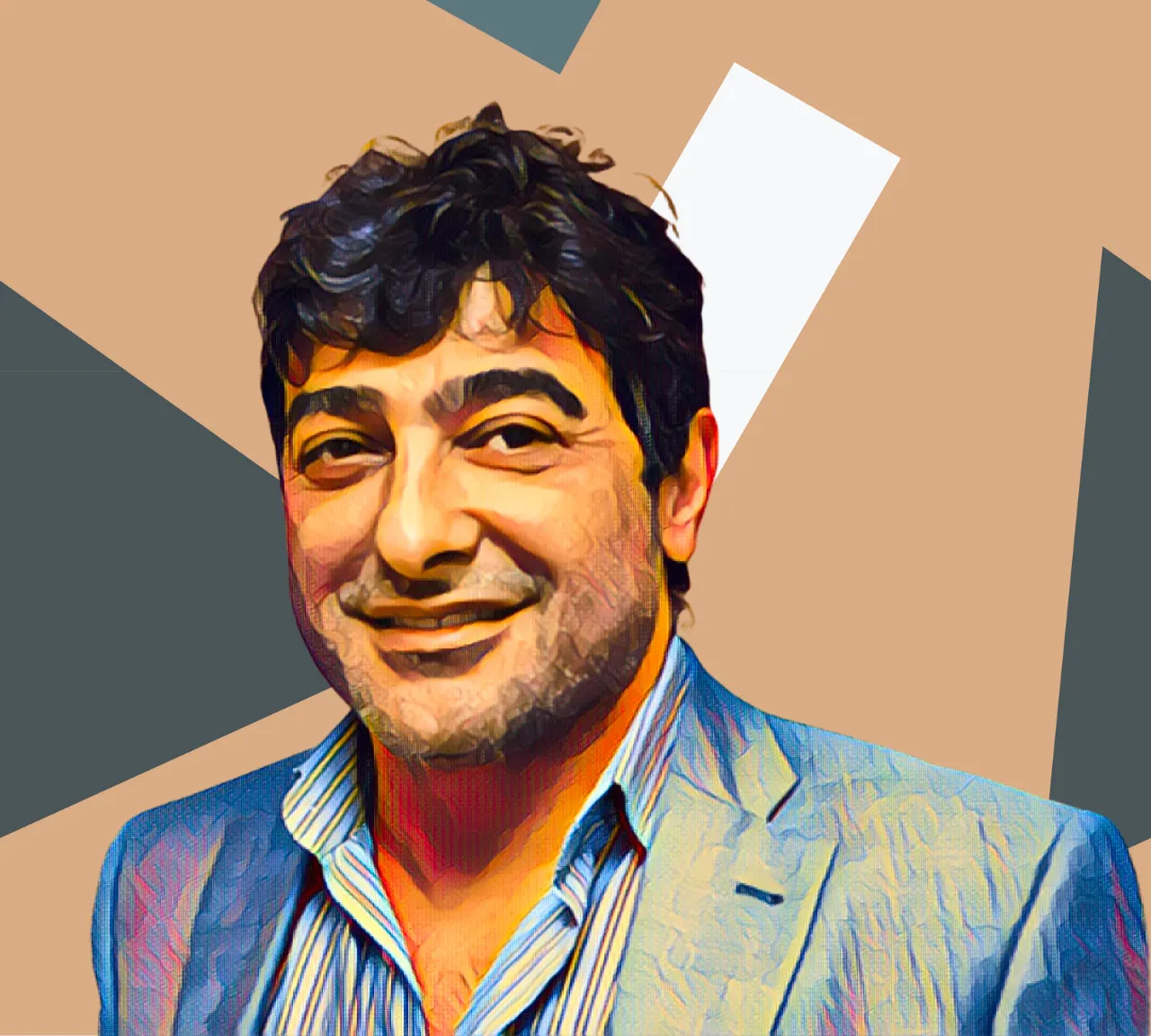
It is called Karameh Industrial City, and the man who built it arrived in Nigeria three decades ago carrying a toolbox.
Mofid Karameh founded Mikano International in 1993 to service generators. The group now runs six divisions covering power, motor vehicles, medical products, food, construction and marine, and it holds distribution or assembly rights from Perkins, MTU, Wartsila, ABB, Siemens, Schneider Electric, Philips, Hyundai, Mercury Marine and four Chinese carmakers.
All of it grew from a single national failure.
Nigeria generates roughly 4,000 megawatts of electricity for more than 200 million people. South Africa, with a quarter of the population, generates around ten times that. Whatever the grid cannot supply, private generators do, and Karameh spent thirty years selling them.
The toolbox
Karameh chose generator repair because he could see what the country needed, by his own account. Sources differ on where he came from. Nigerian outlets covering him recently describe him as Lebanese-Nigerian, while an earlier profile says he arrived from Syria.
Mikano International was incorporated in 1993 to sell, service, maintain, overhaul and rent diesel and gas generating sets. The business expanded in 1995.
Importing was all of it at first. Somebody else built the machines, Mikano brought them in, installed them and kept them running. That is a service operation, and it competes on price with everybody doing the same thing.
Learning to assemble
The change came in 1998, and it is the hinge of the whole story.
Mikano set up the first assembly line for power generators in Nigeria and became an authorised dealer for Perkins of Britain, licensed to sell, repair, service and warranty its generators. It became an authorised assembler of Perkins engines in 2003 and a full authorised partner in 2009.
Assembling instead of importing changes what a company controls. It sets the specification, holds the spare parts, trains the engineers and builds machines for a market where a generator is not emergency equipment but the primary power source, expected to run for hours every day and for years.
A steel factory followed in 1999, which meant Mikano could fabricate its own enclosures and structures rather than buying them.
Collecting the licences
What Karameh did over the following fifteen years was accumulate the right to represent almost every component in an industrial electrical system.
Mikano became an authorised channel partner for ABB low-voltage products in 2009 and an authorised distributor for Hyundai Construction Equipment in 2010. In 2013 it added Siemens breakers and control panels, and became an authorised distributor for Schneider Electric low-voltage, medium-voltage and solar products. In 2014 it took on Philips as distributor, service agent and parts stockist, and became an approved service agent for the Italian alternator maker Mecc Alte.
In 2016 it became an authorised assembler, seller, service agent and parts stockist for MTU Onsite Energy of Germany, and an ABB type-tested panel builder. Wartsila followed in 2019 on the same terms.
The generators Mikano assembles now run from 9 kVA, enough for a household, to 20,000 kVA, enough for a factory, built from MTU, Perkins and Stamford components.
The pattern across all of it is the same. A Nigerian business that needs power does not buy from one supplier and then find somebody else to install it, panel it, light it, service it and stock the parts. Karameh made Mikano the company that does all of it, from 34 and 35 Acme Road in Ogba, Ikeja, with Firas Mamlouk as managing director and Malek Jaber as chief technology officer.
Its own machine
In 2018 Mikano stopped only assembling other people's designs.
The Yorc generator was developed by Mikano and assembled by Yo Chaland, the group's first own-brand product rather than a licensed build. It is not the only thing the company now manufactures under its own name, but it was the first.
Mikano Foods was established the same year.
Karameh Industrial City
The site came in 2019, and it changed what the company could physically do.
Karameh Industrial City covers roughly 75,000 square metres along the Lagos-Ibadan expressway at Warewa in Ogun State, with eight warehouses of 7,500 square metres each, running on 24-hour supply and surveillance. Mikano generates its own power there, which is the product it sells.
The city now houses the motor assembly plant, the generator assembly lines, the marine yard, and separate factories for food, medical products and brake pads.
Owning the whole site matters in a country where land tenure is contested, the grid is unreliable and logistics are expensive. Everything Mikano makes, it makes in one place it controls.
The cars
The motors division was established in 2018 and is the part that has changed fastest.
It began with an exclusive partnership with Zhengzhou Nissan Automobile, a subsidiary of China's Dongfeng, to assemble, distribute and service the Rich6 pickup. Geely followed in 2019, with Mikano as its authorised assembler in Nigeria, and the company rolled out locally built vehicles through the pandemic with autogas and electric-ready options.
Maxus arrived in 2022, bringing the T60 pickup and a position in commercial vehicles.
The Geely relationship ended. Reporting on the sector describes tensions between the two, and by 2023 Mikano had rebuilt around Changan, Maxus and ZNA, covering sedans, sport utility vehicles, pickups and buses. It has since added Deepal, Changan's electric brand.
Mikano now says it is the only automotive company in Nigeria representing three of the top four Chinese car brands, which matters because China is the largest vehicle market in the world and its manufacturers are the ones moving into Africa while the established Japanese and European names retreat.
The assembly plant inside Karameh City covers 7,500 square feet, and the company says it holds the only fully automated vehicle test line in Nigeria.
It is not alone. Innoson Vehicle Manufacturing, GAC Motors, Stallion, PAN Nigeria and Nord Automobiles all assemble locally, and competition has sharpened in sport utility and commercial vehicles. All of them operate under Nigeria's National Automotive Industry Development Plan, which uses tariffs to push assembly onshore.
Masks, syringes, brake pads and boats
Four businesses arrived in a single year, and they have almost nothing to do with each other.
Afrimedical launched in 2022, making Afrimask surgical and KN95 face masks, a range of sanitising equipment, and Afriject auto-disable syringes in sizes from 0.5 to 10 millilitres. Auto-disable syringes lock after one use, which is what the World Health Organization requires for immunisation programmes.
Mikano Brake Pads was established the same year.
So was Mikano Marine, which builds boats and distributes for G-Marine, Al Falasi, Hayaari, ASIS and Mercury engines. Its range covers taxi boats, police boats, fishing boats, cruisers and inflatables.
The food division makes Mac Crunchy Wafer, Mac Max Wafer, Mac Waffle, Mac Pebbles and Mac Choco Dream.
The construction arm handles industrial, commercial and residential projects, and Mikano commissioned a four megawatt independent power plant in Lagos in 2017 and supplied systems for Eko Atlantic, the reclaimed development off Victoria Island.
The allegation
Karameh faced one serious public accusation last year and rejected it entirely.
SaharaReporters published a report on April 9, 2026 linking a name it gave as Nidal Mofid Karameh to a narcotics seizure on the Greek island of Mykonos, involving a yacht it identified as Hallo. The outlet attributed the claim to sources including an organisation called Global Fraud Watch, and stated in the same article that Greek authorities had not publicly confirmed any direct involvement.
Mikano responded that Friday. It called the claims entirely unfounded, baseless and defamatory, said Karameh has never been involved in, investigated for, or associated with any illegal activity, cited three decades of operation, and said it was exploring legal options.
No charge has been brought and no authority has confirmed any connection.
He has also been the subject of a separate false claim. A rumour circulated on Nigerian social media that the former vice president Atiku Abubakar owns Mikano. FactCheckHub examined it and found it false, confirming Karameh as founder and chairman.
The company publishes a compliance statement and operates a whistleblowing channel on its website.
The intelligence satisfies curiosity. The paid briefings satisfy strategy.
Every Monday, Elite subscribers receive an Investor Memo breaking down the deal, the structure and the positioning behind the week's most consequential African wealth story - the kind of analysis that doesn't appear anywhere else.
Twice a month, a Wealth Intelligence brief profiles a single billionaire's holdings, cash flows and expansion pipeline in detail no public source matches.
→ Executive ($25/mo): Daily newsletter + Deep-Dive Reports
→ Elite ($75/mo): Everything above + Investor Memos + Wealth Intelligence + Quarterly Analyst Briefings
Subscribe now