

Table of Contents
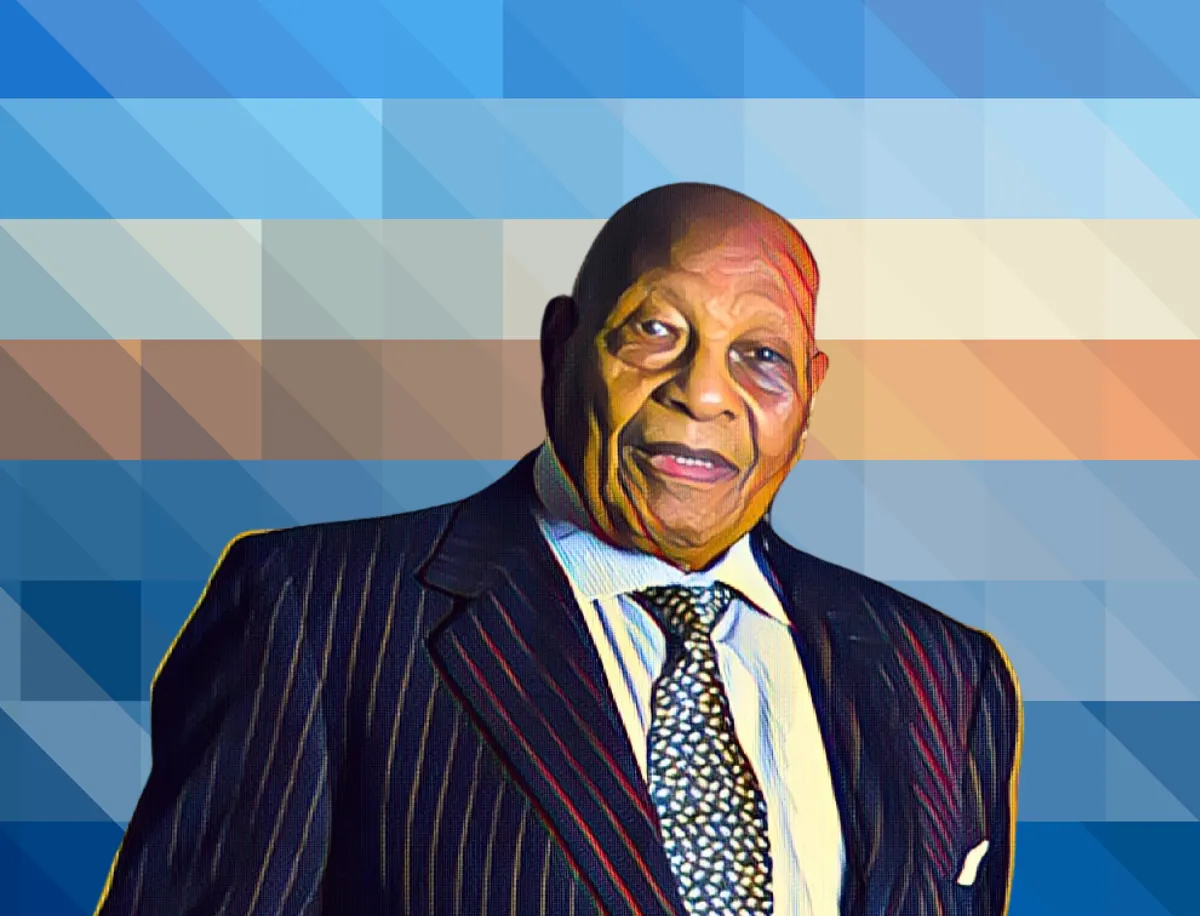
More than six years after the death of Richard Maponya, one of South Africa's best-known Black businessmen under apartheid, his family's business has moved into airport retail.
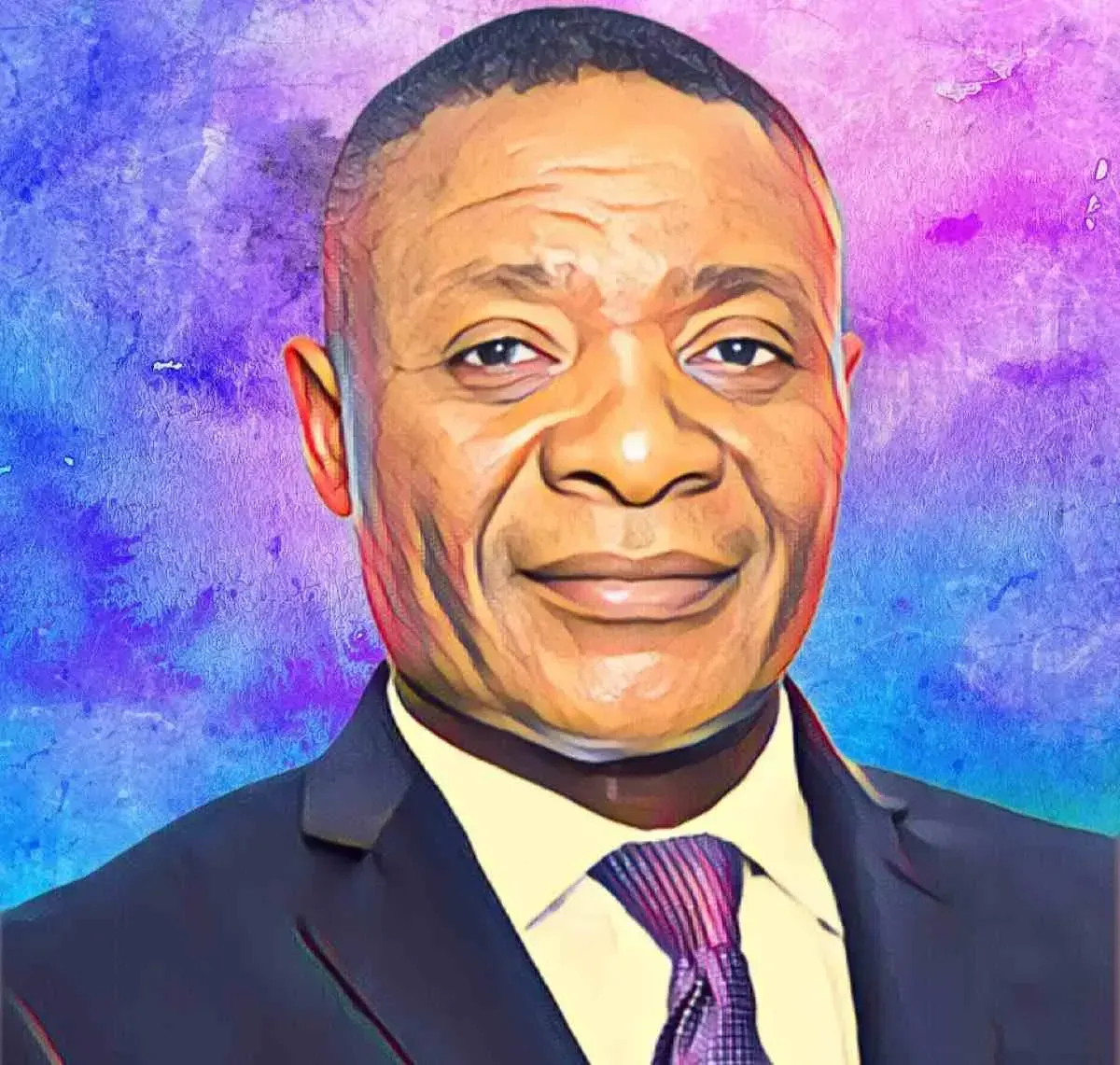
In October 2025, Maponya Investment Holdings, an investment company within the Maponya business, bought what it described as a significant stake in Big Five Duty Free, a leading duty-free chain at South Africa's biggest international airports. Elias Phatudi Maponya, chief executive of Maponya Investment Holdings, became chairman of Big Five Duty Free. Financial details were not disclosed.
The deal builds on a wider presence in travel retail. Maponya's daughter Chichi, who chairs the family's Maponya Group, is also co-founder and executive chairperson of Africa Travel Retail, a Johannesburg company that works in travel retail distribution and advises airports on customer experience and commercial services.
The Maponya fortune began with a milk round in Soweto in the 1950s. When Maponya died on Jan. 6, 2020, at 99, he left an estate valued at more than R1 billion, according to Sunday World, which included the R650 million Maponya Mall in Soweto. His will divided his businesses among 10 children. Within two years, the estate had split the family.
From a stock taker to a Soweto dairy
Maponya was born in Thlabine, near Lenyenye, about 20 kilometers west of Tzaneen in what is now Limpopo. His birth date is commonly given as Dec. 24, 1920, though the year has been disputed.
He trained as a teacher. At 24, during World War II, he moved to Alexandra township in Johannesburg. While still teaching, he took a job as a stock taker at a clothing maker, where his work won promotions for both him and his white manager. In gratitude, the manager sold him soiled clothing and offcuts, which Maponya resold in Soweto.
Apartheid made every step after that a fight. Black South Africans were barred from trading in most of the country, and licences in the townships were hard to win. In the early 1950s, Maponya and his wife, Marina, a cousin of Nelson Mandela, set up the Dube Hygienic Dairy. Boys on bicycles delivered milk to Soweto customers who had no electricity or refrigeration. The family dates the founding of the Maponya Group to 1952.
By the 1970s, the business had grown to include several general stores, car dealerships and filling stations. Maponya's will lists the property that came with it. It included a shopping centre in Dube, Soweto, which he described as his first and which is leased to Checkers, along with a supermarket in Naledi leased to Shoprite Checkers, a Shell service station in Zondi and a BP service station in Orlando East.
Banks, chambers and horses
Maponya also helped build the institutions Black business needed. He was a founder of the National African Federated Chamber of Commerce, known as Nafcoc, in 1964, and later founded and chaired the African Chamber of Commerce. He was one of the founders of African Bank. Marina sat on the boards of Barclays and the Development Bank of Southern Africa, according to their daughter Chichi.
He was the first Black person in South Africa to be granted racing colours in horse racing, and he chose green, gold and black, the colours of the ANC.
His motor and farming businesses widened the empire. In 2012, he opened Maponya Motor City on Klipspruit Valley Road in Orlando East, the first business of its kind in the south of Johannesburg. His will also records shares in Maponya Motors Property Holdings, as well as a property on Mncube Drive in Soweto that went into a joint venture with Barloworld, one of South Africa's largest vehicle distributors. Outside Pretoria, in Winterveld, he built Maponya Poultry Farm, which supplies eggs to supermarkets.
His personal wealth also included listed shares in companies including Sasol, Telkom, Pioneer and Builder's Warehouse, along with property in Molapo, Soweto, a house in the Johannesburg suburb of Hyde Park and the family home in Soweto.
The fight for Maponya Mall
The mall was the project that defined him. In 1979, Maponya became the first Black man to secure a 100-year lease on land in Soweto, near Chris Hani Baragwanath Hospital. The apartheid government made several attempts to take the land from him, and he resisted them all. In 1994, he bought it outright.
Financing the mall took far longer. His attempts to raise the money failed until his holding company formed a joint venture with property developer Zenprop and the Investec banking group. When the mall opened on Sept. 27, 2007, Maponya's company and Zenprop each held 42.5%, and Investec held 15%. The development cost R650 million, and Nelson Mandela opened it. "I was convinced the people really needed a (shopping) mall, I never stopped," Maponya said that day.
During the unrest and looting that hit parts of South Africa in July 2021, the community was credited with rescuing the mall, Daily Maverick reported. It still trades under the Maponya name. In December 2025, it ran a charity store with local organizations, which it said helped 70 families over the festive season.
How the fortune was divided, and the fight that followed
Maponya's will divided his business interests among his 10 children: Maide and Godfrey from his first wife, Oupa and Motlalepule from a previous partner, and Sisi, Roy, Mabotse, Chichi, Solly and Boniwe from his marriage to Marina.
The shares were divided unevenly. Godfrey, Chichi, Solly and Boniwe each received 14.4%. Maide received 10.8%, Mabotse 9%, Oupa and Motlalepule 5.9% each, and Roy and Sisi 5.4% each. Maponya said it was his wish, though not his direction, that the four children with 14.4% each form a holding company so that they would "speak with one voice."
He also left cash gifts. Boniwe, Solly and Chichi received R2.5 million each and Godfrey R2 million. Maide and Mabotse received R1.5 million each, and Oupa, Roy, Sisi and Motlalepule R1 million each. Each of his 23 grandchildren received R50,000. Solly inherited the family home in Soweto, along with his father's Omega watch and signet rings, and Boniwe received his gold coin collection. The Winterveld poultry farm went to Maide and Godfrey in equal shares.
The executors were four of the children, Godfrey, Chichi, Solly and Boniwe, along with accountant David Alan Nathan of Grant Thornton and Don Basildon Allaway of Edward Nathan Sonnenbergs.
In February 2022, Sunday World reported that the grandchildren, led by Jabulani Hlatshwayo, the son of Maide, had hired lawyers to challenge the executors, accusing them of sidelining the grandchildren. The dispute centered on the poultry farm. According to a family member, Maide had started the farm with her father. After the will was read, she was fenced off from the house she lived in on the property, and the business was contracted to a company called Rosegro without her involvement. She wrote to the Deputy Master of the High Court to protest, then moved to Soshanguve, where her health declined and she died.
A second Sunday World report described estate minutes circulated by the administrator in August 2020. They said the executors had not yet established the estate's net value because some information was missing, and described the estate as illiquid, meaning its assets could not easily be turned into cash. The minutes warned that the heirs might need to enter a redistribution agreement to cover the cash bequests after administration costs, taxes and estate duty. They also recorded that a man named John Gary Hamilton and others had lodged claims against Maponya Motor City Properties. The grandchildren accused the executors of withholding information about a Swiss bank account, Maponya's marital status and creditors of the estate. Estate papers had wrongly recorded him as divorced.
Boniwe Maponya declined to comment to Sunday World, and Godfrey said the family would meet and respond. Billionaires.Africa could find no public record of whether the grandchildren went to court or of how the dispute was resolved.
The next generation
Chichi Maponya has become the public face of the family business. She rejoined it in 2004 and worked closely with her father on developing Maponya Mall. By 2015, she was leading the Maponya Group and steered it into financial services, buying 15% of 4 Africa Exchange, a company planning a rival to the Johannesburg Stock Exchange. "We have always had an appetite for the financial services space," she said at the time, pointing to her father's role in founding African Bank.
She was named South African Businesswoman of the Year in 2008 and has chaired Brand South Africa. She is now board chairperson of the Maponya Group and executive chairperson of Africa Travel Retail. She also sits on the board of the Consumer Goods Council of South Africa and is a trustee of the Kgalema Motlanthe Foundation and the Dr. Richard Maponya Institute for Skills and Entrepreneurship.
Big Five Duty Free's other shareholders include German travel retail group Gebr. Heinemann, luxury goods group CAVI Brands and a women-owned consortium made up of Zithezava and Rumbi Investments. The company said the Maponya family business brings "patient capital and extensive experience in governance, execution, and retail place-making."
The deal follows the pattern Richard Maponya set over seven decades: invest in retail and property, hold the businesses for the long term, and use them to enter markets once closed to Black South Africans.
The intelligence satisfies curiosity. The paid briefings satisfy strategy.
Every Monday, Elite subscribers receive an Investor Memo breaking down the deal, the structure and the positioning behind the week's most consequential African wealth story - the kind of analysis that doesn't appear anywhere else.
Twice a month, a Wealth Intelligence brief profiles a single billionaire's holdings, cash flows and expansion pipeline in detail no public source matches.
→ Executive ($25/mo): Daily newsletter + Deep-Dive Reports
→ Elite ($75/mo): Everything above + Investor Memos + Wealth Intelligence + Quarterly Analyst Briefings
Subscribe now