

Table of Contents
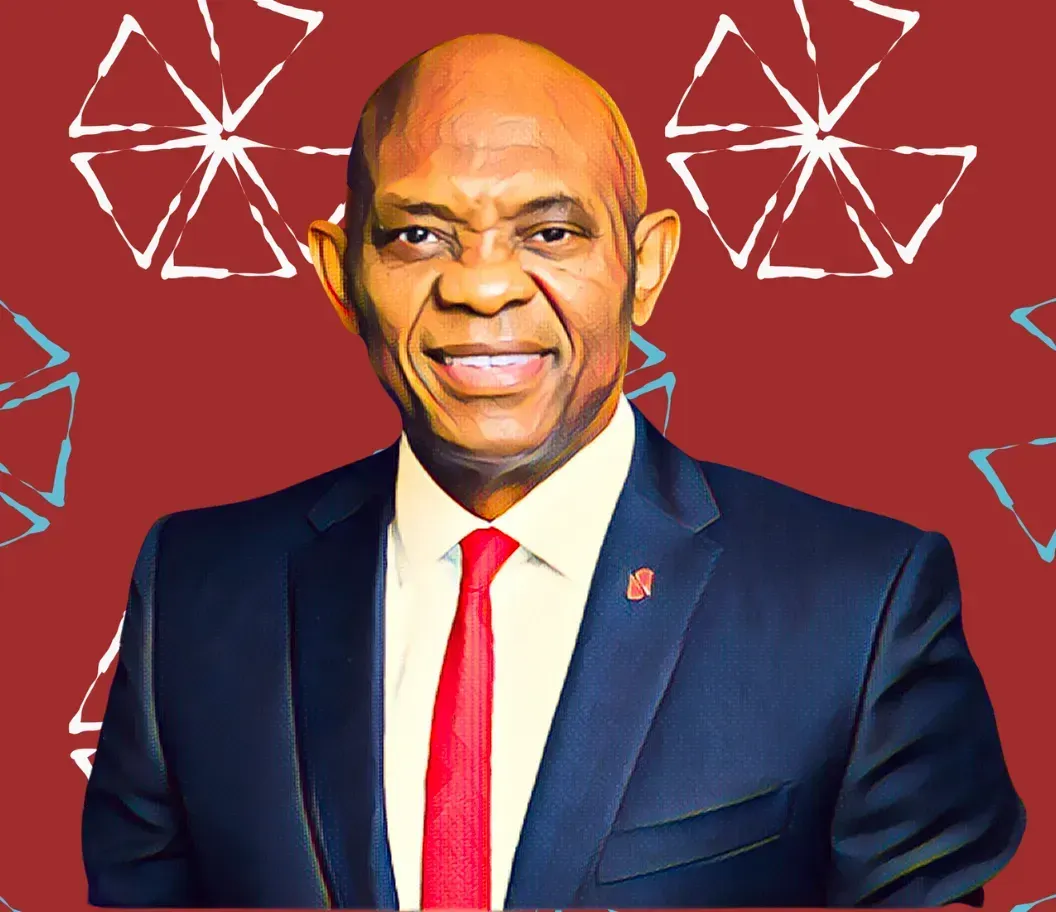
Nigerian billionaire Tony Elumelu said a shortage of electricity, the export of unprocessed raw materials, a lack of capital and weak trade between African countries are the four biggest obstacles to the continent's economic development.
Elumelu, chairman of Heirs Holdings, spoke at the 25th annual conference of Women in Management, Business and Public Service, or WIMBIZ, in Lagos. The conference was held under the theme "The Geography of Opportunity: Why the World Needs What Africa Has."
"We cannot talk about industrialisation without fixing electricity. Factories cannot run without it," he said, adding that reliable power and connectivity are also needed if Africa is to build an artificial intelligence industry.
He questioned why African countries still sell so much of what they produce in raw form, asking "why ship raw lithium, raw cocoa, raw crude out of this continent" instead of processing it at home. Less than a fifth of Africa's trade takes place between African countries, he said, even with the African Continental Free Trade Area in place. "It is easier today to ship goods from Lagos to Liverpool than from Lagos to Luanda."
Applications far outrun funding
Elumelu used his own foundation's figures to make the case on capital. The Tony Elumelu Foundation received 265,529 applications from young Africans this year and could fund 3,200 of them, leaving more than 262,000 without support.
"This, therefore, is not a shortage of entrepreneurial talent in Africa. It is a shortage of capital," he said.
"The future is investment and trade, not aid," Elumelu said. "The most important thing Africa needs to build in the next decade is African capital that invests in Africa."
More than $100 million to 24,633 founders
Elumelu and his wife, Awele, a physician, set up the Tony Elumelu Foundation in 2010. Its main programme, launched in 2015, gives each selected entrepreneur $5,000 in seed capital that does not have to be repaid. Since then the foundation has paid out more than $100 million to 24,633 entrepreneurs in all 54 African countries, Elumelu said at the conference.
The businesses it has backed have generated about $4.2 billion in revenue and created about 1.5 million jobs, according to the foundation, which says 77.5% of them are still operating after five years.
The cash comes with training. Entrepreneurs take a business management course on TEFConnect, the foundation's online platform, and are paired with mentors and coaches. Alumni who keep growing can apply for further financing through the foundation's partners, with awards of up to €50,000 ($56,000) for the strongest performers. The foundation also runs the TEF Forum, an annual gathering of its entrepreneurs, investors and African leaders, first held in 2015.
This year's 3,200 entrepreneurs will share about $16 million. Just over half are women, and 30% come from rural communities. Companies in Elumelu's Heirs Holdings group, including Heirs Energies, Transcorp Power, Transcorp Hotels and United Capital, are funding 1,751 of them. The rest are backed by partners including the European Commission, Germany's development ministry and its agency GIZ, the IKEA Foundation, UNICEF's Generation Unlimited, the Dutch government and the United Nations Development Programme.
He also told the audience of women executives and entrepreneurs that "women's economic leadership is not a concession to fairness; it is a requirement for competitiveness."
Aliko Dangote, Africa's richest person, also addressed the conference this week, telling delegates that Nigeria needs more factories and fewer traders.
Elumelu built his fortune in banking. He led a group of investors that took over the small Crystal Bank in the late 1990s and grew it into Standard Trust Bank, which merged with United Bank for Africa in 2005. UBA now operates in 20 African countries as well as in the U.S., the U.K. and France. Through Heirs Holdings, his family investment company, he also controls Transcorp Plc, which owns power plants and hotels, and Heirs Energies, an oil and gas producer.
Figures were converted at €1 = $1.12.
The intelligence satisfies curiosity. The paid briefings satisfy strategy.
Every Monday, Elite subscribers receive an Investor Memo breaking down the deal, the structure and the positioning behind the week's most consequential African wealth story — the kind of analysis that doesn't appear anywhere else.
Twice a month, a Wealth Intelligence brief profiles a single billionaire's holdings, cash flows and expansion pipeline in detail no public source matches.
→ Executive ($25/mo): Daily newsletter + Deep-Dive Reports
→ Elite ($75/mo): Everything above + Investor Memos + Wealth Intelligence + Quarterly Analyst Briefings
Subscribe now