

Table of Contents
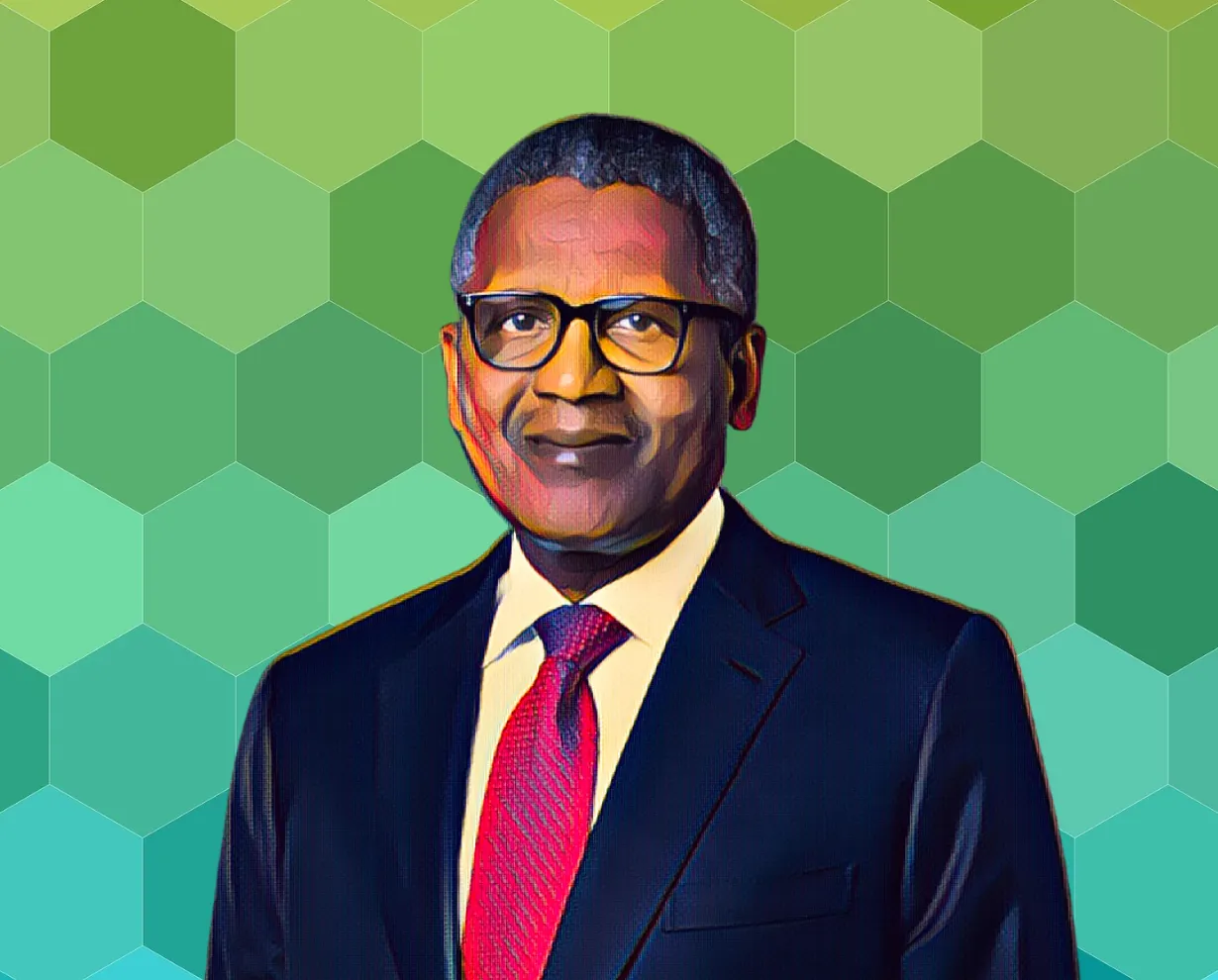
Nigerian billionaire Aliko Dangote has pledged to lead private investment in a regional electricity corridor to ease the power shortages holding back factories across West Africa, making energy the first priority of the new ECOWAS Business Council he chairs.
Dangote unveiled the plan, called Power ECOWAS for Regional Industrialisation, at the council's inaugural meeting in Lagos. It aims to raise private capital, link electricity supply with industrial demand across borders and cut companies' reliance on generating their own power.
"A manufacturer who generates his own electricity is effectively operating two businesses: the business he originally intended to establish and an electricity business he was compelled to establish," Dangote said. "He commits capital, employs personnel and assumes operational risk that his competitors in more industrialised economies do not ordinarily have to bear."
Power as a shared input
Dangote, the president and chief executive of Dangote Industries Ltd., said thousands of businesses in the region were each paying to solve the same electricity problem, tying up money that could go into production and jobs.
"Imagine how much additional manufacturing capacity we could establish if a significant proportion of the capital were directed into actual production, not generating power," he said.
He proposed treating electricity as a regional industrial input, so that factories could be built where they make commercial sense rather than where investors can produce their own power. He said he would invest in the infrastructure and bring in other companies and lenders.
The council will look for industrial customers able to sign long-term power purchase deals, study generation and transmission projects, and bring together investors, lenders and technical partners. The work will build on the West African Power Pool, the region's existing grid-sharing system. Dangote asked members to start with a small number of commercially sound projects, set up a small implementation team and agree a timetable for presenting the first investment proposals.
"A successful initial investment will do more to attract additional capital than an extensive catalogue of untested proposals," he said.
Cheaper to ship from Spain than to Ghana
Dangote said high freight charges and border delays made trade between neighbouring countries more expensive than trade with distant markets, using his group's own shipments as an example.
"Today we take clinker to Ghana. The amount of money we pay, which is just one and a half days of steaming, is more than what we are paying taking gypsum from Spain, which is 12 days," he said.
He backed the proposed six-lane Abidjan-Lagos highway and urged governments and investors to develop it as an economic corridor with power lines, manufacturing clusters, logistics hubs and industrial parks. He said the council would take investment obstacles directly to governments and ask the ECOWAS Commission to step in where regional action was needed.
"We are the people that can easily go and raise funds. We will risk our own money. We will also borrow more to make sure that we develop our own regional market," he said.
The council's members
ECOWAS Commission President Birame Diop said the council was expected to support trade, investment, job creation and access to energy, and to help governments make decisions that advance regional integration.
Aigboje Aig-Imoukhuede, chairman of Coronation Group, joined virtually and called for faster integration of the region's capital markets, closer links between stock exchanges and the creation of ECOWAS bonds. Gambian businessman Muhammed Jah, founder and chairman of QGroup, urged African investors to keep and reinvest more of their capital in the region. Ghanaian mining tycoon Ibrahim Mahama, founder of Engineers & Planners Ltd., called for African companies to take a bigger part in developing the region's minerals.
Liberian businessman Benoni Urey, chairman of PLC Investments, called for cheaper cross-border payments, reliable electricity and an end to illegal checkpoints. Kandeh Yumkella, special envoy for the West Africa Integration and Investment Summit, said existing project pipelines could support the council's work but needed preparation, financing and policy backing.
Africa's richest man
Dangote, 69, is Africa's richest person. His Dangote Petroleum Refinery, the 650,000 barrel-a-day plant near Lagos, is set to list on the Nigerian Exchange on Dec. 1 at a valuation of about ₦65.87 trillion ($47.8 billion). He also controls Dangote Cement Plc, Africa's largest cement maker, which ships clinker across the region.
The intelligence satisfies curiosity. The paid briefings satisfy strategy.
Every Monday, Elite subscribers receive an Investor Memo breaking down the deal, the structure and the positioning behind the week's most consequential African wealth story — the kind of analysis that doesn't appear anywhere else.
Twice a month, a Wealth Intelligence brief profiles a single billionaire's holdings, cash flows and expansion pipeline in detail no public source matches.
→ Executive ($25/mo): Daily newsletter + Deep-Dive Reports
→ Elite ($75/mo): Everything above + Investor Memos + Wealth Intelligence + Quarterly Analyst Briefings
Subscribe now