

Table of Contents
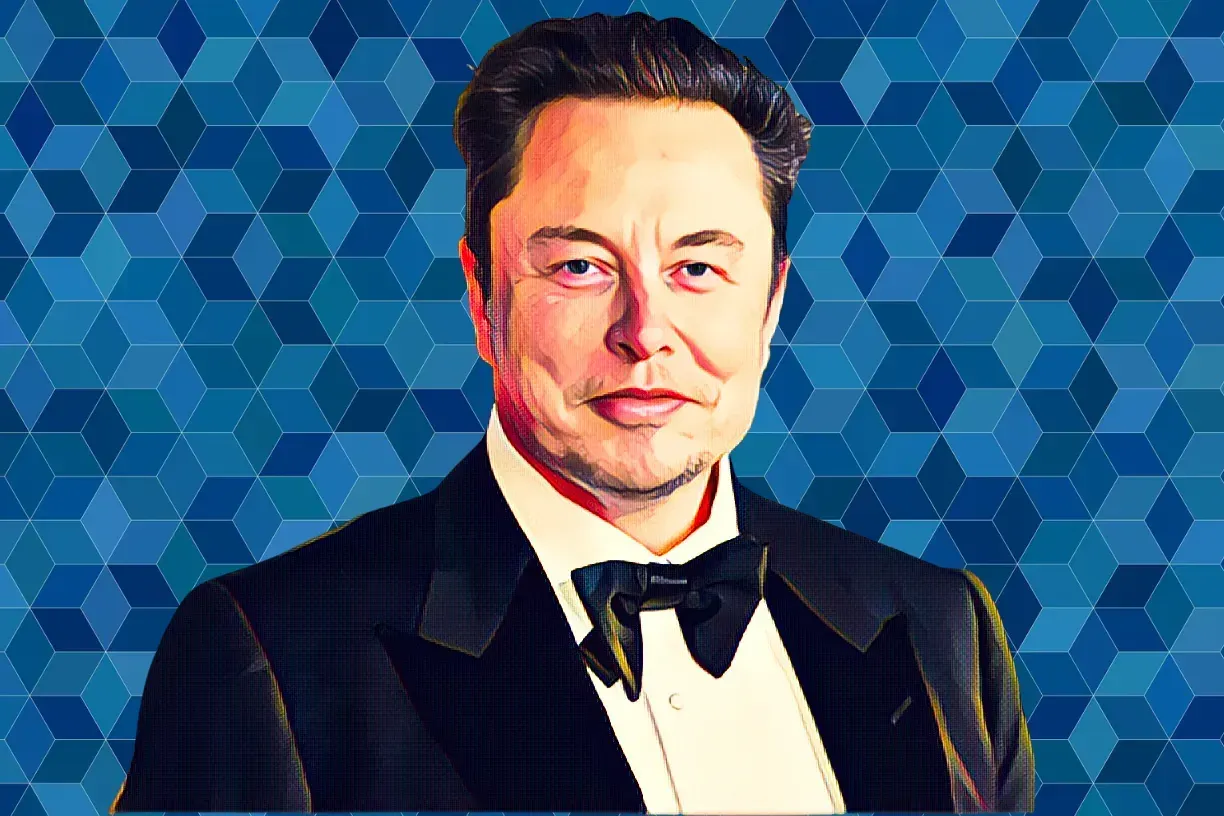
Elon Musk is, by most measures, the richest person on the planet. As of early 2026, Forbes puts his net worth somewhere around $852 billion, a number so large it barely registers as real. He got there by doing something most people cannot: building one world-changing company, then doing it again, then doing it again after that.
His first real venture was Zip2, a city-guide software business he sold to Compaq in 1999 for about $300 million. After that came X.com, which merged into PayPal and was later scooped up by eBay. He co-founded OpenAI before eventually parting ways with it. He co-founded SolarCity before Tesla absorbed it.
Today, though, Musk still controls a portfolio of companies that would be remarkable even if he owned just one of them. Here is a look at each one.
1. Tesla
Tesla is where Musk's name first became a household word, and it remains his most closely watched company. The electric vehicle maker was actually started in 2003 by Martin Eberhard and Marc Tarpenning. Musk came in as a lead investor the following year, eventually took the CEO role in 2008, and after some bitter internal disputes and a 2009 court settlement, he and two others secured the right to be called co-founders.
What Tesla did was simple in theory but nearly impossible in execution: it made electric cars desirable. Not just sensible or eco-friendly, but genuinely cool. The Roadster, Model S and eventually the mass-market Model 3 reframed what people expected from EVs. The company now holds about a $1.5 trillion market capitalization and delivers more than 2 million vehicles annually.
In November 2025, Tesla shareholders approved a new compensation package for Musk potentially worth $1 trillion in stock awards over the next decade, contingent on hitting a series of ambitious targets, including growing the company's market cap to around $8.5 trillion. Whether that happens or not, Tesla's place in automotive history is already secured.
Still, the road ahead is rockier than it once looked. Musk's deep involvement in politics has triggered consumer boycotts in parts of Europe and the U.S., and Tesla's stock has been volatile. The company is pivoting hard toward robotics with its Optimus humanoid robot program, and it is pushing forward on an autonomous robotaxi service. Both remain works in progress.
2. SpaceX
If Tesla made Musk famous, SpaceX is probably the more technically audacious achievement. He founded the company in 2002 after his PayPal exit, sinking $100 million of his own money into it at a time when the idea of a private rocket company competing with national space agencies seemed like a punchline.
It is not a punchline anymore. SpaceX has fundamentally changed the economics of getting to orbit by building rockets that land themselves and can be reflown, cutting launch costs by an order of magnitude. The company holds NASA contracts, carries astronauts to the International Space Station, and is developing Starship, the giant rocket designed to eventually take humans to Mars.
Its Starlink subsidiary has become a business in its own right. The satellite internet service now has roughly 7,000 working satellites in orbit, accounting for more than half of all active satellites globally, and serves millions of subscribers worldwide. SpaceX is also building Starshield, a hardened version of Starlink for the U.S. military.
In February 2026, SpaceX completed its acquisition of xAI in an all-stock deal, creating what is now the most valuable private company in the world, with a combined valuation of about $1.25 trillion.
3. X (formerly Twitter)
Musk's acquisition of Twitter in October 2022 for roughly $44 billion was one of the strangest corporate sagas in recent memory. He tried to back out of the deal, got sued, and eventually went through with it anyway. Almost immediately, he rebranded the platform as X, fired a large portion of the staff, began charging for previously free features like the verification badge, and loosened content moderation policies.
The moves were deeply controversial. Advertisers fled. Users migrated to alternatives. But the platform has not collapsed, and Musk has pressed forward with his vision of X as a kind of everything app, one that eventually handles payments, messaging, and more alongside the social media feed.
In March 2025, Musk sold X to xAI in an all-stock deal that valued the social media company at $33 billion. The practical effect is that X is now folded into the same corporate structure as his AI company, though both operate as distinct products.
4. xAI (now a SpaceX subsidiary)
Musk co-founded OpenAI back in 2015 as a nonprofit, then left the board in 2018. His public explanation for the departure cited disagreements over the company's direction, specifically that OpenAI had abandoned its founding commitment to open-source, safety-focused AI research and become a profit-driven, closed-source operation instead. OpenAI disputes that framing.
Regardless, Musk launched xAI in 2023 to build his own AI competitor. The company's flagship product is Grok, a chatbot that is deeply integrated into X and has grown to roughly 80 million active users. Grok has had its share of embarrassing moments, including a 2024 incident in which the system began generating violent and antisemitic content, which the company blamed on a systems update.
Despite the stumbles, xAI has moved fast. It has raised more than $12 billion in outside funding, built out a massive data center operation called Colossus, and released competitive large language models. In February 2026, SpaceX acquired xAI in an all-stock transaction valued at $250 billion for xAI, with the full combined entity coming in at $1.25 trillion.
5. The Boring Company
Musk founded The Boring Company in 2017, the name being both a straightforward description of what it does and a deliberate joke. The company bores tunnels, and it is trying to reimagine urban transit in the process.
Its most visible project is the Vegas Loop, an underground network of tunnels beneath Las Vegas that uses Tesla vehicles to move passengers between the convention center and nearby hotels. Critics have called it an expensive, limited-capacity glorified parking garage. Supporters say it is a proof of concept.
The more ambitious idea behind the company has always been the Hyperloop, a system of vacuum tubes through which magnetically levitated pods would travel at very high speeds. Progress on that front has stalled significantly. A major Hyperloop One test facility was shut down in 2023, and the concept remains far more theoretical than practical. The Boring Company is still operating, but it has yet to prove it can deliver the transformative transit technology Musk has described.
6. Neuralink
Neuralink was co-founded by Musk in 2016 with the goal of developing implantable brain-computer interfaces. The company's early work has focused on medical applications, specifically helping people with paralysis regain some independence by allowing them to control computers and robotic devices using neural signals alone.
The technical breakthrough at the heart of the device is a delicate system of hair-thin electrodes that can be inserted into brain tissue with minimal invasiveness. Clinical trials are underway, and early results have shown that patients can indeed control digital interfaces with thought.
Total investment in the company now stands at around $5 billion. The longer-term vision, as Musk has described it, is not just medical but cognitive augmentation for healthy people, essentially merging human intelligence with artificial intelligence. That idea has drawn pointed criticism from ethicists and neuroscientists who argue the risks are poorly understood and the consent frameworks inadequate.
7. The Musk Foundation
This one is a bit different from the rest. The Musk Foundation is a registered nonprofit organization that Elon and his brother Kimbal founded in 2001. It has received billions of dollars in contributions, largely in the form of Tesla stock, and is worth hundreds of millions of dollars on paper.
What it actually does with that money is surprisingly murky. The foundation's public web presence is minimal: a plain text page with almost no staff listed and no contact information. Investigations over the years have found that a significant portion of its grants have gone to organizations tied to Musk and his family's interests. It has also been credited with reducing Musk's tax burden by a substantial amount through charitable deductions.
There have been genuine public donations. In 2018, the foundation gave students in Flint, Michigan, $423,600 to purchase Chromebooks. But in recent years, the flow of money through the foundation has attracted growing scrutiny from journalists and regulators alike.
The through-line connecting all of these ventures is a preference for industries that most serious investors considered either impossible or not worth the trouble. That instinct has been spectacularly right more than once, and spectacularly messy more than once. Whether Musk's empire keeps expanding or starts showing real cracks, it is not going to get boring.
The intelligence satisfies curiosity. The paid briefings satisfy strategy.
Every Monday, Elite subscribers receive an Investor Memo breaking down the deal, the structure and the positioning behind the week's most consequential African wealth story - the kind of analysis that doesn't appear anywhere else.
Twice a month, a Wealth Intelligence brief profiles a single billionaire's holdings, cash flows and expansion pipeline in detail no public source matches.
→ Executive ($25/mo): Daily newsletter + Deep-Dive Reports
→ Elite ($75/mo): Everything above + Investor Memos + Wealth Intelligence + Quarterly Analyst Briefings
Subscribe now